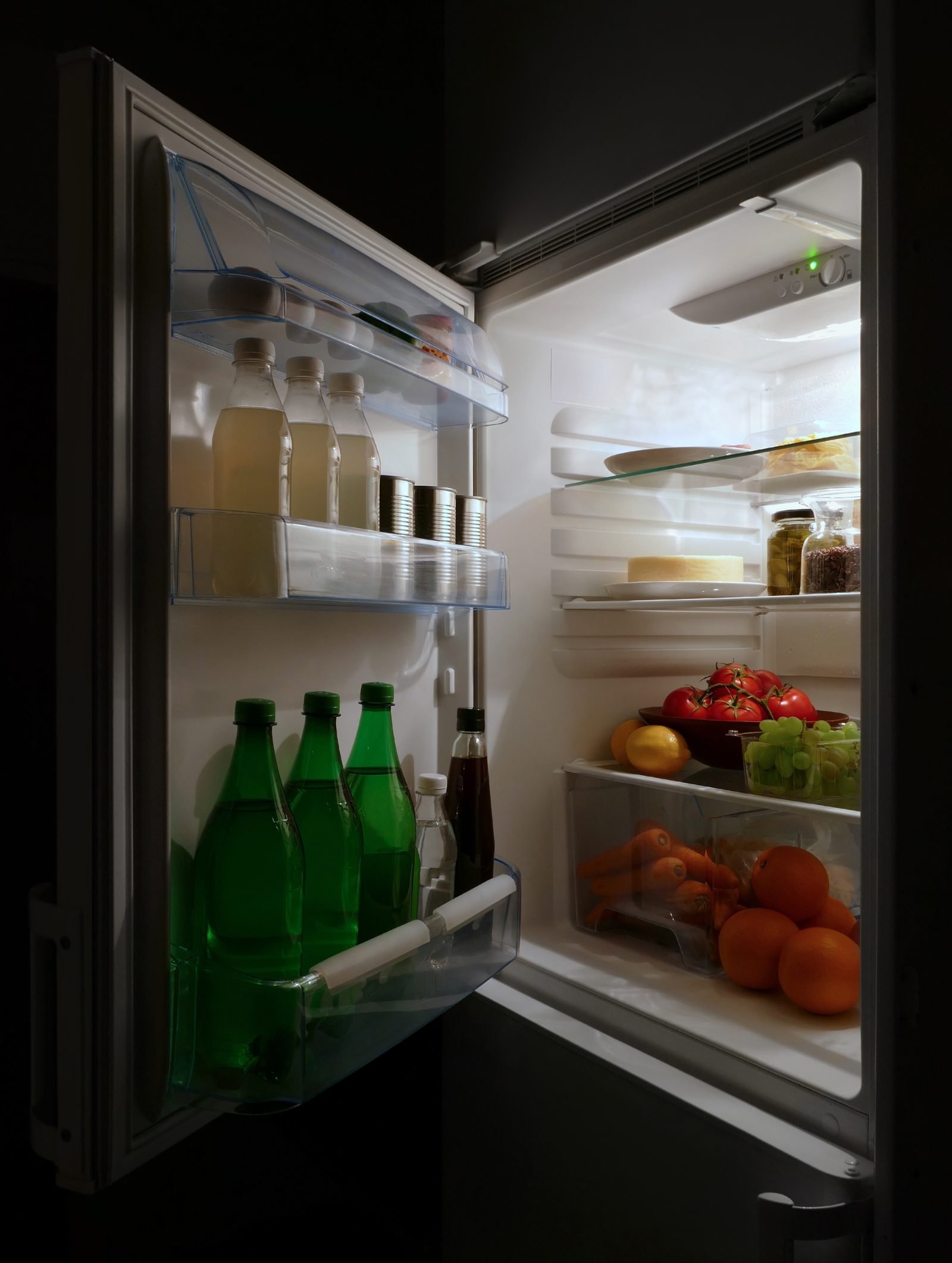
Two little dates on a packet, and almost everyone I know treats them as the same thing. They are not, and the gap between them is where the two big kitchen mistakes live: throwing out a perfectly good tin because the best-before has slipped, or eating a chicken that looked fine two days past its use-by and spending the night regretting it. One date is a suggestion about quality. The other is a hard line about safety. Once you know which is which, you waste less food and you take fewer risks, and the whole thing stops being a guessing game.
Free PDF
Free Oven Temperature & Gas Mark Chart
A printable one-page conversion chart for your kitchen: degrees, fan, gas mark and the descriptions in between. Pop your email in and the PDF is yours, plus the odd straight-talking kitchen tip.
Free, unsubscribe any time. The download starts as soon as you sign up.
The short version
A use-by date is about safety. It is on food that goes off in a way that can make you ill, and you do not eat it after that date, even if it looks and smells perfectly fine. A best-before date is about quality. It is on food that keeps for a long time, and after that date the food is usually still safe, it just might not be at its best. Learn to read which date a food carries and you already know how much slack you have.
Use-by: the line you do not cross
Use-by dates turn up on the perishable stuff: raw meat and fish, ready meals, soft cheeses, cooked meats, prepared salads, and most fresh dairy. These are foods where harmful bacteria can build up to dangerous levels without changing the look, the smell or the taste at all. That is the part people find hard to believe, so it is worth saying plainly: the Food Standards Agency is clear that you should not eat food after its use-by date even if it looks and smells fine, because it might contain enough harmful bacteria to make you sick.
This is exactly why the sniff test has limits. Your nose is brilliant at catching spoilage, the sour milk, the off meat, and I lean on it constantly for the right foods. But the bugs that cause food poisoning, things like listeria and salmonella, often leave no smell, no taste and no visible change. So on a use-by food, your senses are not a second opinion that can overrule the date. The date wins. It is the same veto-not-a-green-light logic I set out in how to tell if chicken has gone off: a bad smell tells you to bin it, but a clean smell does not tell you it is safe.
One more thing that tells you how seriously the rule is taken: in the UK it is against the law for a shop to sell food after its use-by date. That is not a bureaucratic detail. It is the clearest signal there is that this particular date is treated as a safety threshold, not a nicety.
Best-before: a quality date, not a safety one
Best-before dates sit on the long-life half of the kitchen: tinned food, dried pasta and rice, crisps, biscuits, flour, most things in the freezer. Here the FSA line is the reassuring one. After the best-before date the food is usually still safe to eat, it just may not be at its best for flavour, colour or texture. A tin of beans a few months past its best-before is fine. Dried pasta is fine for a good while. Biscuits go soft rather than dangerous.
And crucially, for best-before foods you are allowed to use your judgement. Look at it, smell it, and decide. Mould on the bread, a rancid smell off old nuts, a tin that is bulging or leaking, those are real reasons to bin something. But the date itself passing is not, on its own, a reason to throw perfectly good food away. This is the half of the fridge and cupboard where a bit of common sense saves a lot of waste. The way I judge borderline eggs, which carry a best-before rather than a use-by, is the same approach: there is more on that in how to tell if an egg has gone off.
The one exception: cook it or freeze it in time
Here is the bit that genuinely surprises people, and it is the single most useful thing in this whole article. You can eat food after its use-by date if you cooked or froze it on or before that date.
The reason is simple. Freezing does not kill bacteria, but it stops them multiplying completely, because bacteria cannot grow on frozen food. So freezing a pack of chicken on its use-by date effectively presses pause on the clock. Take it out three weeks later, defrost it properly in the fridge, and you then have a fresh window to use it, not the expired one from the packet. This is the best waste-saver in any busy kitchen: when something is heading towards its use-by date faster than you will eat it, freeze it that day rather than hoping.
There are a couple of rules that come with the exception, and they matter:
- Once you have defrosted something raw, use it within 24 hours and do not refreeze it raw. You can refreeze it once it has been cooked.
- If you cook food and want to keep it, eat it within about two days or freeze it to eat later.
- Defrost in the fridge, not on the worktop, so the food never sits in the warm. The safe methods are all in defrosting food safely.
“Display until” and “sell by” are not your dates
You will sometimes spot a third date, a “display until” or “sell by”, usually in small print near the barcode. Ignore it. Those are stock-control dates for the shop staff, telling them when to rotate or pull an item off the shelf. They mean nothing for you at home. The only two dates that should guide what you eat are use-by and best-before. If a pack has a “display until” and a use-by, the use-by is the one that counts.
Once it is open, the printed date can lie
The date on the packet assumes the packet is sealed. The moment you open something, a second clock often starts, and it can be much shorter than the printed date. This is why so many labels carry a separate line like “once opened, use within 3 days”. That instruction overrides the printed use-by if it lands sooner.
Opened cooked ham that has a use-by of next week might still say “eat within three days of opening”, and three days is then your real deadline. Opened milk is governed by how it smells and how cold you keep it rather than the date alone; I go into that in how long does milk last after opening. The habit worth building is to read the “once opened” line, not just the big date, and when in doubt on an opened perishable, go by the shorter of the two.
Store it right, or the date means nothing
Every printed date carries a hidden assumption: that you stored the food the way the label tells you to. Get that wrong and food can become unsafe well before its use-by date, or drop in quality before its best-before. The two that matter most in a home kitchen:
- Keep the fridge between 0 and 5C. Warmer than that and the use-by dates on everything inside become optimistic. A fridge thermometer costs almost nothing and settles a lot of arguments. There is more on getting the cold chain right in how long food lasts in the fridge.
- Follow the “keep refrigerated” and “store in a cool dry place” lines. They are not padding. A chutney that says keep refrigerated after opening means exactly that.
Freezer storage has its own quirks, mostly about quality rather than safety once food is frozen solid; I have gathered the sensible windows in freezer storage times, and the rules for warming leftovers back up in reheating leftovers safely.
The rule in one line
Use-by is a safety line you do not cross, whatever your nose says; best-before is a quality guide you are allowed to judge for yourself. The only way past a use-by date is to have cooked or frozen the food before it, and every date on every packet assumes you stored the food properly. Get those three things straight and you will throw away less, and eat nothing you shouldn’t.