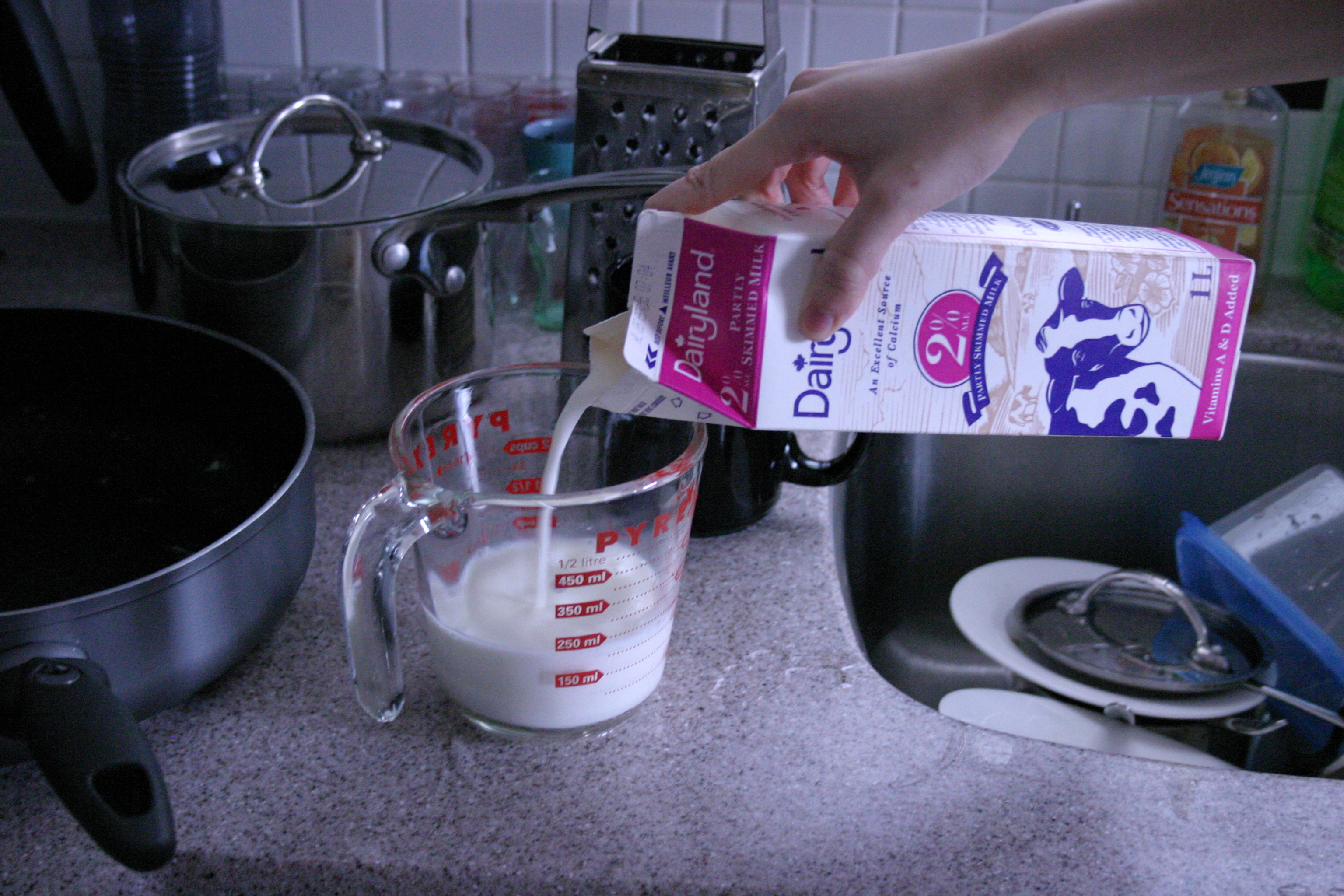
Milk is the one thing my fridge is never without, and it is also the thing I throw away most often. A four-pinter comes home, the week goes sideways, and by the weekend I am standing at the sink wondering whether the last inch is still drinkable or a science experiment. For a long time I guessed. Now I know the actual rules, and they are simpler than the guessing ever was. Here is how long milk lasts once you have opened it, why the date on the bottle is only half the story, and the one line you should not cross whatever your nose tells you.
Free PDF
Free Oven Temperature & Gas Mark Chart
A printable one-page conversion chart for your kitchen: degrees, fan, gas mark and the descriptions in between. Pop your email in and the PDF is yours, plus the odd straight-talking kitchen tip.
Free, unsubscribe any time. The download starts as soon as you sign up.
The short version
Opened cow’s milk keeps roughly four to seven days in a properly cold fridge. That is the figure to hang everything else on. It holds for whole, semi-skimmed and skimmed, because the fat content changes the taste far more than it changes the shelf life.
Two things can shorten that window or, occasionally, stretch it. The first is the date printed on the bottle. The second is how cold and how steady your fridge actually is. Get both of those right and most milk comfortably reaches day five or six. Get them wrong and you can turn a fresh bottle sour in half the time.
Use by or best before? It matters more than you think
Here is where a lot of confusion lives, and it is worth clearing up because getting it wrong is the one mistake that can actually make you ill.
Most fresh milk in the UK has carried a use by date, and a use by date is about safety, not quality. The Food Standards Agency is blunt about this: do not eat, drink or cook food after its use by date, even if it looks and smells fine. The bacteria that make you unwell do not always announce themselves with a smell or a lump. So if your bottle says “use by”, that date is a hard stop. Your four-to-seven-day fridge window runs up to that date, never past it, whichever comes first.
In the last few years some supermarkets and dairies have switched fresh milk over to a best before date instead, partly to cut down the enormous amount of perfectly good milk that gets poured away. Best before is about quality, not safety. If your bottle says “best before”, the date is a guide to when the milk is at its nicest, and you are allowed to use your judgement past it. That is the situation where the sniff test earns its keep.
So the first thing to do with any bottle is read which of the two words is printed on it. It changes what the date means and what you are allowed to do with it.
What the sniff test can and cannot do
The sniff test is genuinely useful, but only within its limits. Off milk gives itself away pretty clearly: a sour, slightly cheesy smell, a taste that makes you wince, and in the later stages a thickened or lumpy texture as it starts to curdle. Trust all of that. If milk smells sour, it is sour, and no date on the bottle overrules your nose in that direction.
What the sniff test cannot do is give milk a clean bill of health past a use by date. Smelling fine is not the same as being safe, because some of the bacteria that matter for safety do not smell of anything. So the honest way to use it is this: on best before milk, sniff away and decide for yourself. On use by milk, the date comes first and the sniff is only ever a second veto, never a green light.
Why the fridge door is quietly ruining your milk
If your milk keeps going off before you expect it to, the culprit is very often where you keep it. The door is the warmest part of any fridge and the temperature there swings every single time someone opens it. Milk stored in the door lives through dozens of little warm spells a day, and each one shortens its life.
The back of a middle or bottom shelf is the coldest and steadiest spot, and that is where milk belongs. It is a small change that buys real time. Your fridge as a whole should be running at 5°C or below, which is the temperature the Food Standards Agency sets for keeping chilled food safe. Most fridges sit warmer than their owners assume, so if you have never checked yours with a cheap fridge thermometer, it is worth doing once. A fridge that drifts up to 8 or 9 degrees will age everything in it faster, milk included.
The other habit that quietly costs you is leaving the bottle out on the counter through a long breakfast or a baking session. Milk, like any perishable, should not sit out at room temperature for more than about two hours in total. Warmth is what bacteria want, and a bottle that spends an hour out every morning is being nudged towards the sink days ahead of schedule. Pour what you need and put it straight back.
Long-life, UHT and plant milks
Long-life and UHT milk behave beautifully in the cupboard because the heat treatment sterilises them, but the moment you open the carton that advantage is gone. Once opened, treat UHT milk exactly like fresh: keep it in the fridge and use it within about four to seven days. The unopened carton lasting months in the cupboard tells you nothing about the opened one on the shelf.
Plant milks (oat, almond, soya and the rest) usually give you a slightly longer opened window, often around seven to ten days, but there is real variation between brands and types, so the carton is your best guide here. Read the “once opened, use within” line, because they do not all behave the same.
Signs it has actually turned
You will not need a chart for this, but for the record, here is what off milk does. It smells sour or faintly cheesy before anything else. The taste turns sharp and unpleasant. Later it thickens, then separates into lumps and thin liquid, and may take on a faintly yellow tinge. Any one of those on best before milk means it is done. On use by milk you should already be past it on the date alone.
One thing worth saying: slightly turned milk is not the same as dangerous, and a splash of just-past-its-best milk curdling in hot tea is a quality annoyance rather than a medical event. But there is no prize for drinking sour milk, and if a use by date has passed, quality is not the question you are answering.
Do not pour it away, freeze it
If you can see you are not going to get through a bottle in time, the fridge is not your only option. Milk freezes far better than most people expect, and freezing it before the use by date effectively presses pause on the clock. I wrote a full guide to freezing milk and thawing it without ruining it, including why you defrost it in the fridge and how to fix the grainy look afterwards. The one rule that carries over from this article: freeze it while it is still within date, not as a rescue attempt the day after.
For everything else that lives in the fridge and prompts the same “is this still alright?” question, my guide to how long food lasts in the fridge covers the usual suspects, and if you have ever wondered whether a leftover is safe to warm through again, reheating leftovers safely has the answers.
The rules, boiled down
Opened milk gives you roughly four to seven days in a cold fridge, and never past a use by date. Read whether your bottle says use by or best before, because that decides whether the date or your nose has the final say. Keep it at the back of a shelf running 5°C or below, not in the door. Do not leave it out for more than a couple of hours. And when you know a bottle is going to beat you, freeze it before it turns rather than after. Do those few things and the walk to the sink becomes a rare event instead of a weekly one.