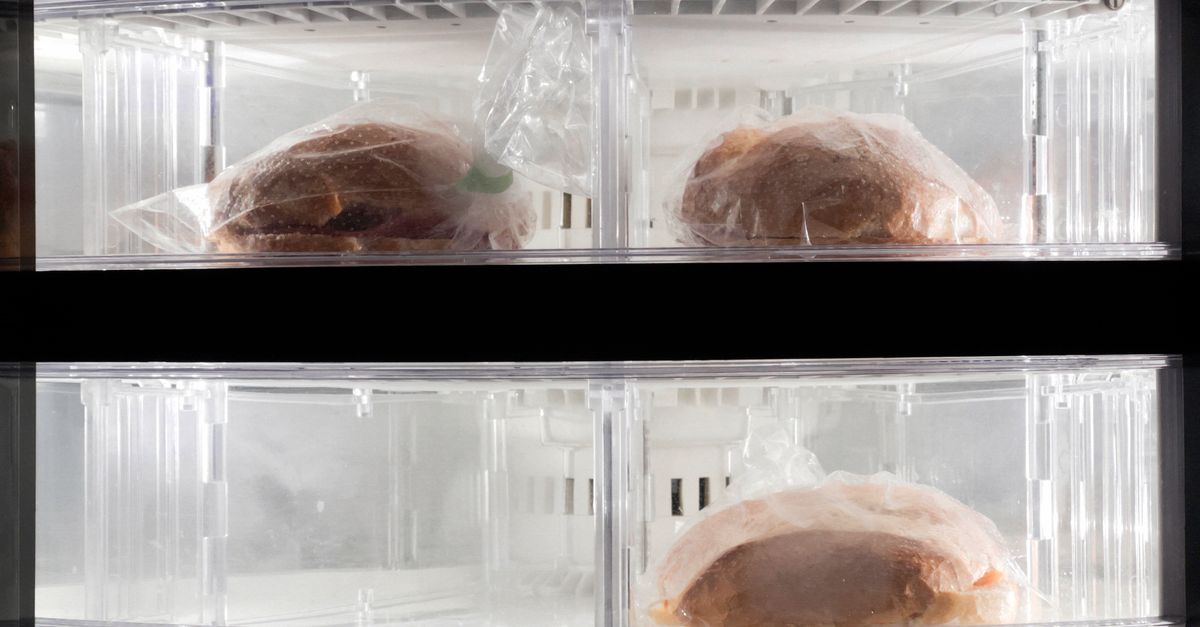
The freezer is where good intentions go to hibernate. Mine currently holds a labelled, dated, rotated stock of family dinners and also, if I am honest, a bag of something beige from an era I cannot identify. The good news about freezers is that the safety question is simple: food kept frozen at minus 18°C (0°F) stays safe more or less indefinitely, because bacteria cannot grow at that temperature. The times below are about quality, not safety, and understanding that difference changes how you use the freezer.
Free PDF
Free Oven Temperature & Gas Mark Chart
A printable one-page conversion chart for your kitchen: degrees, fan, gas mark and the descriptions in between. Pop your email in and the PDF is yours, plus the odd straight-talking kitchen tip.
Free, unsubscribe any time. The download starts as soon as you sign up.
The times, honestly
These assume a proper freezer at minus 18°C, food that went in fresh, and decent wrapping. They are quality windows: the point past which texture and flavour noticeably decline, not a safety cut-off.
| Food | Keeps well for | Notes |
|---|---|---|
| Beef and lamb joints, steaks | 6 to 12 months | Big dense pieces last longest |
| Pork joints and chops | 4 to 6 months | Fat goes rancid sooner than lean meat |
| Mince (all kinds) | 3 to 4 months | More surface area, degrades faster |
| Sausages and bacon | 1 to 2 months | The salt and fat shorten the window |
| Whole chicken | Up to 12 months | |
| Chicken pieces | 6 to 9 months | |
| Oily fish (salmon, mackerel) | 2 to 3 months | The oils turn stale first |
| White fish (cod, haddock) | 4 to 6 months | |
| Cooked leftovers, stews, soups | 2 to 3 months | Fine after, but flavours flatten |
| Bread and rolls | 3 months | Slice before freezing |
| Cakes and baked goods | 3 months | Un-iced freezes better than iced |
| Blanched vegetables | 8 to 12 months | Blanch first or enzymes keep working |
| Fruit | 8 to 12 months | Texture softens; ideal for cooking |
| Butter | 6 to 9 months | Unsalted keeps a little longer |
| Hard cheese | 3 to 6 months | Turns crumbly; grate it first |
| Milk | 1 to 2 months | Separates a bit; shake after thawing |
| Raw egg whites/yolks (not in shell) | Up to 12 months | Never freeze eggs in the shell |
| Ice cream | 2 to 3 months | Gets icy once opened |
Notice the pattern: fat is the enemy of freezer time. Fat does not freeze solid the way water does, and it slowly oxidises and goes rancid even at minus 18°C. That is why lean white fish outlasts salmon and why bacon has one of the shortest windows in the freezer.
Freezer burn: safe but sad
Those greyish, dried-out, leathery patches on badly wrapped food are freezer burn, and it is worth knowing what it is, because it is not spoilage. Freezer burn is dehydration. Ice on the food’s surface sublimates (turns straight from ice to vapour) and migrates to colder surfaces, usually the freezer walls or the inside of the bag, leaving the food’s surface dry and oxidised.
Freezer-burnt food is completely safe to eat. It is also drier, tougher and stale-tasting where the burn is. Light freezer burn can be trimmed off and the rest used, preferably in something wet like a stew. Heavy freezer burn all over means the food is safe but not worth eating, which is its own kind of waste.
This is also the honest answer to “how long does food really last in the freezer”: safety-wise, indefinitely; quality-wise, the table above; and in practice, exactly as long as your wrapping holds out. Frost-free freezers, useful as they are, accelerate the process because their defrost cycles pull moisture harder.
What freezes badly
Some things come back from the freezer as a disappointment no matter what you do:
- High-water vegetables eaten raw: lettuce, cucumber, raw tomatoes, celery, radishes. Ice crystals rupture their cell walls and they thaw limp and weeping. (Cooked tomatoes freeze fine.)
- Whole eggs in the shell: they expand and crack. Beaten eggs or separated whites freeze well.
- Cream-based sauces, custard, mayonnaise: emulsions split when frozen. Freeze the dish without the cream and add it on reheating.
- Plain cooked pasta and rice in sauce: survivable but soft. Undercook them if you know the dish is destined for the freezer.
- Fried and breaded things: the coating goes soggy. A hot oven revives them better than a microwave.
- Cooked potato chunks in stews turn grainy and watery. Mash freezes better than chunks, oddly.
Wrapping and labelling, the part everyone skips
Air is what kills frozen food, so wrapping is not fussiness, it is the whole game.
- Exclude air. Press freezer bags flat and squeeze the air out, or wrap tightly in cling film and then foil or a bag. Flat bags also freeze faster and stack better, and faster freezing means smaller ice crystals and better texture.
- Portion before freezing. A kilo of mince frozen as one brick forces you to thaw a kilo of mince. Four flat 250 g bags give you options.
- Label with contents and date. You will not remember. Nobody remembers. A freezer marker on the bag (“bolognese, 26/6”) takes five seconds and is the difference between a stock rotation and an archaeology dig.
- Cool cooked food before freezing, within a couple of hours of cooking, then freeze. Putting hot food straight in warms everything around it.
Thawing and refreezing
Thaw in the fridge, not on the counter, because the outside of counter-thawed food spends hours in the bacterial growth zone while the middle is still frozen. Overnight in the fridge handles most things; a whole chicken needs a day or more. Cold water (in a sealed bag, water changed regularly) is the fast method, and small flat portions can go straight from frozen into the pan or oven.
Refreezing: food thawed in the fridge can be refrozen, officially, though quality drops each round trip. Raw meat thawed and then cooked can absolutely be frozen again as a cooked dish, which is the practical way to break the “never refreeze” rule everyone half-remembers. What you should not refreeze is anything that thawed slowly at room temperature.
Once food is out of the freezer, the fridge clock starts running as normal, and the times in the fridge storage guide apply from the point of thawing, not from the original cooking date. And before the freezer stage, storing fresh produce properly in the first place buys you days; that is covered in how to store fruit and veg.
Takeaway: frozen food is safe indefinitely at minus 18°C, so the label and the airtight wrap are what decide whether it is still worth eating.