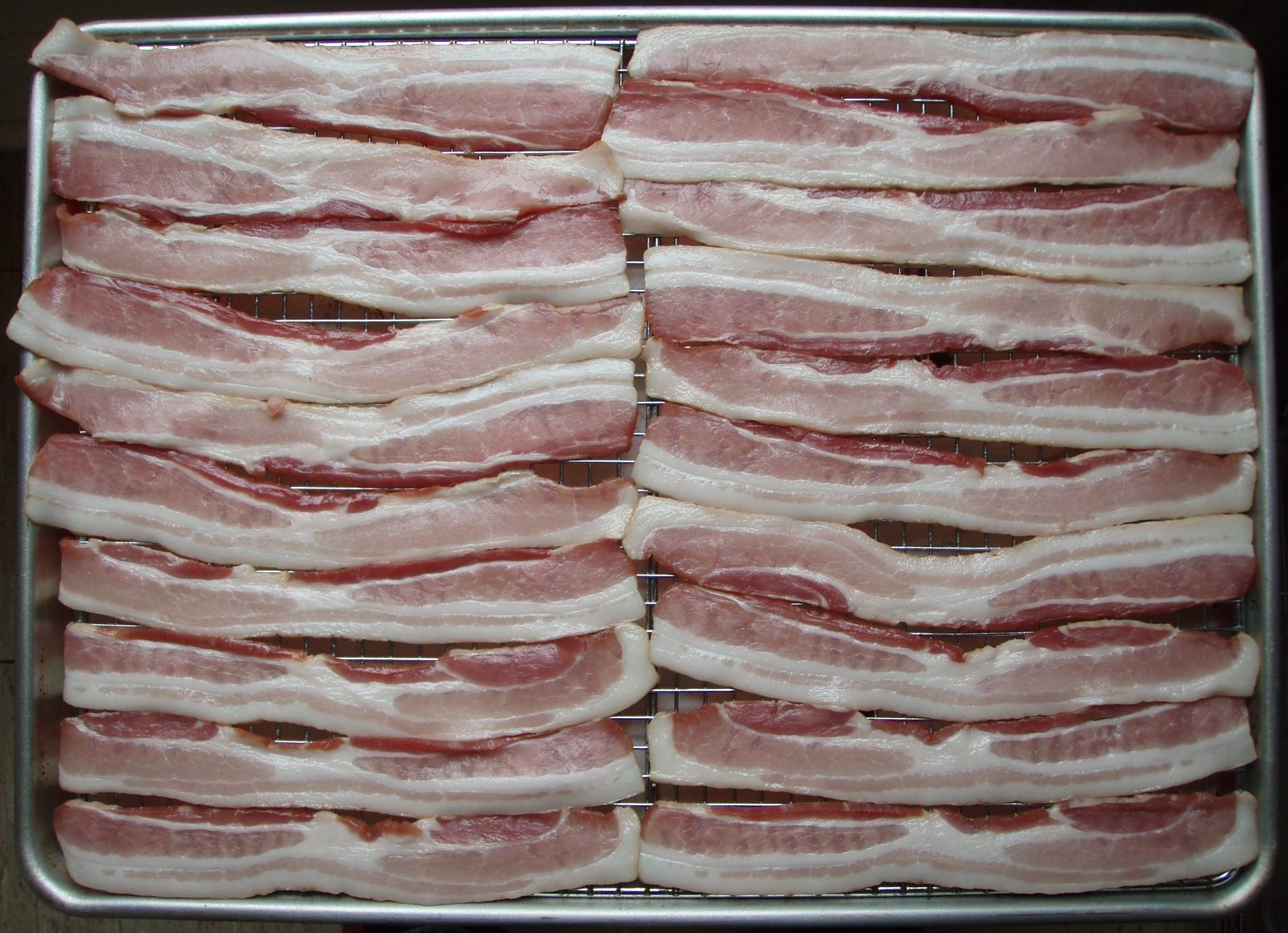
Bacon lives a strange double life in my fridge. Sometimes a pack gets torn open on a Saturday and is gone by Sunday, and sometimes half a pack sits shoved to the back until I find it on a Wednesday and stand there wondering whether it is still a breakfast or a bin job. Because it is cured, bacon lasts noticeably longer than a plain bit of pork, which lulls people into thinking it lasts forever. It does not. Here is how long raw and cooked bacon actually keep, opened and unopened, fridge and freezer, and how to tell when a pack has finally turned.
Free PDF
Free Oven Temperature & Gas Mark Chart
A printable one-page conversion chart for your kitchen: degrees, fan, gas mark and the descriptions in between. Pop your email in and the PDF is yours, plus the odd straight-talking kitchen tip.
Free, unsubscribe any time. The download starts as soon as you sign up.
The short version
- Unopened raw bacon: roughly 1 to 2 weeks in the fridge, and always go by the use-by date on the pack.
- Opened raw bacon: about a week in the fridge, or the use-by date, whichever comes first.
- Cooked bacon: 4 to 5 days in the fridge, cooled quickly and kept covered.
- Freezer, raw or cooked: safe indefinitely at -18C, best used within about a month before the fat starts to turn.
Those are the numbers I plan around. The rest is why bacon gets the extra time, and how to store it so you actually get it.
Why bacon lasts longer than plain pork
Bacon is pork that has been cured, which means it has been treated with salt and, in almost all shop bacon, curing salts containing nitrites. Both do the same useful job: they pull water out of the meat and make it a far less welcoming place for the bacteria that cause spoilage and food poisoning. That is why a sealed pack of bacon happily keeps a week or two in the fridge while a fresh pork chop is on a much shorter clock.
It buys time, but it does not stop the clock. Curing slows bacteria, it does not make bacon immortal, and a pack left too long will still spoil and can still make you ill. So treat the extra days as a bonus, not a licence to forget about it at the back of the shelf.
In the fridge: unopened versus opened
Shop bacon in the UK carries a use-by date, which makes it a safety date, not a suggestion. That is the first number to trust. While the pack is sealed, unopened bacon comfortably keeps to that date, usually a week or two out from when you bought it, as long as the fridge is properly cold at 0 to 5C. If you are hazy on why a use-by is different from a best-before, I have laid it out in use-by vs best-before dates; the short version is that you do not eat bacon past its use-by, however good it looks.
The moment you open the pack, a shorter clock starts. Air and your hands get at the meat, and the sealed-pack maths no longer holds. Opened raw bacon is best used within about a week, and if the use-by date lands sooner than that, the use-by wins. In practice I write the day I opened it on the pack with a marker, because otherwise I am back to guessing on Wednesday. Keep opened bacon well wrapped or in a sealed tub so it is not drying out and picking up fridge smells.
Cooked bacon
Cooked bacon keeps for 4 to 5 days in the fridge, and the same rule that governs all cooked leftovers applies: cool it quickly and get it covered and cold, ideally within a couple of hours of cooking rather than leaving the plate out all afternoon. I store cooked rashers in an airtight tub with a sheet of kitchen paper underneath, which soaks up the grease and stops them going soggy.
Reheat it once, until it is properly hot through, and do not keep reheating the same batch; the general rules for that are in reheating leftovers safely. Cold cooked bacon straight from the fridge, crumbled into a salad or a baked potato, is fine within that four-to-five-day window and one of the better reasons to cook a bit extra.
In the freezer
The freezer is where bacon stops being a race against the clock. Frozen solid at -18C, both raw and cooked bacon are safe more or less indefinitely, because bacteria cannot multiply at freezer temperatures. What runs down is quality, and bacon has a particular weakness here: it is fatty, and fat slowly goes rancid even in the freezer, taking on a stale, off flavour. That is why the sensible window is about a month for best quality, rather than the longer times you can get away with for leaner foods. It is still safe well beyond that, it just starts to taste tired.
A few things make frozen bacon actually usable rather than a solid pink brick:
- Freeze it in the portions you cook. Lay rashers flat, or roll them, with a square of greaseproof between each so you can peel off two or three without defrosting the lot.
- Wrap it well. Freezer bag or airtight, air squeezed out, because exposed fatty surfaces are exactly what freezer burn and rancidity go for.
- Label it with the date. A month goes quickly, and unlabelled frozen bacon is bacon you will never quite trust. There is more on stacking a freezer this way in freezer storage times.
Freezing an unopened pack right on its use-by date is a good trick too, and a perfectly safe one, because freezing before the use-by effectively pauses the safety clock. Defrost it in the fridge, never on the worktop, using the methods in defrosting food safely, and once it is thawed treat it as opened bacon: use it within a day or so and do not refreeze it raw.
How to tell if bacon has gone off
The dates are your real safety net, but bacon does give you honest warning signs once it turns. Bin it if you find any of these:
- A slimy or sticky film on the surface. Fresh bacon is moist but not tacky; a slippery coat is bacteria, and it is the clearest sign.
- A sour, or ammonia-like, or plain rotten smell. Raw bacon should smell faintly smoky and meaty. A sharp or sulphurous whiff means it is done.
- Dull grey, green or brown patches. A little browning from air exposure is normal and not dangerous on its own, but grey-green sliminess with an off smell is not.
As always, the tests are a veto, not a green light. A bad smell or a slimy feel tells you to throw it out; a clean smell does not prove bacon is safe past its use-by, for the same reason it does not with any other meat. I go into that logic more fully in how to tell if meat has gone off. Trust the use-by date first and your senses second, never the other way round.
Whichever way you cook it, bacon needs to be cooked right through, and if you are doing a tray in the oven or a batch in the air fryer, the air fryer conversion calculator and the oven temperature converter will get the settings right.
One honest note on processed meat
Bacon is a processed meat, and it is worth being straight about the health side rather than tucking it away. UK health guidance is that eating a lot of red and processed meat is linked to a higher risk of bowel cancer, and the NHS advice is that if you regularly eat more than about 90g a day of red and processed meat, it is worth cutting down towards 70g. That is not a reason to never enjoy a bacon sandwich; it is a reason to keep it a treat rather than a daily fixture. Storing it safely and eating it in sensible amounts are two different questions, and both are worth getting right.
The rule in one line
Unopened bacon keeps a week or two and goes by its use-by date, opened bacon about a week, and cooked bacon four or five days; freeze either for up to a month for the best of it, and bin anything slimy or sour whatever the date says.