Chicken is the one thing in my fridge I never gamble on. We cook it two or three times a week, it is cheap enough to replace, and the illness it can hand you if you get it wrong is genuinely miserable. So when a pack has been sitting a day longer than I meant, I do run through the checks: the smell, the colour, the feel. What I want to be honest about here, and what most articles gloss over, is what those checks can and cannot tell you. They catch chicken that has spoiled. They do not catch chicken that is dangerous. Those are two different things, and knowing the difference is what keeps you well.
Free PDF
Free Oven Temperature & Gas Mark Chart
A printable one-page conversion chart for your kitchen: degrees, fan, gas mark and the descriptions in between. Pop your email in and the PDF is yours, plus the odd straight-talking kitchen tip.
Free, unsubscribe any time. The download starts as soon as you sign up.
What fresh raw chicken should be like
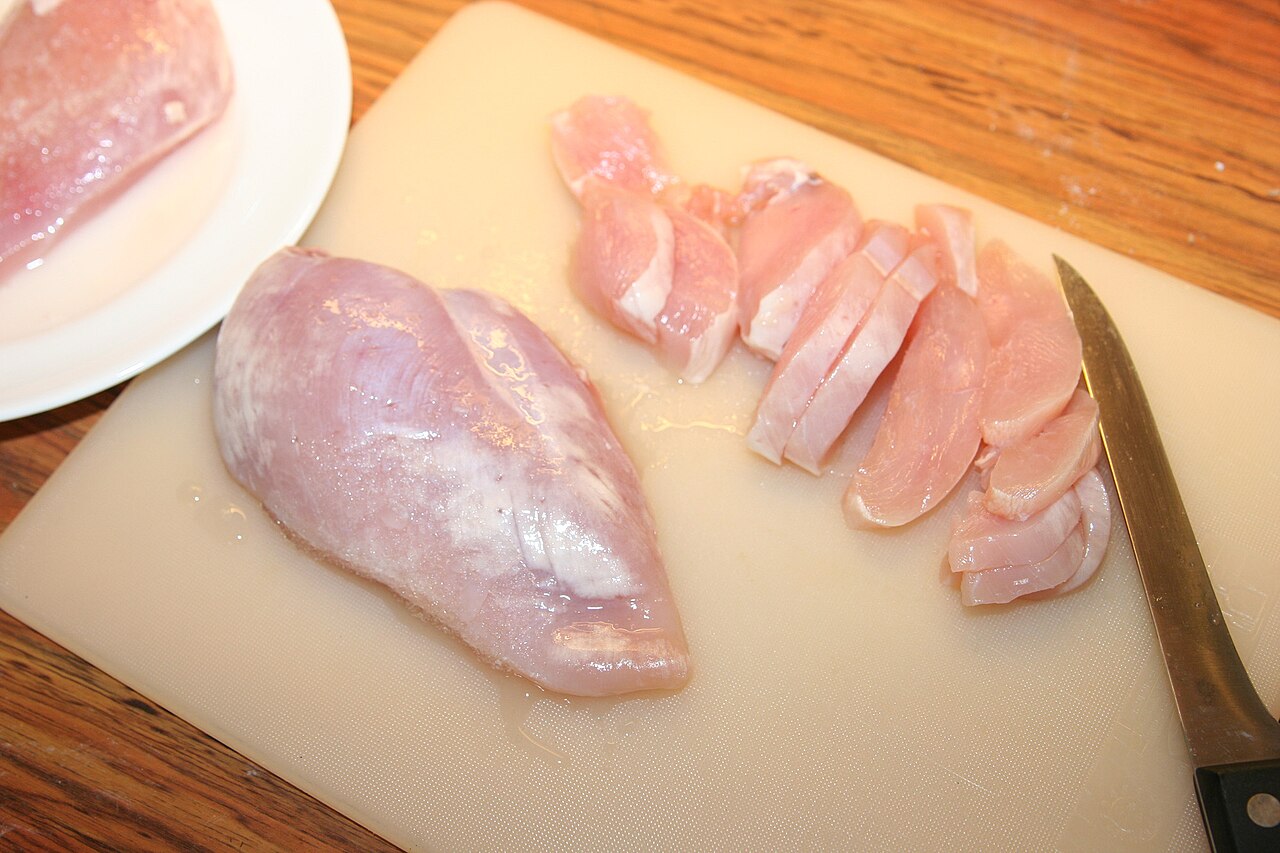
Start with the baseline, because you cannot spot wrong until you know right. Fresh raw chicken is a pale, slightly translucent pink, with the fat a soft creamy white. The surface looks glossy and feels moist, but your fingers come away clean. Give it a sniff and there is almost nothing there: maybe a faint, neutral, slightly meaty note, nothing you would call a smell.
That is your reference. Anything that has drifted a long way from it deserves a hard look, and quite possibly the bin.
The three signs it has gone off
Smell. This is the loudest signal. Chicken on the turn develops a sour, sharp, faintly eggy or sulphurous smell, and once you have met it you will not mistake it. It does not fade when you rinse the pack or open a window; it is coming from the meat. If a raw chicken breast makes you wrinkle your nose the moment the packet opens, trust that and throw it out. A note on packaging: some fresh chicken is sold in modified-atmosphere packs, and there can be a slightly off, gassy whiff the instant you break the seal that clears within a minute or two. That first-breath smell I give the benefit of the doubt. A smell that is still there after a couple of minutes in open air, I do not.
Colour. Fresh pink is what you want. Be a little relaxed about small shifts, because raw meat oxidises in contact with air and can go a touch greyer or duller without being unsafe, in the same way a cut apple browns. What you are watching for is a clear move towards grey-green, a yellowish cast on the flesh, or any fuzzy patch that could be mould. Green or grey on the meat itself, rather than a slightly tired-looking surface, means bin it.
Texture. Fresh chicken is moist and glossy but not slimy. If the surface feels slippery, sticky or tacky, rinse a small patch under the tap, pat it dry, and feel again. Genuinely fresh chicken feels clean once dried. If the slimy, coated feeling comes straight back, that is a film of bacterial growth and the chicken is done. In the bin it goes.
Any one of these on its own is enough for me. Two of them together is not even a decision.
Why these tests are a veto, not a green light
Here is the part that matters most, and the part I wish everyone understood. Passing the smell, colour and feel tests does not prove chicken is safe. It only proves it has not obviously spoiled.
The bugs that make chicken dangerous, mainly campylobacter and salmonella, are invisible, and they do not smell. The Food Standards Agency is blunt about campylobacter in particular: it is the most common cause of food poisoning in the UK, it is routinely present on raw chicken, and you cannot see it, smell it or taste it. A chicken breast that looks and smells perfect can still make you very ill if it has been kept too warm, kept too long, or was contaminated to begin with. The organisms that trip the smell test are spoilage bacteria, which announce themselves as they break the meat down. The organisms that put you in bed are a different set, and they give no warning at all.
So use your senses as a veto. If chicken fails any of the three checks, it is out, no argument. But never let passing them talk you into eating chicken that the date or the storage says you should not. The nose catches rot. It does not catch risk.
The use-by date is the real safety line
Because your senses cannot see the dangerous bugs, the thing that actually protects you is the use-by date and keeping the cold chain intact. Raw chicken carries a use-by date, not a best-before, and the FSA treats use-by as a genuine safety deadline: eat or freeze it by that date, and do not eat it after, even if it looks and smells completely fine. This is the opposite of how I treat eggs, where the date is only about quality, as I explained in how to tell if an egg has gone off. With chicken the date is not a suggestion.
You can freeze chicken right up to the end of the use-by day to stop the clock, and there is more on doing that well in freezer storage times. Once it is defrosted, treat it as fresh again and cook it within 24 hours. The safe way to defrost is in the fridge, never on the worktop, and the full method is in defrosting food safely.
Kept in the fridge, raw chicken is good for only a day or two, so I buy it close to when I plan to cook it rather than stockpiling. Your fridge should sit between 0 and 5C; the door and the top shelf run warmer, so raw chicken belongs on the coldest shelf, which is usually the bottom, in a covered dish that cannot drip onto anything below it. The general picture for everything else in there is in how long food lasts in the fridge.
Do not wash it, do cook it properly
Two habits do more for chicken safety than any amount of sniffing.
The first is to stop washing raw chicken, if you still do. Rinsing does not remove bacteria; only heat does that. What it does do is throw contaminated water droplets more than half a metre across your worktop, your hands, the tap and any salad sitting nearby. The FSA has campaigned on this for years for good reason. Pat the chicken dry with kitchen paper if you must, and bin the paper.
The second is to cook it through, every time. Campylobacter and salmonella are killed by proper cooking, and the target the FSA gives is 70C held for two minutes, or the equivalent, which is 75C for 30 seconds. In a home kitchen the reliable check is a probe thermometer into the thickest part reading at least 75C, backed up by the old signs: the juices run clear rather than pink, there is no pink or translucent meat at the bone, and it is steaming hot right through. There is more on target temperatures in meat doneness temperatures, and if you are roasting a whole bird my roasting time calculator will get you close before the thermometer settles it.
When in doubt, bin it
I will finish where I began, because it is the only rule that never lets you down. A chicken breast costs a couple of pounds. A bout of campylobacter costs you several days flat on your back, and for someone very young, elderly, pregnant or already unwell it can be far more serious than that. If the smell is off, if the colour has gone grey-green, if the feel stays slimy after drying, or if it is simply past its use-by date, there is no clever save and nothing to weigh up. It goes in the bin, and you cook something else. That is not waste; that is the cheapest insurance in the kitchen.