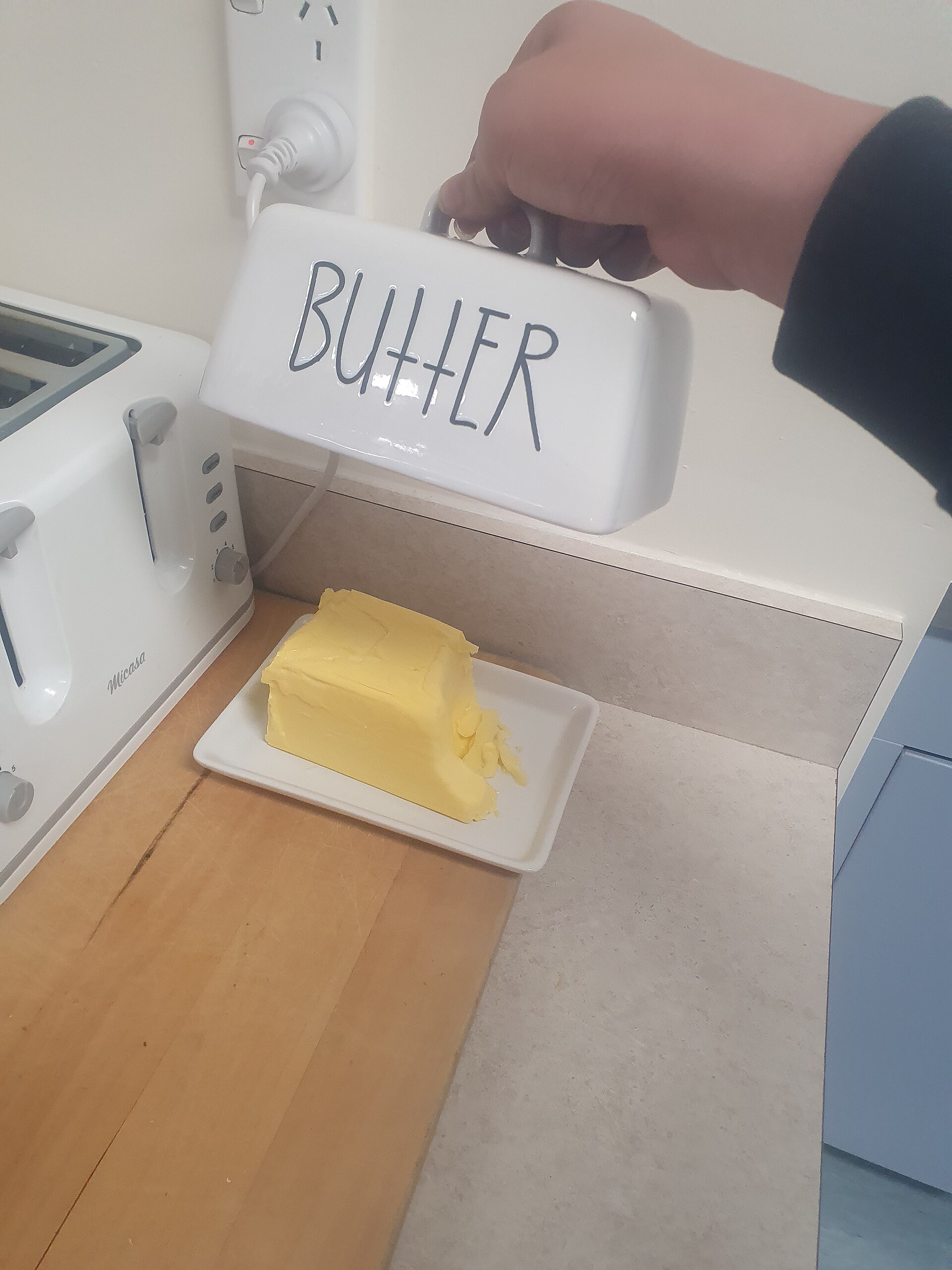
Butter is one of the calmer things in my fridge. It does not spoil the way milk does, it does not sulk if you forget about it for a fortnight, and a block of it will happily outlast almost everything else on the shelf. But it is not immortal, and the question people really want answered is a slightly different one: can you leave it out on the counter so it is actually spreadable, and if so, for how long. Here are the honest numbers for the fridge, the counter and the freezer, plus why salted and unsalted butter behave so differently.
Free PDF
Free Oven Temperature & Gas Mark Chart
A printable one-page conversion chart for your kitchen: degrees, fan, gas mark and the descriptions in between. Pop your email in and the PDF is yours, plus the odd straight-talking kitchen tip.
Free, unsubscribe any time. The download starts as soon as you sign up.
Why butter keeps so well
The reason butter is so forgiving comes down to what it is made of. It is roughly four-fifths fat and only about a sixth water, and bacteria need water to grow. Milk, by contrast, is mostly water, which is why it turns in days while butter shrugs off weeks. On top of that, most everyday butter is salted, and salt is a preservative: it pulls at what little water there is and makes life hard for microbes.
So the main way butter goes off is not really microbes at all. It is the fat itself slowly reacting with air, light and warmth, a process called oxidation that turns it rancid. Rancid butter smells sour, waxy or a bit like old paint, and it tastes stale and sharp. It is usually more unpleasant than dangerous, but it is the signal that a block has had its day, and it is what most of these storage times are really protecting against.
In the fridge
The fridge is where butter belongs for the long haul, and it lasts a good while there.
- Salted butter: comfortably a month or two, often up to three. The salt does its job and salted butter is the marathon runner of the dairy shelf.
- Unsalted butter: around a month. Without salt to slow things down, it turns rather sooner, so I buy it in smaller amounts and use it more promptly.
Butter carries a best-before date rather than a use-by date, and that distinction is worth understanding. Best-before is about quality, not safety, so butter is very often perfectly good for a while past that date if it has been kept cold and well wrapped. Trust your nose and your tongue over the print on the wrapper here; the date is a guide, not a deadline. (A use-by date, the kind you see on raw meat and fresh milk, is the opposite, and there you do treat it as a hard line.)
One practical point that catches people out: butter soaks up smells like a sponge. Keep it wrapped in its own foil or in a lidded dish, and store it away from anything strongly flavoured, or you will end up with butter that tastes faintly of last night’s curry.
On the counter
This is the question everyone actually has, because cold butter tears toast and nobody enjoys that. The good news is that you can leave butter out, within limits.
Salted butter is safe at room temperature for a day or two, provided the room is genuinely cool, below about 21C, and the butter is kept in a covered dish or a proper butter crock, out of direct sunlight and away from the hob. The USDA takes the same line: butter is safe at room temperature but should not be left out for more than a day or two, and it is quality, not safety, that slips first. I keep a small dish of salted butter out and simply do not put more in it than we will get through in a couple of days.
Two honest cautions, because I will not tidy them away:
- Warm kitchens change the maths. In a hot spell, or a kitchen that sits well above 21C, even salted butter can turn rancid within a few days. Heat speeds up oxidation, so in summer I keep less out and top it up more often, or just live with fridge-cold butter and let a knob soften on the plate.
- Unsalted butter is better off in the fridge. With no salt to protect it, unsalted butter is more prone to both rancidity and, in a warm room, microbial spoilage. If you want to leave some out, leave out salted and take unsalted butter from the fridge only when you need it, giving it a few minutes to soften.
Leaving butter out is a small everyday call, not a reckless one, but keep the amount modest and the spot cool and you will never have a problem.
In the freezer
Butter freezes beautifully, and this is my answer to a good-value multi-pack that I cannot get through before the date. In the freezer butter keeps its quality for six months to a year, which is about as low-maintenance as food storage gets.
Freeze it in its original wrapper inside a freezer bag, or wrap a cut block tightly so no air reaches the surface, since air is the enemy that causes freezer burn and off flavours. I often cut a block into halves or quarters before freezing so I can pull out just what I need. To use it, thaw it overnight in the fridge, or grate frozen butter straight into a bowl if you are rubbing it into pastry or a crumble, which works a treat and skips the wait. There is more on thawing anything safely in defrosting food safely, and the wider list of times lives in freezer storage times.
How to tell if butter has turned
The signs are easy to read once you know them. Give it a sniff and a look:
- Smell. Fresh butter smells clean and faintly creamy, or of nothing much at all. Rancid butter smells sour, sharp, waxy or like old paint. That smell is the tell-tale one.
- Colour. A darker, deeper-yellow rind on the outer edges, especially where the block met the air, points to oxidation. Trim a thin layer and check what is underneath.
- Taste. If a scrape on the tip of a knife tastes sharp, stale, cheesy or unpleasant, the block is past it.
Rancid butter will not usually make you ill, but it will ruin whatever you cook with it, carrying that stale flavour straight through a cake or a sauce. So this is mostly a quality judgement rather than a safety scare. If it smells and tastes clean, it is good; if it has gone sharp and paint-like, it goes in the bin.
The short version
Butter is a keeper. In the fridge, salted lasts a month or two and often three, unsalted about a month, both frequently good past the best-before date if kept cold and covered. On the counter, salted butter is fine for a day or two in a cool, covered dish, while unsalted is better kept chilled. In the freezer, it holds for six months to a year. Trust your nose: sour, waxy or paint-like means it has turned. And if you are weighing butter for baking rather than storing it, my ingredient converter turns grams into tablespoons and back, and the baking substitutions guide covers what to do on the day you open the dish and find there is none left.