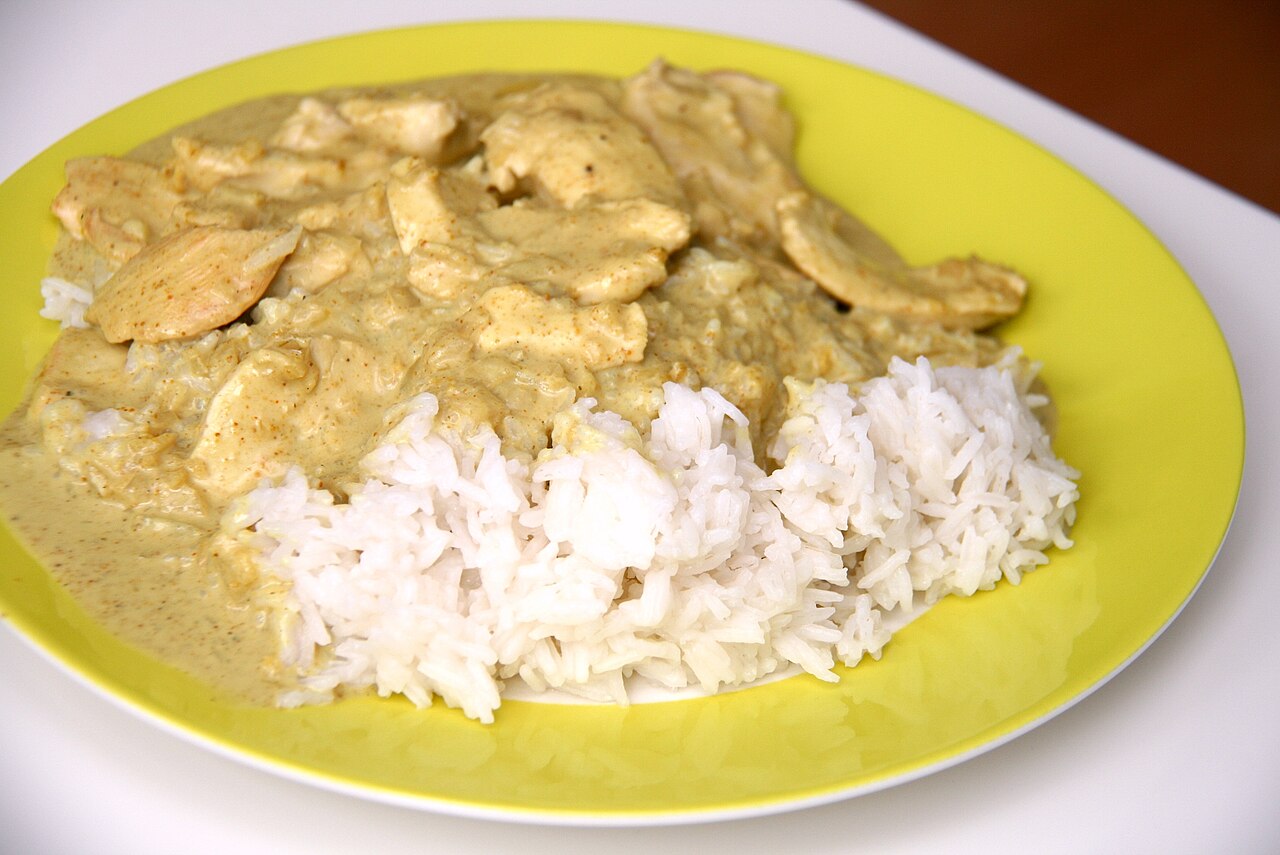
Yes, you can freeze curry, and it is honestly one of the best uses a freezer gets in my house. A big pot of something spiced freezes into a run of easy dinners, and a lot of curries actually taste better a day or two on, once the spices have settled into each other. Most home curries keep about three months in the freezer for good quality. The main things to get right are cooling it fast, freezing it in sensible portions, and reheating it properly, once. There are a couple of ingredients that need a bit of thought, which I will come to.
Free PDF
Free Oven Temperature & Gas Mark Chart
A printable one-page conversion chart for your kitchen: degrees, fan, gas mark and the descriptions in between. Pop your email in and the PDF is yours, plus the odd straight-talking kitchen tip.
Free, unsubscribe any time. The download starts as soon as you sign up.
Which curries freeze well, and which sulk
The workhorse curries freeze brilliantly. Anything built on a base of onions, tomatoes and spices takes to the freezer without complaint: a chicken curry, a beef or lamb curry, a chickpea or lentil dal, a vegetable curry. These are the batch-cook heroes, and if anything they improve. When I cook a curry to freeze, this is the sort I make on purpose.
The ones that need care are the creamy and delicate ones.
- Cream and yoghurt. Curries finished with double cream or yoghurt can split slightly when they thaw, going a touch grainy or oily on the surface. It is not dangerous, and a good stir over a gentle heat usually pulls it back together. If you want it perfect, hold the cream or yoghurt back: freeze the spiced base without it and stir the dairy in fresh when you reheat.
- Coconut milk. Full-fat coconut milk freezes more happily than dairy cream, so coconut-based curries generally come through well, with maybe a little separation that stirs out.
- Potato. Chunks of potato in a curry, like an aloo, can go a bit soft or grainy after freezing, for the same reason plain cooked potatoes do. Still fine to eat, just softer.
- Fresh, crunchy add-ins. Anything you added for crunch or freshness, like a raita, fresh coriander, or crisp peppers, is best added after reheating rather than frozen in.
Cool it fast before it goes in
This is the part that matters most for safety, and it is the same rule for any cooked leftover. Do not leave a pot of curry sitting out to cool slowly all evening, and do not put a hot pot straight into the freezer either. Warm food left standing is where bacteria multiply, and a hot pot warms everything around it in the freezer.
Cool the curry as quickly as you can, ideally within one to two hours, then chill or freeze it. To speed it up I split a big batch into smaller, shallower containers, which lose heat far faster than one deep pot. If you are not freezing it, keep it in the fridge at 5°C or below and eat it within two days. My guide to how long food lasts in the fridge has the fuller picture.
Freeze it in the portions you actually eat. Flat freezer bags laid down thin are my favourite, because they stack, they thaw fast, and you can snap off what you need. Rigid tubs work too; leave a little space at the top because the curry expands as it freezes. Label everything with what it is and the date, because after a week in the freezer every orange sauce looks like every other orange sauce.
The rice question
Here is the one that trips people up. If your leftovers are curry and rice together, the rice is the ingredient that sets the rules, not the curry.
Cooked rice can carry a bacterium called Bacillus cereus, whose spores survive cooking and, if the rice is left sitting warm, multiply and produce a toxin that reheating does not destroy. So cooked rice has to be cooled fast, ideally within an hour, kept chilled, and reheated only once until steaming hot. Freezing rice is fine as long as you froze it soon after cooking. I have written this up properly in can you reheat rice and can you freeze cooked rice, and it is worth a read if you batch-cook.
What I actually do is freeze the curry and the rice in separate bags, or just freeze the curry and cook fresh rice on the night. It gives you more flexibility, the rice reheats better that way, and you are not tied to the two thawing at the same rate.
How to reheat frozen curry
Thaw it in the fridge overnight where you can, then reheat. If you are reheating from frozen, do it gently at first so the middle catches up with the edges rather than the outside boiling while the centre is still icy.
- Hob: tip it into a pan over a low to medium heat, add a splash of water or stock if it has thickened, and stir now and then as it comes up to heat. This is my default; you can see and stir the whole thing.
- Microwave: fine for a single portion. Cover it, heat in bursts and stir between each one so there are no cold pockets, then give it a minute to even out.
- Oven: good for a big dish, covered, at around 180°C, stirring once or twice.
Whatever you use, get it steaming hot all the way through, piping hot in the centre and not just warm at the edges. If it has cream or yoghurt in it and it looks split, keep the heat gentle and stir; it comes back. Add any fresh cream, yoghurt or coriander at this point.
And the rule that is not negotiable: reheat it once only. Once you have brought a portion of curry back to hot, that is its last time. Do not warm the whole batch, eat some, and reheat the rest tomorrow. Take out only what you will eat, and reheat that. This is the standard leftovers rule, covered in reheating leftovers safely and how many times you can reheat food. It is also why portioning before freezing pays off.
Meat and seafood: do not refreeze
One trap worth naming. If you bought chicken, lamb or prawns frozen, thawed them, and cooked them into a curry, that is fine, because cooking counts as the change that lets you freeze them again. What you must not do is refreeze raw meat or fish that thawed, or serve a curry, cool it, and refreeze it as leftovers a second time.
Prawns and other seafood deserve extra caution. A prawn curry freezes well if the prawns were fresh, but if they were previously frozen and thawed, cook them and eat them rather than freezing the leftovers. More on the general rule in defrosting food safely.
Quick answers
- How long does curry keep in the freezer? About three months for good quality. It stays safe longer at minus 18°C, but the flavour and texture fade.
- In the fridge, unfrozen? Two days, covered, at 5°C or below.
- Can I freeze a shop-bought or takeaway curry? Yes, if it has not already been frozen and thawed, and if it was cooled and chilled promptly rather than left out. Takeaway that sat on the counter for hours is not a candidate.
- Can I double a recipe to freeze half? That is exactly what the freezer is for. If you are scaling a curry up, my recipe scaler keeps the quantities honest.
If in doubt about any batch, whether because you have lost track of the date or it smells off when it thaws, throw it out. A binned portion of curry is a small loss against a night spent regretting it.
This is general kitchen guidance, not medical advice. For food safety while pregnant, feeding young children or caring for anyone unwell, follow current NHS and Food Standards Agency advice.