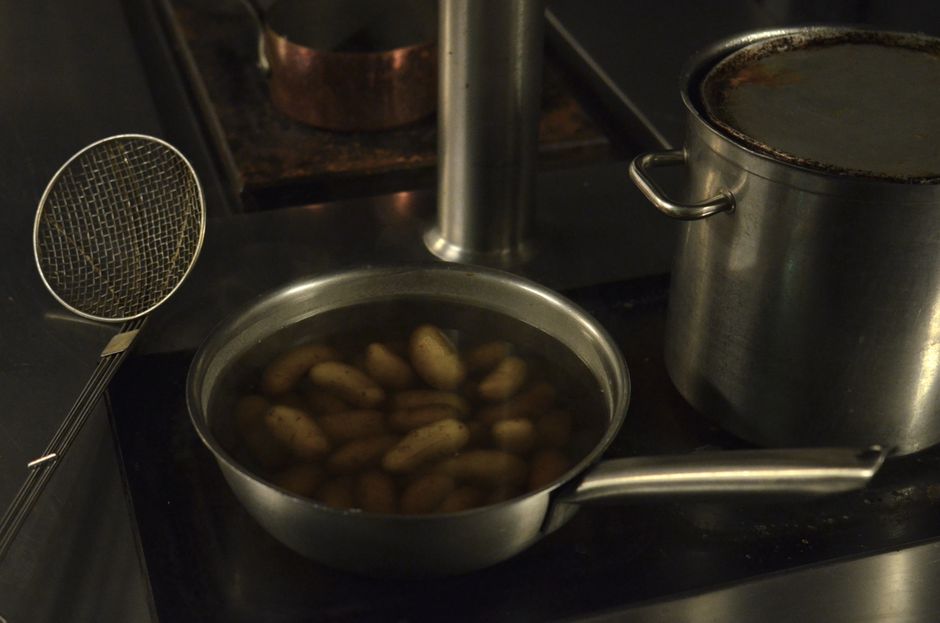
Potatoes are the thing I always cook too many of. A bag looks like a week’s worth, then a Sunday roast swallows half of it, and there is nearly always a bowl of boiled or roasted potatoes heading for the fridge. The good news is that cooked potatoes store and reheat well, and cold leftover potatoes make some of the best quick meals going. The catch is that potatoes are a starchy food, and starchy foods play by a slightly stricter set of rules than most people realise. There is also one specific risk with foil-wrapped baked potatoes that is worth knowing and easy to sidestep.
Free PDF
Free Oven Temperature & Gas Mark Chart
A printable one-page conversion chart for your kitchen: degrees, fan, gas mark and the descriptions in between. Pop your email in and the PDF is yours, plus the odd straight-talking kitchen tip.
Free, unsubscribe any time. The download starts as soon as you sign up.
The short answer
Cooked potatoes keep for three to four days in the fridge and up to three months in the freezer, provided you cooled them quickly and got them cold within two hours of cooking. That holds for boiled, mashed and roast potatoes alike. A jacket potato is fine within the same window, with one caveat about foil that I will come to. Reheat them once, until piping hot all the way through, and never a second time. The rest of this is why potatoes earn that caution and how to store each kind so it reheats well.
Why cooked potatoes need respect
Potatoes grow in the ground, and soil is home to a bacterium called Clostridium botulinum, whose spores can end up on the skin. Those spores survive cooking: baking or boiling does not destroy them. On their own they are harmless. Trouble only arises in a specific set of conditions, which is where the foil warning below comes from.
Potatoes also carry the same general starchy-food risk as rice and pasta. Cooked potato left standing warm is a comfortable home for bacteria to multiply, and the longer it sits in the danger zone between 8C and 63C, the more likely it is to become unsafe. This is the same mechanism I set out in how long does cooked pasta last, and it is why, with potatoes, how fast you cool them matters more than how you reheat them.
Cool them fast, then chill
Because the whole risk is about time spent warm, the single most useful habit is to cool cooked potatoes quickly and get them into the fridge. The FSA and NHS line for leftovers is to cool them within two hours and refrigerate. I aim to beat that comfortably.
- Spread them out. A deep bowl of hot mash or a covered dish of roasties holds its heat for ages. A wider, shallower container sheds heat far faster.
- Do not seal them steaming. A lidded box of hot potatoes traps the warmth and cools slowly. Let them cool, then cover and refrigerate.
- Never leave them out to cool “for later.” A tray of roast potatoes left on the side after dinner and boxed up at bedtime has spent hours in the danger zone. That slow cool on the worktop is exactly what the rules are written to prevent.
Once cool, into the fridge they go, at 5C or below. Store them in a sealed container so they do not dry out or pick up other flavours.
How long each kind lasts
Boiled potatoes keep three to four days in the fridge in a sealed container. Cold boiled potatoes are the base of a proper potato salad and fry up beautifully into sauté potatoes, so they are worth having around.
Mashed potato keeps three to four days too, though the butter or milk in it means I lean towards the earlier end. It can dry out and stiffen in the fridge; a splash of milk when you reheat brings it back.
Roast potatoes keep three to four days and, honestly, reheat better than they have any right to. A hot oven or air fryer crisps them up again far better than a microwave, which steams them soft.
Jacket (baked) potatoes keep three to four days once cooled and refrigerated, with the foil caveat below. Reheat them in a hot oven to bring the skin back.
Sauce or dairy shortens the clock. A potato dish loaded with cream, cheese or a meat gravy takes its timing from the richest thing in it, so I treat a dauphinoise or a loaded potato bake as any cooked dinner and eat it within two days.
The foil-wrapped baked potato warning
This is the one worth reading twice. Those soil-borne Clostridium botulinum spores I mentioned can produce a dangerous toxin, but only in an oxygen-free environment kept warm. A baked potato wrapped in foil creates exactly that: the foil seals out air, and if the potato is then left at room temperature for hours, the inside can become the low-oxygen, warm environment the toxin needs.
The fix is simple and costs you nothing. Do not leave foil-wrapped baked potatoes sitting out at room temperature. If you are baking them ahead or keeping them warm, either keep them genuinely hot (above 63C) until served, or unwrap them and refrigerate them promptly once they are cool, within that two-hour window. Reheat only what you will eat, and get it piping hot. Refrigerating in foil is not the risk; leaving them warm in foil for hours is. This is guidance the US Department of Agriculture has long given, and it is easy to follow once you know it.
Freezing cooked potatoes
Freezing sidesteps the short fridge window, but it works far better for some potatoes than others.
- Mash freezes well, especially with a little extra butter or cream worked in, which protects the texture. Portion it into flat bags or tubs, squeeze the air out, and label with the date.
- Roast potatoes freeze well and reheat straight from frozen in a hot oven, coming out crisp.
- Chips and wedges freeze well, part-cooked, then finished from frozen.
- Plain boiled potatoes freeze poorly. They tend to turn watery and grainy on thawing, because the water in them forms ice crystals that wreck the texture. If you must, dice them small and expect to use them in a soup or hash rather than as a side.
Cooked potatoes keep about three months in the freezer for quality; they are safe indefinitely at -18C, but the texture fades after that. Defrost in the fridge, or reheat straight from frozen for the ones that take it, and never on the worktop, for the same danger-zone reason as always. The method is in defrosting food safely, and how potatoes sit alongside everything else worth stashing is in freezer storage times.
Reheating potatoes once, and properly
The rule is the same as for any leftover: reheat once, and get them steaming hot all the way through.
Steaming hot means hot right to the middle, not just warm around the edges. In the microwave that means covering, adding a splash of water or milk to mash, stirring, and letting it settle, because microwaves leave cold pockets and a cold pocket is an unheated pocket. For roasties and jackets, a hot oven or air fryer beats the microwave every time on both safety and texture.
And once only. Every reheat is another warm-up and cool-down, another window for anything that survived to get going, so I reheat only the portion I am going to eat and bin whatever is left of it. The wider principle is in how many times can you reheat food.
How to tell if cooked potatoes have turned
Cooked potatoes that have gone off usually smell sour or musty, feel slimy or tacky rather than firm, and may look grey, mouldy or unusually dark. Any of those and they go straight in the bin, no second sniff. As ever, the catch is that the tests only work one way: a bad smell tells you to throw them out, but the absence of one does not prove they are safe, because the bacteria that make you ill often leave no trace you can detect. Trust the dates first and your senses second.
Frequently asked questions
Can you reheat potatoes more than once? No. Reheat cooked potatoes once, until piping hot, then bin whatever is left of that portion. Reheat only what you are going to eat, and leave the rest cold in the fridge.
Are cold cooked potatoes safe to eat? Yes, cold cooked potatoes are safe straight from the fridge if they were cooled fast and stored properly, and they make excellent potato salad and sauté potatoes. As a bonus, cooling potatoes turns some of their starch into resistant starch, which is gentler on blood sugar.
Why should you not leave baked potatoes wrapped in foil? Foil seals out oxygen, and a foil-wrapped potato left warm for hours can create the low-oxygen, warm conditions in which Clostridium botulinum produces a dangerous toxin. Keep foil-wrapped potatoes either genuinely hot or promptly refrigerated, never sitting out warm.
How long do cooked potatoes last in the fridge? Three to four days for boiled, mashed and roast potatoes stored in a sealed container at 5C or below, provided they were cooled within two hours of cooking. Potato dishes rich in cream, cheese or gravy are best eaten within two days.
The short version
Cooked potatoes are a brilliant leftover and I lean on them every week, but they belong in the careful bracket rather than the relaxed one. Cool them fast within two hours, keep them three to four days in the fridge, freeze mash and roasties for about three months, and reheat once until steaming hot. Never leave a foil-wrapped baked potato sitting out warm. Get the cooling right and none of the rest is a worry. Where cooked potatoes sit against everything else in the fridge is all in how long food lasts in the fridge.
This article is general guidance, not professional food safety advice; when in doubt, throw it out.