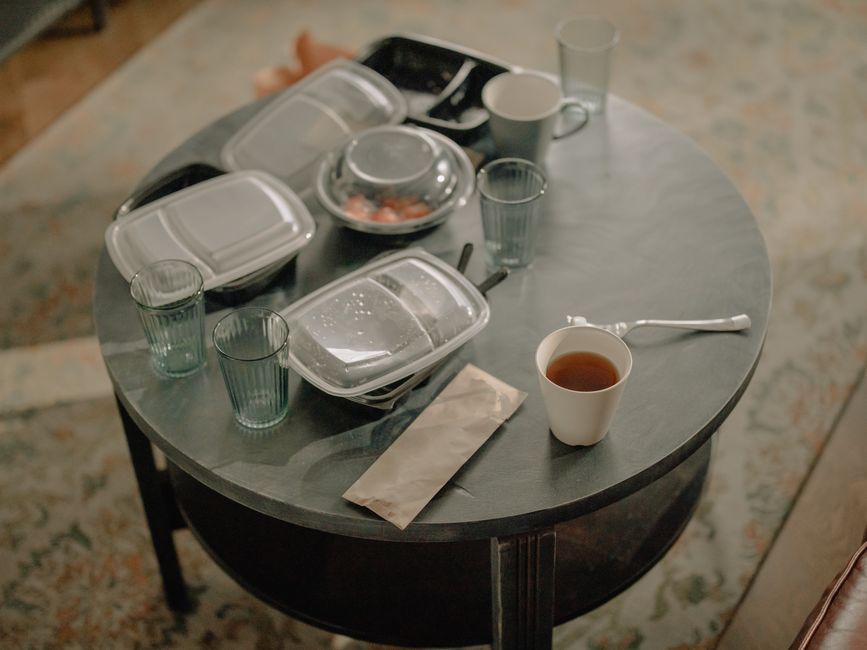
Someone asks it in our kitchen most weeks, usually mid-argument over a pan of curry that has already done a lap of the fridge: how many times can you actually reheat this? The short answer is once. But the number on its own is misleading, because the real risk is not about counting heatings at all. It is about how many times the food has crossed the temperature range where bacteria breed. Once you understand that, the rule stops being an arbitrary rule and starts making obvious sense.
Free PDF
Free Oven Temperature & Gas Mark Chart
A printable one-page conversion chart for your kitchen: degrees, fan, gas mark and the descriptions in between. Pop your email in and the PDF is yours, plus the odd straight-talking kitchen tip.
Free, unsubscribe any time. The download starts as soon as you sign up.
The short answer
The Food Standards Agency and the NHS both advise that you reheat cooked food only once. Each reheat means the food warms up, sits at eating temperature, and cools down again, and every one of those cycles gives any surviving bacteria another chance to multiply. So the safe rule is: reheat the portion you are going to eat, get it piping hot all the way through, and do not reheat the same food a second time. What you do not eat after that first reheat goes in the bin, not back in the fridge.
Why “once” is the rule (and it is not really about the number)
Here is the thing the “how many times” question gets slightly wrong. There is nothing magic about the number one. The danger is time spent in what the FSA calls the danger zone, between 8C and 63C, the range where bacteria multiply fastest. Every trip your food takes through that band, on the way up as it reheats and on the way down as it cools, adds to the total.
Cook a dish, cool it, and reheat it once and you have put it through that zone a handful of controlled times. Cook it, cool it, reheat it, cool it again, reheat it again, and you are stacking up warm hours the food never needed to spend. Somewhere in there the risk crosses from theoretical to real, and because you cannot see or smell it happening, the sensible line is drawn at one reheat. It is a simple rule that keeps you comfortably on the safe side without needing a thermometer and a stopwatch.
There is a second reason cooking cannot bail you out. Heat kills bacteria, but it does not destroy the toxins some bacteria leave behind once they have multiplied. If food sat warm long enough for Staphylococcus aureus or Bacillus cereus to produce a toxin, no amount of reheating will make it safe again. The damage done on the worktop is permanent, which is why storage matters more than reheating and why repeated reheating is a gamble rather than a fix.
The trick that means you never reheat twice: portion first
The single habit that makes the once rule effortless is to portion food before you reheat it, not after. Take out of the fridge only what you are going to eat, heat that, and leave the rest cold and untouched.
This is the difference between a rule that feels annoying and one you never even notice. If you reheat a whole tub of chilli to serve two people and there is some left, that leftover has already had its one reheat and cannot have another. But if you scoop one portion out of a cold tub and heat only that, the rest of the tub has never been reheated at all and is still on its first life. The pot that comes back to the boil on the hob every evening for a week is a tradition, not a safety protocol, and portioning is how you break the habit painlessly.
How to reheat properly, whichever way you do it
Reheating once only counts if you do it properly. The target is 75C in the thickest part, which in a home kitchen means steaming hot throughout, not warm in the middle.
- Microwave. Microwaves heat unevenly and leave genuinely cold spots, and a cold spot is an unheated spot. Cover the food, add a splash of water to anything dry, stir halfway through, and let it stand for a minute afterwards so the heat equalises. If the centre is not hot, run it again now: that is still one reheat, finished properly, not two.
- Hob. Bring soups, stews, gravies and sauces to a rolling boil, which guarantees the temperature better than any prodding.
- Oven or air fryer. Best for anything you want to stay crisp. Cover meat with a splash of stock so it does not dry out, and check the middle is steaming before you serve.
A probe thermometer settles the question instantly if you have one; without it, the middle of the food should be too hot to hold a spoonful against your lip.
The two foods that get the strictest treatment
Rice. Cooked rice carries a specific risk, because Bacillus cereus spores survive the initial boiling and, if the rice sits warm, they germinate and produce a toxin that reheating does not destroy. Reheated rice is safe only if it was cooled fast in the first place: spread it out, get it cold within an hour, fridge it, eat it within 24 hours, and reheat it once until piping hot. Rice that spent the evening warm in the pan is not safe, and no amount of reheating rescues it. The full version is in how long does cooked rice last.
Chicken and other meat. The belief that chicken must never be reheated is a myth: it is safe under exactly the same once rule as everything else. What earns it its reputation is that poultry starts with a higher bacterial load, so the cool-fast and reheat-hot steps matter more, and undercooked reheating is less forgiving. Get it to 75C with no pink in the middle of a reheated thigh, or eat it cold straight from the fridge, which is perfectly safe. The same logic covers all meat.
The foods it is not worth reheating
Some things are safe to reheat and simply not worth the trouble, which quietly answers the “how many times” question by making the answer zero:
- Fried and breaded food turns to mush in a microwave; an oven or air fryer at 200C recovers some of it.
- Fish is safe within the rules but overcooks in moments and scents the whole house; gentle covered oven heat, or eat it cold.
- Rare steak reheats to grey. Slice it thin and eat it cold, or flash it in a screaming pan for seconds a side.
- Emulsified sauces like hollandaise and mayonnaise split when heated.
Stews, curries, soups, chilli and bolognese, by contrast, are genuinely better on day two, which is the best argument there is for cooking double on purpose. If a reheated dish tastes fine but flat, how to rescue a dish covers the fixes.
Frequently asked questions
Can you reheat food twice? The safe advice is no. Reheat cooked food once, then bin whatever is left of that reheated portion. Each reheat is another trip through the temperature range where bacteria multiply, and the risk builds each time.
Is it the reheating or the storing that makes leftovers risky? Overwhelmingly the storing. It is the hours food spends warm on the worktop, and slow cooling, that build the danger, not the reheating itself. Reheating cannot undo bad storage, because heat does not destroy the toxins some bacteria leave behind.
How long can I keep leftovers before reheating them? Cool them within two hours of cooking, keep them in a fridge at 5C or below, and eat them within two days. Rice is stricter at 24 hours. If you will not eat leftovers in time, freeze them on day one rather than gambling on day three.
Does reheating kill all the bacteria? Reheating to 75C kills the live bacteria present, but it does not destroy heat-stable toxins that may already have formed if the food was left warm too long. That is why proper cooling and the once rule matter as much as the reheating temperature.
The short version
Reheat food once, get it steaming hot all the way through, and portion before you reheat so the rest never takes the ride. The number is one because every heat-and-cool cycle stacks up warm time the food never needed, and reheating can never undo the hours it spent in the danger zone. Get the cooling and portioning right and you will never have to count reheats again. The wider set of leftover rules, including cooling fast and the two-day fridge limit, is in reheating leftovers safely, and how everything sits against the rest of your fridge is in how long food lasts in the fridge.
This article is general guidance, not professional food safety advice; when in doubt, throw it out.