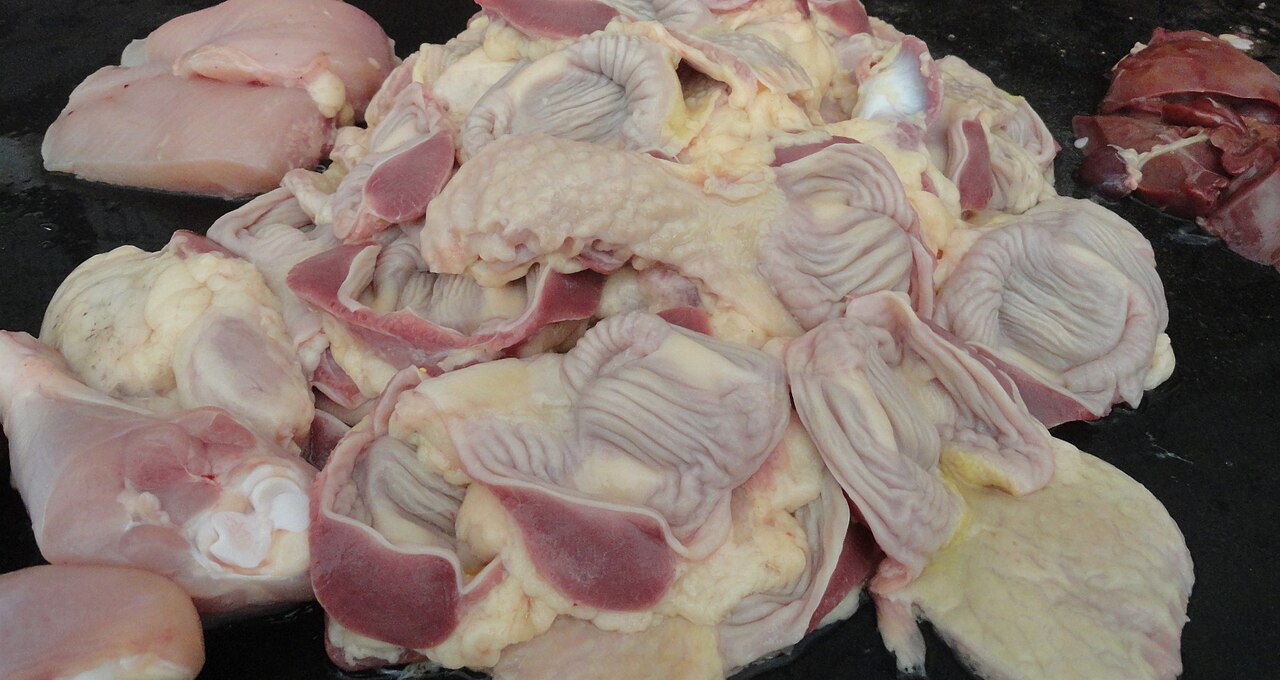
Raw chicken keeps for one to two days in the fridge, and the use-by date on the pack is the line you actually obey, not a smell test or a guess. That is the whole answer, and unlike a lot of storage questions this one has very little give in it. Raw poultry is the food I am strictest about in my kitchen, because it is the one most likely to carry campylobacter, the bug behind more UK food poisoning than any other. So this is a piece with firm edges: how long raw chicken really lasts, how to store it so it makes it that far, and the handful of rules that are worth being fussy about. None of it is complicated, but none of it is optional either.
Free PDF
Free Oven Temperature & Gas Mark Chart
A printable one-page conversion chart for your kitchen: degrees, fan, gas mark and the descriptions in between. Pop your email in and the PDF is yours, plus the odd straight-talking kitchen tip.
Free, unsubscribe any time. The download starts as soon as you sign up.
The one-to-two-day line, and the date that overrides it
Fresh raw chicken from the shop lasts one to two days in the fridge once you are home. The USDA puts it plainly: cook raw chicken within one to two days, or freeze it. That timing holds for a whole bird, breasts, thighs, drumsticks and diced chicken alike; if anything the smaller and more cut-up it is, the more surface there is for bacteria, so I lean towards the shorter end for a pack of dice and the longer end for a whole bird.
But the number that actually governs it is the use-by date printed on the pack. Raw chicken carries a use-by, not a best-before, and that word choice is deliberate. A use-by is a safety date. Eat chicken by it, freeze it before it, but do not cook and eat raw chicken after it, even if it looks and smells perfectly fine. This is the opposite of how eggs work, where the date is a quality guide with a little give; on raw poultry the date is a hard stop. If the difference between the two kinds of date is hazy, it is worth reading use-by versus best-before, because on chicken it is the whole ballgame.
So the practical rule I run on: use raw chicken within a day or two of buying it and always by the use-by, whichever comes first. If I know I will not get to it in time, it goes in the freezer the day I realise, not the day it expires.
Why the smell test does not save you here
With cooked leftovers I will use my nose as a veto. With raw chicken I do not lean on it at all, and here is why.
Raw poultry can carry enough campylobacter or salmonella to make you seriously ill while looking pink and fresh and smelling of nothing much. These bugs do not announce themselves the way the bacteria of obvious spoilage do. By the time raw chicken is visibly slimy, grey or sour-smelling it is well gone, but the absence of those signs is not a clean bill of health. That is exactly why the use-by date exists: it protects you against the danger your senses cannot detect. So on raw chicken the date does the deciding, not the sniff. When in doubt, throw it out, and do not talk yourself past a use-by because it “seems okay”. A pack of chicken is a couple of pounds; campylobacter is a genuinely rotten week and, for the very young, elderly, pregnant or unwell, worse than that.
How to store it so it lasts the two days
Getting raw chicken to keep even for its short window, without turning your fridge into a contamination risk, comes down to cold, sealed and low.
- Bottom shelf, always. Raw chicken goes on the lowest shelf of the fridge, below everything else. This is not superstition; it is so that if the pack leaks, and they do, the juices cannot drip down onto vegetables, cheese, or anything you eat without cooking. Raw poultry juice on a salad leaf is one of the classic routes to a poorly household.
- Keep it sealed and contained. Leave it in its packaging if that is intact, and stand it in a bowl or on a plate with a rim to catch any leak. If I have opened a pack, I move the chicken to a covered container. The aims are to stop it drying out and, far more importantly, to keep its juices to itself.
- Get the fridge cold enough. Raw chicken wants a fridge running between 0C and 5C. A fridge sitting at 8 or 9C, which more of them do than people realise, shrinks that one-to-two-day window fast. If you have never checked yours with a thermometer, poultry is the reason to.
- Do not let it sit out. Home from the shop, chicken goes straight in the fridge, not left on the side while you unpack the rest. On a warm day I take a cool bag for the journey. Time in the warm is time bacteria spend multiplying, and it comes off the total, not off some separate allowance.
The wider fridge picture, shelf by shelf and food by food, is in how long food lasts in the fridge, but for chicken the short version is: cold, sealed, bottom shelf, and not for long.
Do not wash it
This one catches a lot of good cooks out, because it feels like the hygienic thing to do. Do not rinse raw chicken under the tap. The Food Standards Agency has campaigned on this for years, and the reason is simple: washing chicken does not remove bacteria, it spreads them. The splashing throws campylobacter onto your hands, the taps, the worktop, the draining board and anything else within a surprising radius, and that is how it ends up in your mouth days later. Cooking is what kills the bacteria, not rinsing. So skip the wash, pat the chicken dry with kitchen roll if you need it dry for browning, and bin the paper straight away.
The rest of the raw-chicken hygiene drill is the ordinary stuff done properly: wash your hands with warm soapy water after handling it, keep it away from ready-to-eat foods, and use a separate board and knife or wash them thoroughly before they touch anything else.
Freezing raw chicken to buy real time
Freezing is how the one-to-two-day problem becomes a non-problem. Raw chicken freezes very well, and frozen at a steady temperature it stays safe more or less indefinitely; it is quality that fades, not safety. For the best eating the USDA suggests using frozen whole birds within about a year and raw pieces within around nine months, but a bag used a little past that is a texture question, not a danger.
The one firm rule: freeze it before the use-by date, not on it or after. Freezing pauses the clock, it does not rewind it, so what you freeze is what you thaw. I portion chicken into meal-sized bags, flatten them so they freeze and thaw fast and stack tidily, squeeze the air out, and write the date and cut on the bag, because a frozen chicken thigh looks identical to a frozen chicken breast once it is white and solid. The general freezer timings for everything else are in freezer storage times.
Thawing is where people undo all the care, so I keep it dull. Thaw raw chicken in the fridge, on the bottom shelf, in a bowl to catch drips, never on the worktop where the outside warms into the danger zone while the middle is still solid. A large bird can take a day or more, so I plan it the night before. Once it has thawed in the fridge, treat it as fresh raw chicken: cook it within a day, and do not refreeze it raw. If you need it faster, the safe quicker methods are set out in defrosting food safely. There is a bit more room to manoeuvre once chicken is cooked, which I have covered in can you refreeze cooked chicken, but raw thawed chicken gets cooked, not refrozen.
Cook it properly and the storage worry ends
All of the fuss about storing raw chicken exists because cooking it is the step that actually makes it safe, and undercooking undoes everything. Chicken needs to reach a core temperature of 70C for two minutes, which is the FSA line, and in the kitchen that shows up as three signs together: the meat is white all the way through with no pink, the juices run clear rather than pink when you cut into the thickest part, and it is steaming hot to the middle. A probe thermometer into the thickest bit, avoiding the bone, takes the guesswork out, and on a whole bird the thickest part is where the leg meets the body. Get chicken to that point and whatever it might have been carrying is dealt with. The doneness targets for chicken and everything else live in meat doneness temperatures, and once it is cooked, the storage rules change and the clock resets, which is a separate piece: how long cooked chicken keeps.
The short version
- Raw chicken lasts one to two days in the fridge, and always by the use-by date, whichever comes first. The date is a safety line, not a suggestion.
- The smell test does not clear raw chicken. The dangerous bugs leave no smell; the date is what protects you.
- Store it cold, sealed and on the bottom shelf, below everything else, in a fridge at 5C or below, and get it in there promptly.
- Never wash it. Rinsing spreads campylobacter around your kitchen; cooking kills it.
- Freeze before the use-by if you will not use it in time, thaw in the fridge, and do not refreeze it raw.
- Cook it to 70C for two minutes, no pink, juices clear, steaming through, and the worry is over.
Raw chicken is the one thing in my kitchen I refuse to be relaxed about, and honestly that is what makes it easy. Buy it, keep it cold and low, use it within a day or two or freeze it, cook it through, and never wash it. Follow those and raw chicken is simply an ingredient, not a hazard.