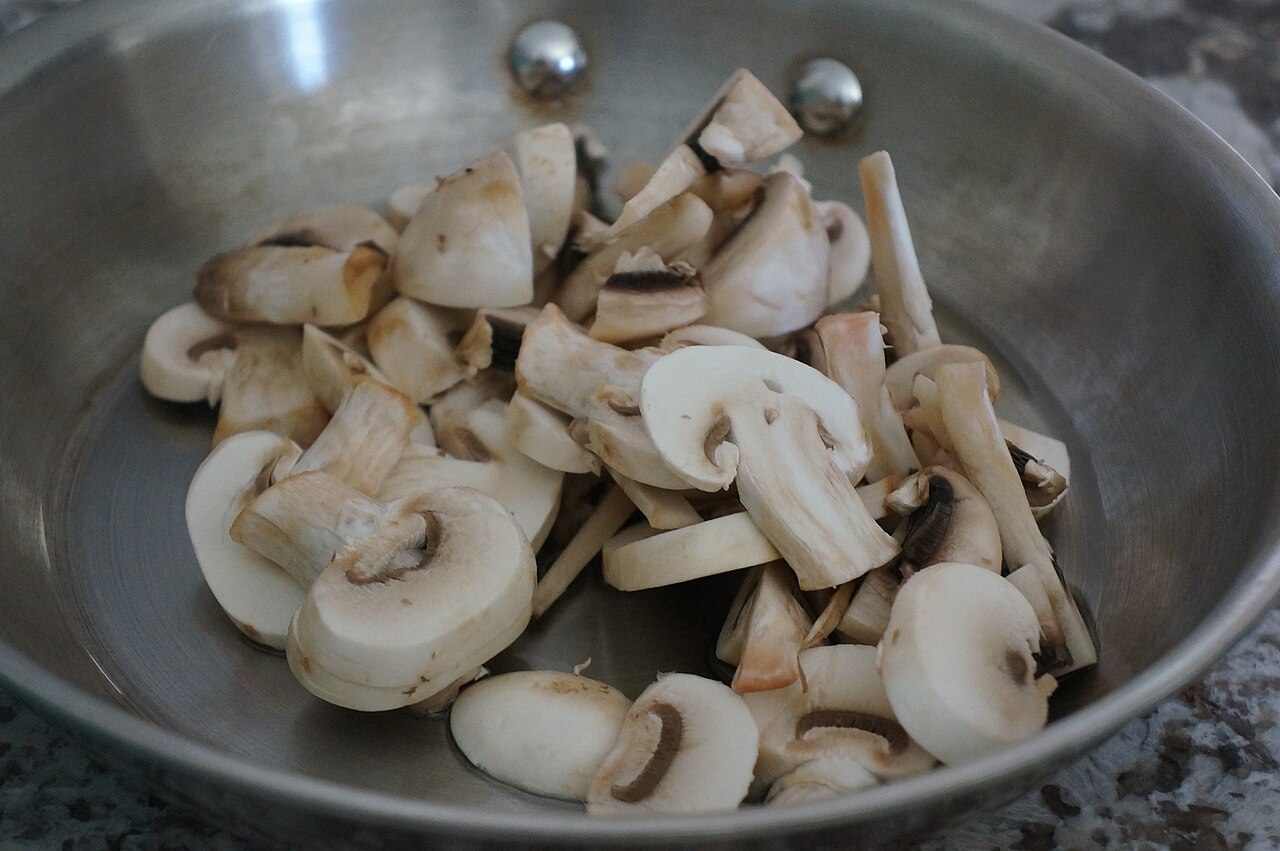
Yes, you can freeze mushrooms, but there is one thing worth knowing before you tip a punnet into a bag and shut the drawer: cook them first. Mushrooms are mostly water, and if you freeze them raw the ice crystals wreck their structure, so what comes out is limp and a bit slimy. Cook the water out before it freezes and you get a completely different result, mushrooms that still taste of something and hold up in a pan. That is the whole trick, and it takes about ten minutes. Below is exactly how I do it, how long they keep, and why you should never bother thawing them.
Free PDF
Free Oven Temperature & Gas Mark Chart
A printable one-page conversion chart for your kitchen: degrees, fan, gas mark and the descriptions in between. Pop your email in and the PDF is yours, plus the odd straight-talking kitchen tip.
Free, unsubscribe any time. The download starts as soon as you sign up.
The short answer
Freeze mushrooms cooked, not raw, and they will keep their texture. A quick dry fry in a hot pan drives off the moisture that would otherwise turn to ice, and that moisture is the enemy here. You can freeze them raw if you are pushed for time, and I will cover that, but the difference on the plate is real. Cooked-then-frozen mushrooms go into a risotto or a sauce and behave like mushrooms. Raw-then-frozen ones tend to disappear into a grey, watery softness that nobody asked for.
Frozen mushrooms last a good long time, so this is a genuinely useful thing to do with a half-price tray you were never going to get through in time.
Why raw mushrooms freeze badly
A mushroom is somewhere around 90 per cent water. When you freeze that water it expands into sharp crystals that punch through the cell walls, and when it thaws the whole thing collapses and weeps liquid. That is the slime people complain about. It is not spoilage, it is physics, but it makes for a poor mushroom.
Cooking first fixes it because you have already removed most of that water in the pan. There is far less left to freeze, so far less damage on the way in and far less puddle on the way out. This is the same reason I cook mushrooms hard and fast when I want them browned: get the water gone, then you can actually fry.
How I freeze mushrooms (the method I trust)
This is the dry fry method, and it is the one I use for anything I am going to stir into a dish later.
- Wipe, do not soak. Brush or wipe the mushrooms with a damp cloth to get any grit off. Do not plunge them in water, they drink it up, and you are trying to lose water, not add it.
- Slice or leave small ones whole. Even slices cook evenly. Little button mushrooms can go in whole.
- Dry fry in a hot pan. No oil to start, or the barest smear. Get the pan properly hot, add the mushrooms, and let them release their water. They will squeak and hiss, then the liquid will boil off and they will start to colour. That takes five to eight minutes. A knob of butter or a splash of oil right at the end is fine for flavour.
- Cool them fully. Spread them out and let them come down to room temperature quickly. Do not stack hot mushrooms into a bag, the condensation refreezes as ice and you are back to square one. As with any cooked food, cool it fast and do not leave it sitting out for hours.
- Open freeze, then bag. Lay the cooled mushrooms in a single layer on a lined tray and freeze until solid, then tip them into a labelled bag or box. This stops them clumping into one lump, so you can shake out a handful whenever you need it.
If you would rather not fry them, you can steam or blanch them instead. Two to four minutes for slices, up to six for whole ones, then cool and freeze the same way. Blanching keeps the colour a touch brighter; frying gives more flavour. I go with the pan.
Freezing mushrooms raw, if you must
Short on time? You can freeze them raw. Slice them, open freeze on a tray so they do not stick together, then bag them up. Do not wash them first, for the reason above. Use raw frozen mushrooms only in cooked dishes where a softer texture will not show, soups, stews, a slow ragu, and use them a bit sooner rather than later, because the quality slides faster than with the cooked ones. They are perfectly safe, they just will not have much bite.
How long do frozen mushrooms keep?
For quality, here is what I aim for:
- Cooked (fried or sautéed): up to about 12 months.
- Blanched: around 6 months.
- Raw: best within 3 to 6 months.
On safety, food kept solidly frozen at minus 18 degrees is safe more or less indefinitely, because freezing halts the bacteria rather than killing them. Those time limits above are about flavour and texture going downhill, not about the mushrooms becoming dangerous. That said, a freezer that is repeatedly opened or set too warm will let quality drop much faster, and anything that has picked up freezer burn (dry, greyish, leathery patches) will taste of very little. For a fuller rundown of what keeps and for how long, I have a separate guide to freezer storage times.
One firm rule: freeze mushrooms while they are still good, ideally at or before the use-by date on the pack, not after. Freezing is a pause button, not a rescue. If they are already slimy, smell sour or ammoniac, or have gone dark and wet, they are past it, and a spell in the freezer will not bring them back. When in doubt, throw it out.
Do not thaw them, cook from frozen
Here is the part that surprises people: you do not defrost frozen mushrooms at all. Thawing just gives the ice time to slump into a puddle. Instead, throw them straight from the freezer into a hot pan, a sauce, a soup or a stew. They will finish cooking in a couple of minutes. If you are adding them to something already wet, like a casserole, just stir them in frozen and carry on.
The one exception is if you froze whole mushrooms to stuff or grill later, where you genuinely need them intact and pliable. In that case let them thaw slowly in the fridge and accept that they will be softer than fresh. For everything else, straight from frozen is the answer, and it saves faffing about with defrosting entirely.
And do not refreeze mushrooms that have already thawed out on their own. If you cook the thawed mushrooms into a dish, you can freeze that finished dish, a soup or a sauce, but do not put loose thawed mushrooms back in raw.
Getting more out of a batch
Freezing cooked mushrooms is one of those quiet habits that saves real money. Mushrooms are often reduced when they are a day off, and a big tray dry fried down to a modest bag of concentrated, freezer-ready mushrooms is a good trade. I keep a bag on the go for weeknight risottos, omelettes and pasta sauces, and it means a handful of proper mushroom flavour is always ten seconds away.
If you are cooking a big batch to freeze and want to scale a recipe up cleanly, the recipe scaler does the sums for you, and the ingredient converter is handy if your recipe lists mushrooms by weight and you only have cups or the other way round.
A note on fresh storage first
Before you even get to the freezer, most mushrooms last longer than people think if you store them right in the fridge. Keep them in a paper bag, not sealed plastic, which traps moisture and turns them slimy within a day or two. Loose in a paper bag on a middle shelf, most cultivated mushrooms are good for the best part of a week. If yours are heading that way and you cannot use them, that is your cue to fry and freeze rather than let them go off. For the wider picture on keeping produce, see my guide to storing fruit and veg.
Wild or foraged mushrooms are a different matter. Only freeze ones you are completely certain are safe to eat and have cooked properly first. If you are not sure what something is, it does not go in the pan, let alone the freezer.
The bottom line
Freeze mushrooms cooked and they reward you; freeze them raw and they mostly disappoint. Dry fry to drive off the water, cool them fast, open freeze so they stay loose, and cook them straight from frozen when the time comes. Do that and a cheap tray of mushrooms turns into months of easy meals with almost no waste, which is exactly the sort of small win a busy kitchen runs on.
This is general kitchen guidance, not medical advice. If you are ever unsure whether food is safe to eat, follow the FSA and NHS guidance and err on the side of binning it.