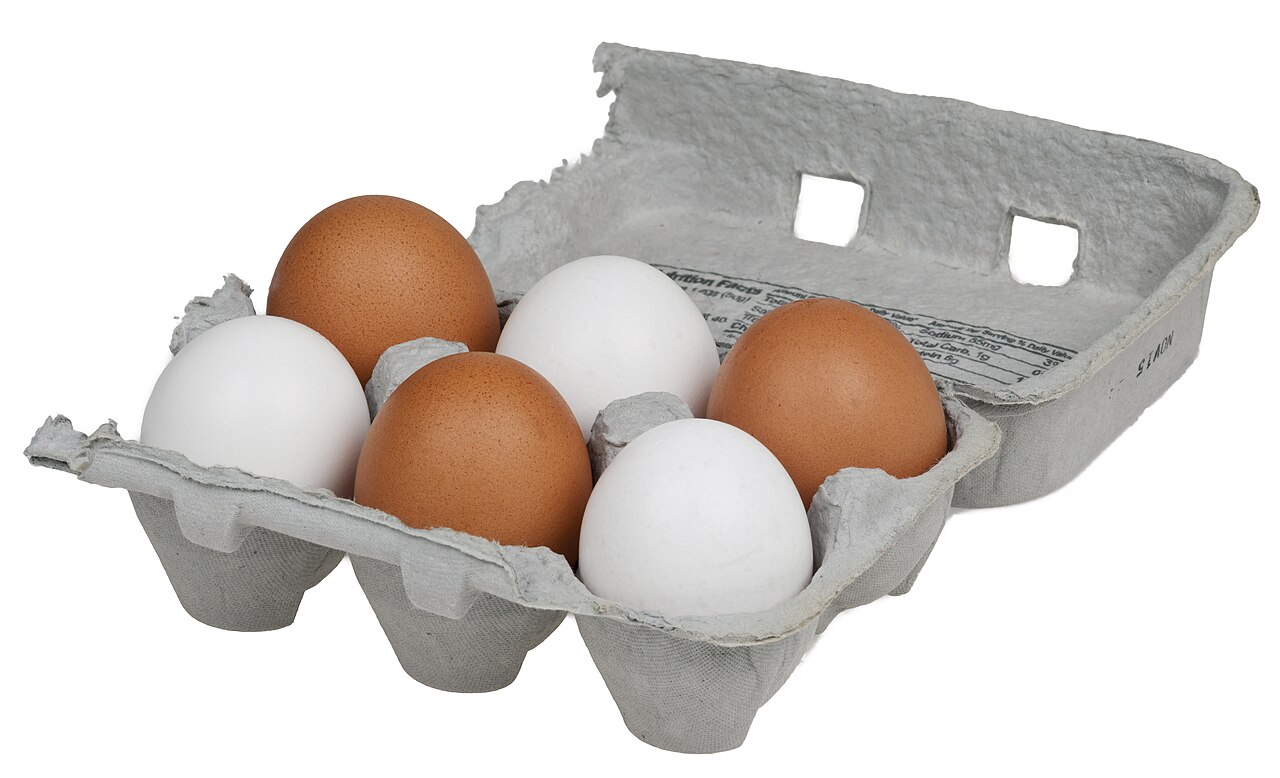
Raw eggs in their shells keep for three to five weeks in the fridge, and in practice that means roughly to the best-before date on the box and a day or two beyond if you cook them properly. That is the number I actually run my kitchen on. We go through two or three dozen a week here, so a stray box surfacing from the back of the shelf is a weekly event, and I have stopped treating a passed date as a verdict. Here is how long eggs really last, why they carry the date they do, and the small storage habits that make the difference between an egg that lasts five weeks and one that quietly gives up in two.
Free PDF
Free Oven Temperature & Gas Mark Chart
A printable one-page conversion chart for your kitchen: degrees, fan, gas mark and the descriptions in between. Pop your email in and the PDF is yours, plus the odd straight-talking kitchen tip.
Free, unsubscribe any time. The download starts as soon as you sign up.
The short answer, by state
- Raw, in the shell: three to five weeks in the fridge. In the UK that works out at about the best-before date, which is set at 28 days from lay, plus a short margin if they are cooked thoroughly.
- Raw, out of the shell (a yolk or white you have separated): two to four days in a covered container in the fridge, no longer.
- Hard-boiled, in the shell: up to a week in the fridge, and they keep best left unpeeled.
- Cooked into a dish (quiche, frittata, scrambled): treat as any leftover, so two days in the fridge is the line I use.
I have written the boiled and cooked timings up in full over in how long do cooked eggs last; the rest of this piece is about the raw egg in its shell, because that is the one people stand over the bin wondering about.
Best-before, not use-by, and why it matters
Eggs are one of the few high-protein foods in the fridge that carry a best-before date rather than a use-by. That single difference changes how you should read the number.
A use-by date is about safety. Once it passes, on raw chicken or a tub of prawns, the food is not considered safe and it goes in the bin, no sniffing, no debate. A best-before date is about quality. It is the maker telling you when the food is at its best, not the moment it turns dangerous. So an egg a day past its best-before is not the same thing as chicken a day past its use-by. The egg has faded a little in freshness; it has not crossed a safety line the way the chicken has. If the two-date system is fuzzy for you, it is worth ten minutes on use-by versus best-before dates, because getting it straight is what stops a lot of good food going out early.
That said, best-before does not mean “eat forever”. The reason eggs get a date at all is salmonella. UK Lion-marked eggs come from vaccinated hens and the risk is very low, but it is not nothing, and it climbs as an egg ages and any bacteria present have time to multiply. So the honest position is this: within the date, an egg is fine to use however you like, including soft-boiled or a runny yolk. Past the date, cook it through.
A day or two past the date, if you cook it well
The Food Standards Agency line is that eggs are safe to eat for a couple of days after the best-before date if they are cooked thoroughly, meaning both the white and the yolk set firm. That is a hard-boiled egg, a well-cooked scramble, a cake, a quiche. What I would not do with a past-date egg is dip soldiers into a runny yolk or whisk it raw into a mousse or a homemade mayonnaise, because those uses give any bacteria a free pass.
For anyone in an at-risk group, and that means pregnant women, babies and very young children, the elderly, or anyone already unwell, I would not push a past-date egg at all, and I would keep even in-date eggs cooked through for them unless they carry the British Lion mark, which is the assurance the NHS leans on for runny eggs during pregnancy. When it is for the grandchildren, I just use a fresh box and cook it properly. The margin is not worth the gamble.
And the usual rule still applies underneath all of this: when in doubt, throw it out. A single egg is a few pence. A bad couple of days is not.
Keep them cold, and keep them cold
Here is the habit that does the most to make eggs last, and it is one plenty of British kitchens get half-right: store eggs in the fridge, and once they are in there, leave them in there.
For years eggs were sold and kept at room temperature in this country, and you will still see them on an unrefrigerated shelf in the shop. But the FSA and British Lion advice for the home is clear that the fridge is the best place for them, because a steady, cold temperature keeps them fresher for longer and holds any bacterial growth in check. The one thing you must not do is move them back and forth. An egg taken from a cold fridge into a warm kitchen sweats, and that condensation on a porous shell is exactly the moisture bacteria need to work their way inside. So pick cold and stay cold, rather than fridge overnight and counter by day.
A few more things that genuinely help:
- Leave them in the box. The carton shields the shells from the strong smells of a fridge, and eggshells are porous enough to take on the flavour of a cut onion or a ripe cheese sitting nearby. The box also carries the date, which you lose the moment you tip them into one of those egg-shaped door racks.
- Store them on a shelf, not in the door. The door is the warmest, most temperature-swung part of the fridge every time it opens. The main shelf is colder and steadier, and steadier is what an egg wants.
- Point them pointy-end down. The blunt end holds the air cell; keeping it uppermost helps the yolk stay centred and the egg stay fresh a touch longer. A small thing, but free.
- Do not wash them. Shop eggs have a natural protective coating called the cuticle. Wash it off and you open the pores to bacteria. If an egg is dirty, wipe it dry and use it soon.
Get the fridge itself right too. It wants to be running between 0C and 5C. A fridge quietly sitting at 8 or 9C, which a surprising number do, shortens the life of everything inside it, eggs included.
What actually shortens an egg’s life
An egg does not spoil so much as slowly stale. Over the weeks, moisture and carbon dioxide escape through the shell, the air cell at the blunt end grows, the white thins and the yolk flattens. None of that is dangerous in itself; it is the freshness draining away. It is also, usefully, what freshness tests read. A fresh egg sinks and lies flat in a glass of water; an old one, with a big air cell, stands up or floats. That test measures age, not safety, and I have written up what it does and does not tell you, alongside the far more reliable smell test, in how to tell if an egg has gone off. If you are standing at the sink with a questionable box, that is the page to read.
What speeds the staling up is warmth and time out of the fridge, which is the whole case for cold, steady storage. A cracked shell is a different matter entirely: once the seal is broken, use the egg that day or bin it, because the barrier that kept bacteria out is gone.
Can you freeze them to buy more time?
You can, though not in the shell, because they expand and crack. Beaten whole eggs freeze well, as do whites on their own, and yolks freeze best with a pinch of salt or sugar beaten in to stop them going gluey. It is a genuinely handy trick when a box is racing towards its date and you cannot use it up, or when a recipe leaves you with three spare whites. The full method, including how much to thaw and how to label so you remember whether it was salted or sweetened, is in can you freeze eggs. Frozen, they keep for months rather than weeks, so it turns a use-it-now problem into a use-it-eventually one.
Working eggs into what you are cooking
Most of the eggs that go off in my house do so because I forgot what I had, not because they were truly old. The fix is dull but it works: cook from the oldest box first, and plan a use for a box that is getting on. A big tray bake, a batch of pancakes, an egg-heavy custard or a quiche will clear half a dozen at once. If you are scaling a recipe up or down and need to know how many eggs to carry across, the recipe scaler does the sums, and for the flour, milk and sugar around them the ingredient converter turns cups and grams into whatever your recipe is speaking. Getting the oven right for all that baking is the oven temperature converter.
The short version
- Raw eggs last three to five weeks in the fridge, which in the UK is roughly to the best-before date, set at 28 days from lay.
- That date is a best-before, not a use-by. It is about quality, not a hard safety cliff, so a day or two past is fine if you cook the egg thoroughly.
- Cook past-date eggs through, white and yolk firm, and keep runny eggs and raw-egg dishes to in-date, Lion-marked eggs, especially for anyone pregnant, very young, elderly or unwell.
- Store them cold and keep them cold, in the box, on a shelf not the door, in a fridge at 5C or below. Do not shuttle them in and out.
- A cracked egg is a same-day egg. The shell was the barrier; once it is broken, use it or lose it.
- When you genuinely cannot tell, check it properly rather than guess, and if it is still in doubt, bin it.
Eggs are more forgiving than their date suggests and less forgiving than a warm counter allows. Keep them cold, read the date as the quality guide it is, cook the older ones through, and a box will see you comfortably from one weekly shop to the next.