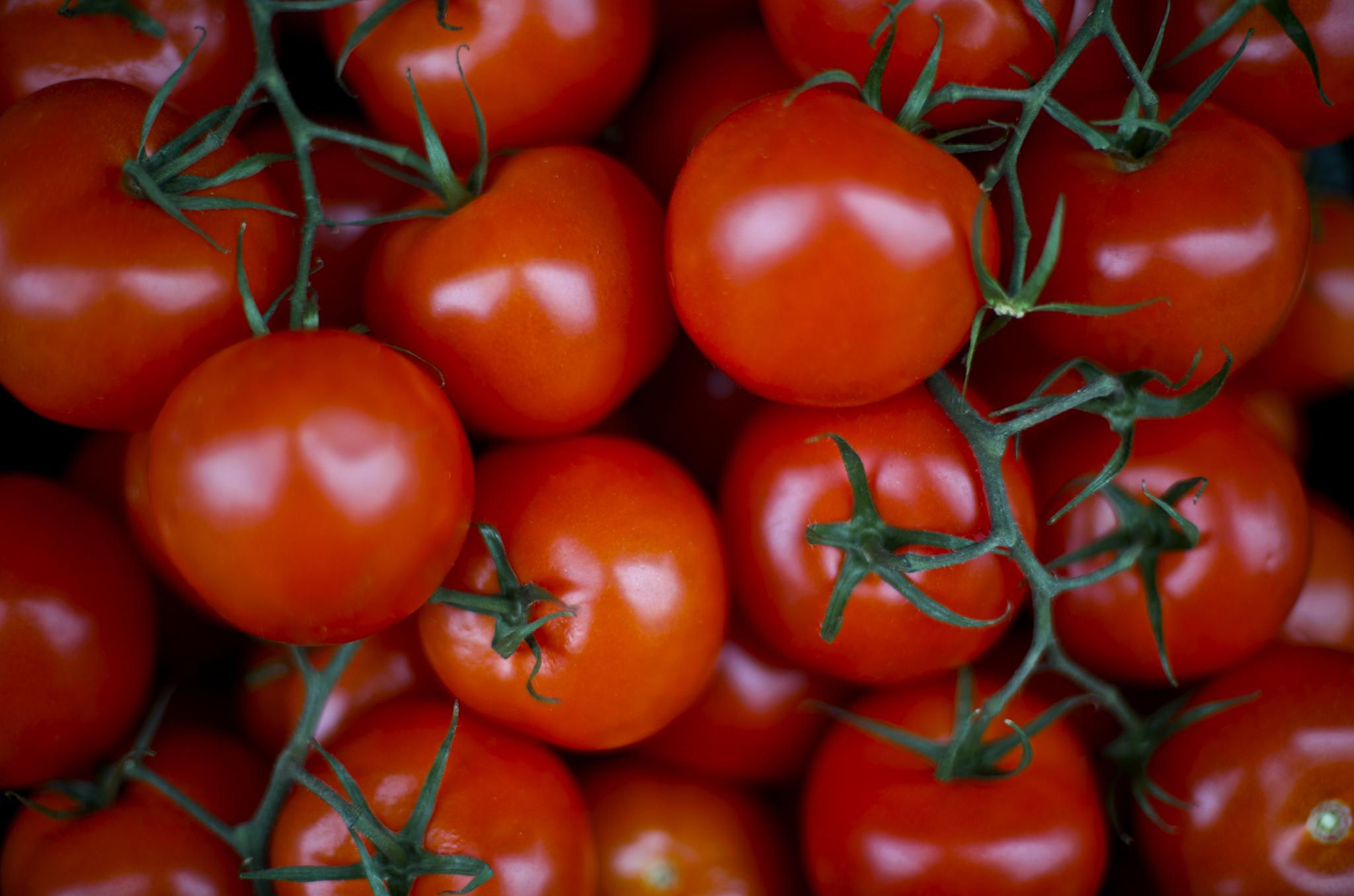
Yes, you can freeze tomatoes, and it is one of the least fussy things you can put in the freezer. The simplest method by a mile is to freeze them whole and raw with the skins still on. No blanching, no peeling, no faff. They keep their best quality for around six months and stay safe far longer than that. The one thing to know before you start is that frozen tomatoes come back soft, so they are for cooking, not for slicing into a salad. Once you have made peace with that, a glut of end-of-summer tomatoes turns into a winter’s worth of sauces and soups instead of a sad, wrinkled bowl on the windowsill.
Free PDF
Free Oven Temperature & Gas Mark Chart
A printable one-page conversion chart for your kitchen: degrees, fan, gas mark and the descriptions in between. Pop your email in and the PDF is yours, plus the odd straight-talking kitchen tip.
Free, unsubscribe any time. The download starts as soon as you sign up.
The lazy way: freeze them whole
This is what I do with a bowl of tomatoes going soft faster than we can eat them.
- Wash and dry them properly. Any water left on the skins turns to ice crystals.
- Cut out the core, the hard pale bit where the stalk was. A small knife and one twist does it.
- Open freeze them on a tray, spaced out so they are not touching, until solid. A few hours or overnight.
- Bag them up once frozen hard, pressing out as much air as you can, and label with the date.
Open freezing on a tray first is the step people skip, and it is the one that saves you. Freeze them in a heap and they weld into one lump; freeze them apart first and they stay loose, so you can tip out three tomatoes for a sauce and leave the rest. I do the same with berries and chopped herbs.
The genuinely satisfying part comes later. Freezing splits the skins from the flesh for you, so when you want to peel one you run it under the warm tap for a few seconds and the skin slides straight off in your hand. It is far easier than blanching fresh tomatoes in boiling water, which is the usual palaver for getting skins off. If a recipe wants skinned tomatoes, freezing has quietly done the hard bit.
If you would rather chop or roast first
Whole is easiest, but a couple of other approaches earn their place depending on how you cook.
Chopped or quartered. Core them, chop to the size you like, and open freeze on a lined tray before bagging. Handy if you always tip tomatoes straight into a pan, because there is no chopping a rock-hard frozen tomato later.
Roasted or as a sauce. If you have the oven on anyway, halve the tomatoes, roast them with a little oil until soft and jammy, then cool and freeze in portions. This is my favourite for a glut, because you are banking something that is already most of the way to a meal. Cooked tomatoes freeze beautifully and keep their quality for a good ten to twelve months. Freezing them in a flat, sealed bag saves space and thaws fast. The same logic applies to a batch of finished sauce, in the way I freeze soup and curry.
Whichever way you go, portion before you freeze. A big brick of frozen tomato that you have to hack at is nobody’s friend.
How long do they keep?
Raw frozen tomatoes hold their best quality for about six months, though they stay perfectly safe well beyond that as long as your freezer sits at minus 18C. After six months or so the flavour and texture fade, and since you are cooking them anyway you want them tasting of something. Cooked or roasted tomatoes keep their quality a little longer, around ten to twelve months.
Food kept solidly frozen at minus 18C is safe more or less indefinitely; the dates are about quality, not safety. I still label everything, because “I will remember” is a lie I have told myself too many times. For the keeping periods on everything else in there, I keep a full freezer storage times list.
Why frozen tomatoes go soft, and why it does not matter
Tomatoes are mostly water. When that water freezes it forms ice crystals that pierce the cell walls, and when it thaws the structure has collapsed, so the tomato is soft and a bit watery. There is no trick that stops this, whatever you read. A thawed tomato will never be a firm, glossy salad tomato again.
Here is the thing though: for cooking, that softness is exactly what you want. Any tomato you put in a soup, a sauce, a curry, a chilli or a stew is going to break down anyway, and a frozen one has done half that work for you before it hits the pan. You can often add them still frozen straight into a hot pan and let them collapse as they heat. So do not freeze tomatoes hoping for a summer salad in January. Freeze them for the cooking pot, and they are excellent.
Thawing and using them safely
Most of the time you do not need to thaw at all. Drop them frozen into whatever you are cooking and carry on. If a recipe needs them thawed, do it in the fridge, or use the warm-tap trick to slip the skins off and then chop.
Do not leave tomatoes sitting out on the worktop for hours to thaw. That soft, watery flesh at room temperature is a comfortable spot for bacteria, and the two-hour rule that applies to other thawed food applies here too, as I set out in defrosting food safely. Cook them soon after thawing rather than leaving a bowl of mushy tomatoes about.
A few things I have learned the hard way
- Freeze them at their best, ripe but not going off. Freezing pauses a tomato where it is; it does not improve a sad one. A mouldy tomato does not become fine once frozen, so check first.
- Cherry tomatoes freeze whole beautifully and need no coring. A bag of them is brilliant tipped frozen into a roasting tin around chicken or sausages.
- Expect some liquid when they thaw. In a sauce that is fine, it cooks off. If a dish needs to stay thick, let it simmer a little longer or drain the worst of the water first.
- Watery skins bother some people. If you cannot be doing with skins in your sauce, either slip them off with the warm-tap trick after freezing, or blitz the finished sauce smooth.
The bottom line
Freeze tomatoes whole and raw with the skins on for the least effort, chopped if you like them ready to tip in, or roasted if you want to bank something closer to a finished dish. Best quality is about six months raw, up to a year cooked, and they stay safe far longer at a steady minus 18C. They will be soft when they thaw, which rules out salads but makes them ideal for anything cooked. It is one of the simplest ways I know to stop a tomato glut going to waste.
For scaling up a batch of sauce or soup to fit your tubs, the recipe scaler does the sums, and if you are freezing other bits of the harvest at the same time, storing fruit and veg covers what is better kept in the fridge or the bowl instead.