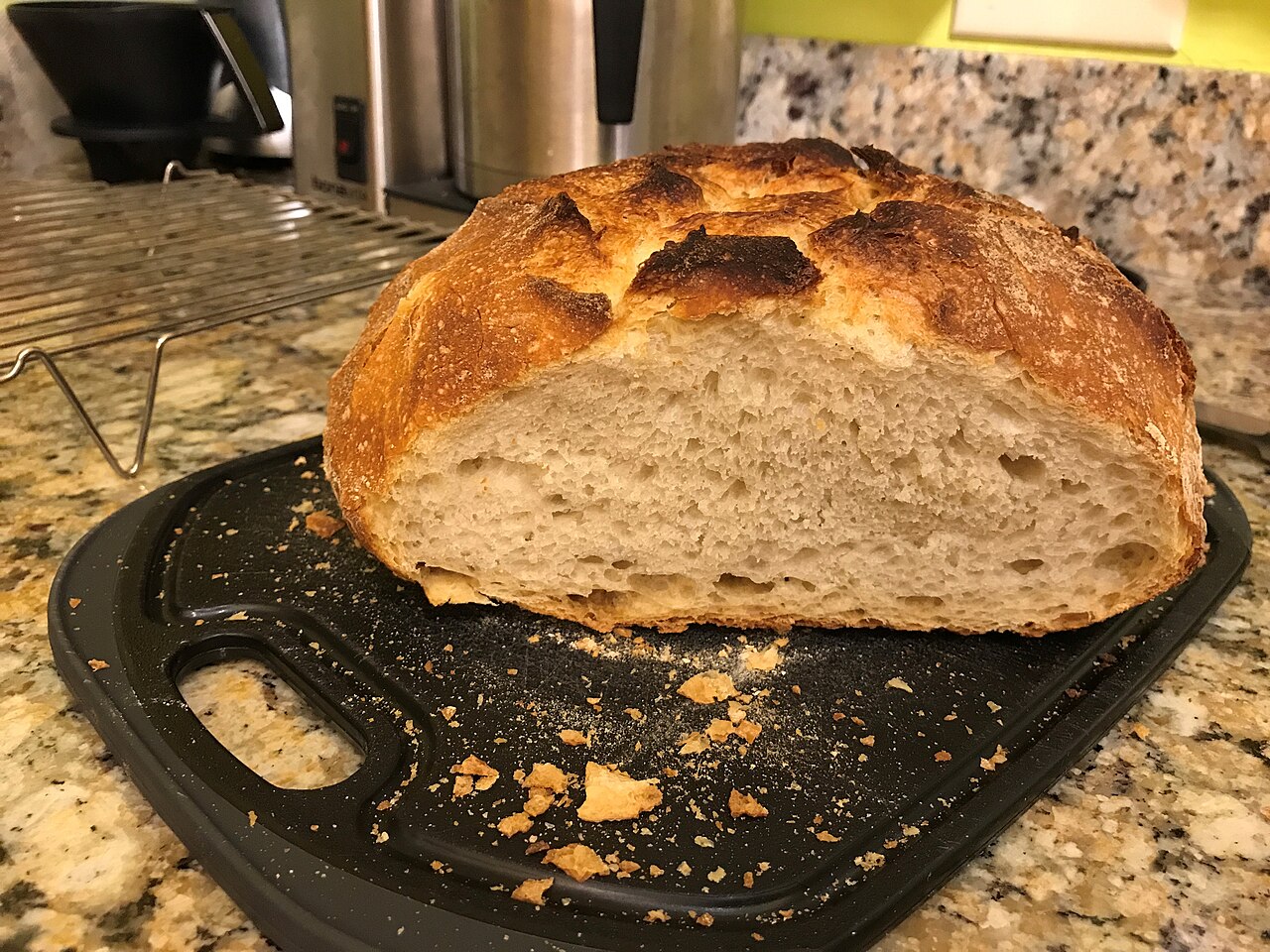
A wrapped shop loaf keeps about 3 to 5 days at room temperature. A crusty bakery loaf or something you have baked yourself, with no preservatives in it, is really at its best for 2 to 3 days and stale by day four. Those are the honest numbers, and the single most useful thing I can tell you is where not to put it: the fridge. Bread goes stale faster in the fridge than it does sitting on the worktop, which is the opposite of what most people assume. So the choice is simple. Eat it in a few days at room temperature, or freeze it. The fridge is the one place a loaf should never go.
Free PDF
Free Oven Temperature & Gas Mark Chart
A printable one-page conversion chart for your kitchen: degrees, fan, gas mark and the descriptions in between. Pop your email in and the PDF is yours, plus the odd straight-talking kitchen tip.
Free, unsubscribe any time. The download starts as soon as you sign up.
How long each kind of bread lasts
The preservatives, the crust and the moisture all change the timings, so it is worth splitting bread into types rather than giving one flat number.
- Wrapped supermarket loaf (white or wholemeal): about 3 to 5 days at room temperature. The plastic bag and the added preservatives buy you the extra days.
- Bakery or artisan loaf, crusty sourdough, baguette: best on day one, good for 2 to 3 days, going hard after that. No preservatives means a shorter life and a faster stale.
- Bread I have baked at home: the same 2 to 3 days, sometimes less for an enriched dough. Fresh bread with nothing added in it does not hang about.
- Soft rolls, bagels, pitta, wraps: roughly 3 to 5 days wrapped, similar to a shop loaf.
- Enriched breads (brioche, milk bread, anything with egg and butter): a couple of days at room temperature. The fat keeps the crumb soft for a little longer, but they dry out and can turn once past their date.
A best-before date on the bag is a quality guide, not a safety deadline. Bread a day past its best-before is usually perfectly fine, just heading towards stale. That is different from a use-by date on, say, cooked meat, and it is worth knowing the difference, which I go into in use-by vs best-before dates. With bread the thing that actually ends its life is not the date on the bag, it is mould, and I will come to that.
Why the fridge makes it worse
Here is the part that catches people out. Chilling bread does not keep it fresh, it speeds up the staling.
Staling is not really about bread drying out, or not only that. It is a process called starch retrogradation, where the starch molecules in the crumb slowly recrystallise and firm up after baking. That reaction happens fastest at fridge temperatures, roughly 0 to 5 degrees, which is exactly the range your fridge sits in. So a loaf in the fridge stales several times faster than the same loaf left in a bread bin. You get bread that is cold, dry and cardboardy in a day or two, and no amount of hoping fixes it.
The fridge does slow mould down, which is the one thing in its favour, but it is a bad trade. You swap a slow risk of mould for a fast certainty of stale, and stale is what you will actually get. If you want to stop mould, the freezer does that job far better without wrecking the texture.
The one good use of a fridge for bread is a loaf you are about to toast anyway, where stale barely matters because the heat brings some of the softness back. Even then I would rather freeze it.
Where bread actually keeps best
For anything you will eat within a few days, room temperature is the answer, kept in the right spot.
A bread bin is genuinely good, better than most people give it credit for. It holds enough moisture to stop the crust drying out, but lets enough air move that it is not a sweaty box breeding mould. A paper bag suits a crusty loaf, keeping the crust crisp at the cost of the crumb going firmer sooner. A sealed plastic bag keeps a soft sandwich loaf soft, but traps moisture, so it will mould sooner in a warm kitchen.
What I actually do: a crusty loaf lives cut-side down on the board for the first day, which keeps the cut face from drying while the crust protects the rest. A sliced sandwich loaf stays in its bag with the air squeezed out and the tie folded back on. And I buy smaller and more often rather than one giant loaf that is stale before we get near the end.
Keep bread out of direct sun and away from the hob, since warmth and damp together are what mould loves.
Freezing is the real answer
If you will not finish a loaf in 2 or 3 days, freeze it. Freezing all but stops starch retrogradation, so bread comes out of the freezer far closer to fresh than anything the fridge could ever give you. It is the single best thing you can do with bread you cannot eat in time, and it is how I stop half a loaf going to waste every week.
Slice it before it goes in. That way you take out two slices for toast without defrosting the whole loaf, and sliced bread toasts straight from frozen, no thawing needed. Wrap it well, bag it, push the air out. It keeps its quality for about 3 months, and stays safe to eat beyond that, it just slowly loses texture.
To thaw a whole loaf, leave it wrapped at room temperature for an hour or two. For slices, the toaster does it in one go. A quick warm through in a low oven revives a defrosted crusty loaf nicely. I have the full method, including which breads freeze well and which sulk, in can you freeze bread.
When bread has actually gone off
Stale is not off. Stale bread is safe, just hard, and it is the best thing going for toast, breadcrumbs, croutons, bread and butter pudding or a panzanella. So do not bin a hard loaf, cook with it.
Mould is the real end of the road, and with bread it is a hard stop. Bread is soft and porous, which means the mould you can see on the surface has almost certainly sent threads down through the crumb you cannot see. So the whole loaf goes in the bin, not just the mouldy slice, and no, you cannot cut the fuzzy bit off and eat the rest. That “cut around it” trick only works on hard, dense foods like a firm block of cheese, never on bread. I explain which foods you can rescue and which you cannot in can you eat mouldy food. If you spot mould on one slice in the bag, the rest of the bag goes too, since the spores are already through it.
The when-in-doubt rule holds here as everywhere: if a loaf smells musty, off or faintly of alcohol, or if you are not sure, throw it out. Bread is cheap and a stomach upset is not worth it.
Making a loaf last, in short
If you take one thing from this: keep bread on the worktop for the short term, freeze it for the long term, and keep it out of the fridge entirely. Buy in sizes you will actually get through, slice and freeze the surplus, and turn anything that goes stale into something else rather than binning it. That is most of home baking sorted, and if you have started making your own bread, the recipe scaler is handy for taking a loaf recipe up or down to fit your tin.
This is general food-safety and storage guidance based on FSA and NHS advice, not a substitute for the instructions on the packet or official advice. When something looks or smells wrong, trust that over any timing on this page.