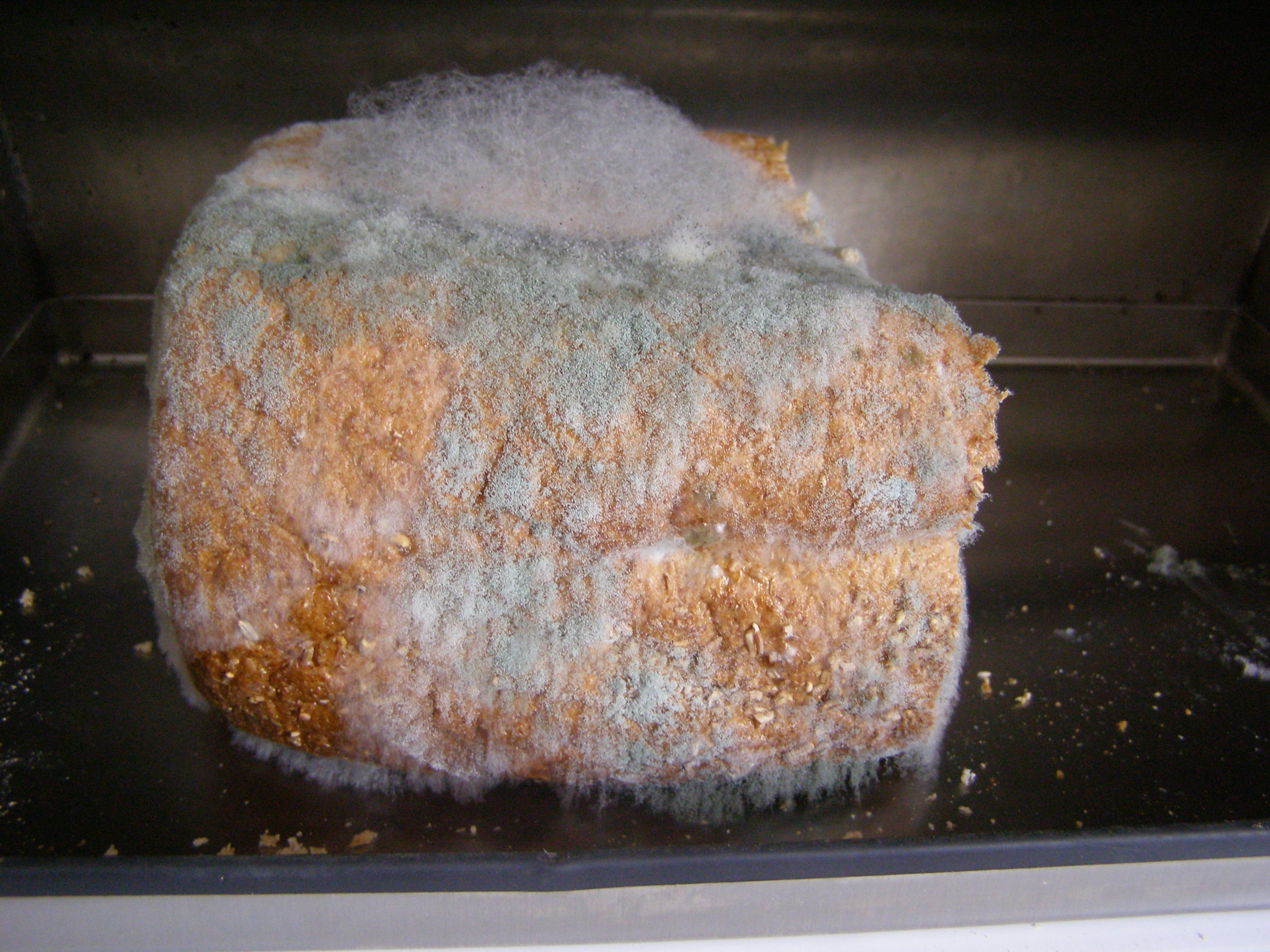
Mostly no, and the honest short version is this: if the food is soft or porous, one spot of mould means the whole thing goes in the bin, because what you can see on top has almost certainly spread through the bits you cannot. That covers bread, soft cheese, jam, yoghurt, cooked leftovers and soft fruit. The exceptions are firm, dense foods, a hard block of cheese, a whole carrot, a cabbage, a dry-cured ham, where the mould stays near the surface and you can cut it away with room to spare. So the useful question is not “is mould bad”, it is “what am I looking at”, and the answer changes completely depending on the food. Here is how I sort it in my own kitchen.
Free PDF
Free Oven Temperature & Gas Mark Chart
A printable one-page conversion chart for your kitchen: degrees, fan, gas mark and the descriptions in between. Pop your email in and the PDF is yours, plus the odd straight-talking kitchen tip.
Free, unsubscribe any time. The download starts as soon as you sign up.
The one rule that decides everything: soft or firm?
Mould is not just the fuzzy patch you see. That patch is the flowering top of a network of tiny roots, called hyphae, that run down into the food out of sight, plus spores that drift about. In a firm, low-moisture food those roots struggle to travel, so the visible mould really is roughly all of it. In a soft, wet or porous food they spread fast and far, so by the time you spot a bloom on your bread the loaf is threaded through with mould you cannot see.
That is why the advice splits so cleanly. It is not fussiness. Cutting the green bit off a slice of bread does nothing about the roots already in the slice next to it. The US Department of Agriculture puts it plainly: if a food is soft or porous, mould can penetrate below the surface, so discard it. If it is hard and dense, you can cut around and below the mould and use the rest.
Bin these the moment you see mould
Bread and baked goods. No cutting off the corner, no picking off the spot. Bread is soft and airy, mould runs right through it, and a visible patch usually means the whole loaf, or the whole bag, is affected. Bin it. If one roll in a bag has gone, I do not trust its neighbours either.
Soft cheese. Cottage cheese, cream cheese, ricotta, mascarpone, and also anything shredded, sliced, grated or crumbled, even if it started life as a hard cheese, because now it has lots of cut surfaces and moisture. If it has mould that is not meant to be there, throw the lot away.
Jam, jelly and other preserves. This is the one people argue with me about, and it is the one I am most firm on. Do not scoop the mould off the top and eat the rest. The moulds that grow on jams can produce mycotoxins, poisons that spread into the jar below the visible bloom. A whole jar of jam is not worth the gamble. Bin it, jar and all.
Yoghurt and soured cream. Soft, wet, quick to carry mould through. If you open a pot and see fuzz or a pink or black speck, that pot is done.
Soft fruit and veg. Tomatoes, cucumbers, peaches, berries, soft citrus, courgettes. High water content, so mould gets in fast. One furry strawberry in the punnet is a warning to check the rest closely, not a one-off to pick out and forget.
Cooked leftovers. Cooked meat, poultry, rice, pasta, casseroles and stews. These are moist and often handled a lot, so mould and the bacteria that keep it company move through them. If a container of leftovers has gone fuzzy, do not rescue a portion from the middle. For how long cooked food should have been in there in the first place, see how long food lasts in the fridge.
Peanut butter, nuts and pulses made without preservatives. Some moulds on nuts and grains produce aflatoxin, one of the better-studied mould poisons and a known carcinogen. Not worth the risk for the sake of a jar.
These you can rescue, with a wide margin
A few firm, dense foods are genuinely fine to save, as long as you cut generously and do not kid yourself about how much to remove.
Hard cheese. A block of mature Cheddar, Parmesan or similar. Cut off at least 2.5cm, a good inch, around and below the mouldy spot. The trick that matters: keep the knife out of the mould itself, or you drag spores through the clean cheese as you slice. Trim it, rewrap it in fresh wrapping, and it is fine. The UK Food Standards Agency’s own guidance for cheese businesses draws the same line, allowing mould to be cut away from large blocks of hard cheese but not from soft cheese. Grated or sliced hard cheese does not qualify, as I said above.
Firm fruit and veg. Carrots, cabbage, swede, whole firm peppers, and similar dense produce. Same rule as the cheese: cut off at least 2.5cm around and below the mould, use the rest.
Hard salami and dry-cured hams. A whitish surface mould on these is often normal and part of how they are made. Scrub or wipe it off the surface and the meat underneath is fine. If you are ever unsure whether a mould on a cured meat is the friendly kind, that is a “when in doubt” moment.
The mould you are meant to eat
Not all mould is a mistake. Blue cheeses like Stilton, Roquefort and Gorgonzola, and the soft white rinds on Brie and Camembert, are made with specific, safe, edible moulds that are the entire point of the cheese. Those are fine to eat as they are.
The catch is a mould that turns up where it should not. If your blue cheese grows a fuzzy patch in a colour or texture that is not its usual veining, or your Brie sprouts something on the cut face that is not the white rind, treat it like any other cheese: for a hard blue, cut well around it; for a soft one like Brie, bin it. The intended mould being safe does not make a gatecrasher safe.
What if you have already eaten some?
Do not panic. Most of the time, eating a bit of mould by accident does nothing worse than put you off your lunch, and a healthy stomach deals with it. You might get a short bout of nausea or an upset stomach. Keep an eye out, drink water, and it usually passes.
Be more careful if you are pregnant, very young, elderly, or your immune system is down through illness or treatment, because moulds and the bacteria that travel with them hit these groups harder. If you have eaten obviously mouldy food and then feel genuinely unwell, with a high temperature, persistent vomiting or breathing trouble, ring 111 or speak to a doctor. This is a kitchen reference, not medical advice, so trust a professional over a web page if you are worried.
A few habits that mean less binning
Prevention beats the whole dilemma. What I actually do:
- Keep the fridge cold, at or below 5C, and do not stuff it so full the air cannot move. Mould still grows in the cold, just slower, and a warm fridge speeds everything up.
- Wrap and cover. Airborne spores land on exposed surfaces. Cheese in fresh wrapping, leftovers in lidded tubs, bread in a bin or bag.
- Cool and store leftovers quickly, within a couple of hours, and eat them within a couple of days. See reheating leftovers safely for the once-only reheating rule.
- Freeze before it turns. If a loaf, a block of cheese or a glut of tomatoes is not going to get eaten in time, freezing stops mould in its tracks. My freezer storage times guide has the keeping periods, and I would rather freeze a spare loaf than bin a mouldy one next week.
- Shop and rotate honestly. Oldest at the front, and do not buy the giant tub of soft cheese if it is only you eating it.
The bottom line
Firm and dense, cut it out with a wide margin and carry on. Soft, wet or porous, bin the whole thing, because the mould you can see is only the part that made it to the surface. Blue cheese and Brie rinds are the mould you paid for and are fine. And on the foods where it genuinely matters, jam, bread, soft cheese, leftovers, do not talk yourself into scooping off the top. When in doubt, throw it out. A slice of bread is cheaper than a bad night, and far cheaper than a hospital trip for someone whose body cannot shrug it off.
For related questions, I have separate guides on how to tell if meat has gone off, how long cheese lasts and use-by versus best-before dates, which is a different question from mould but the one people muddle it with most.