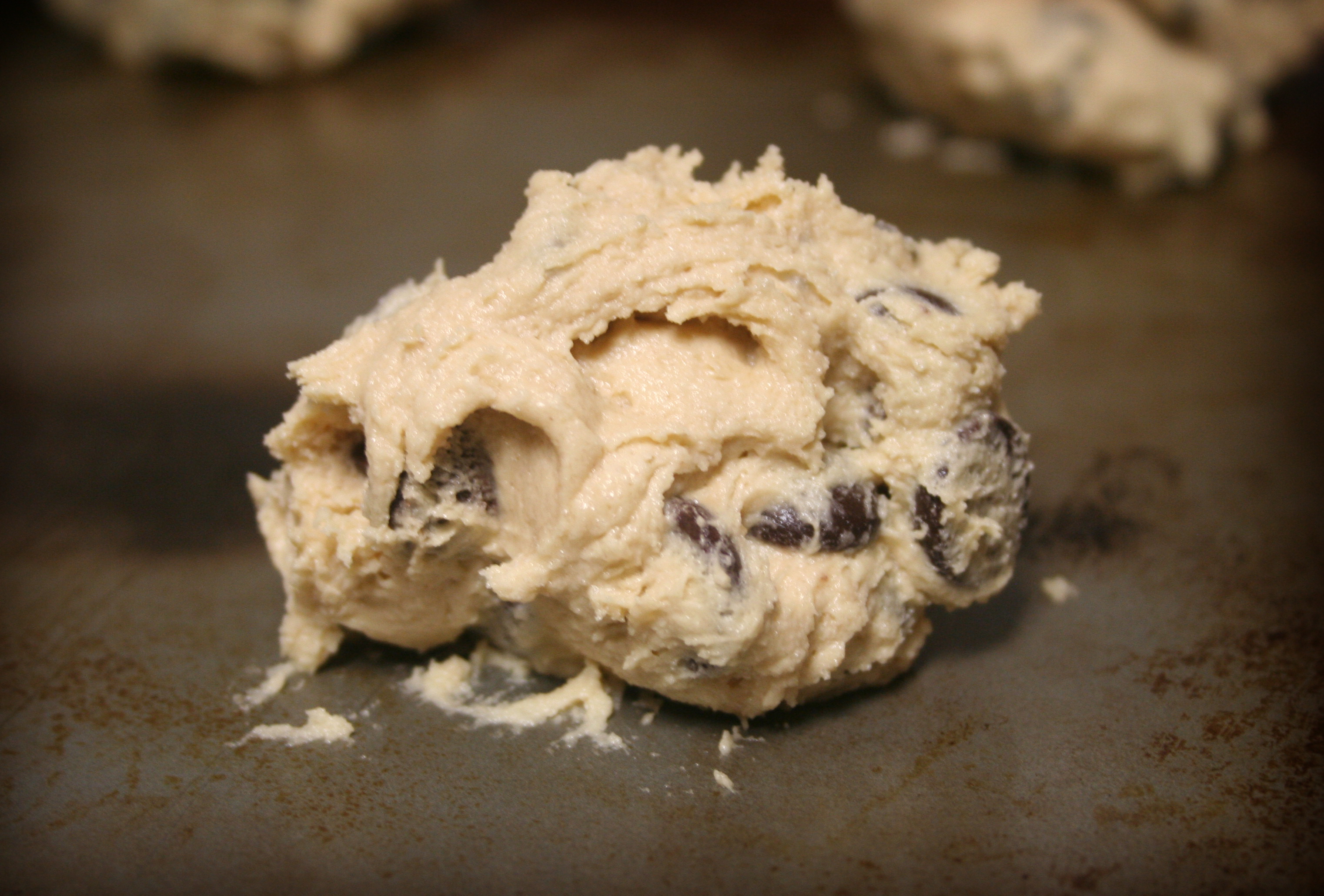
The straight answer is no, you should not eat ordinary raw cookie dough, the kind you make to bake. I know that is not what anyone licking the spoon wants to hear, and I will be honest that I have swiped raw dough plenty of times in my life without incident. But “I got away with it” is not the same as “it is safe,” and there are two separate reasons the dough in your bowl carries a genuine risk. Most people only know about one of them.
The reason worth reading on for is that the risk everyone worries about is probably not the bigger one, and the safe workaround is easy once you know what you are actually guarding against.
Free PDF
Free Oven Temperature & Gas Mark Chart
A printable one-page conversion chart for your kitchen: degrees, fan, gas mark and the descriptions in between. Pop your email in and the PDF is yours, plus the odd straight-talking kitchen tip.
Free, unsubscribe any time. The download starts as soon as you sign up.
Two risks, not one: the egg and the flour
Ask most people why raw cookie dough is risky and they will say the raw egg, because of salmonella. That is a real risk, and I will come to it. But food safety agencies now flag a second ingredient that catches almost everyone by surprise: the flour.
Raw flour is a raw ingredient. It has not been cooked, treated or sterilised. Wheat grows in fields, gets rained on, sits near animals, and whatever is on the grain can travel through milling into the bag of flour in your cupboard. Grinding and bleaching do not kill germs. As the US Centers for Disease Control put it plainly, most flour is raw and the germs are killed only when it is cooked or baked. So raw flour can carry harmful bacteria, including some strains of E. coli, which can cause severe stomach cramps and, in bad cases, bloody diarrhoea.
This is not a theoretical worry. A large outbreak in 2009 linked to raw pre-packaged cookie dough sickened dozens of people across the United States with E. coli, and investigators eventually pointed the finger at the flour rather than the egg. Since then, several flour recalls have been tied to the same bug. The heat of baking sorts it out completely; a raw spoonful does not.
So when you eat raw dough, you are not taking one gamble, you are taking two: the egg and the flour.
The egg risk, and why UK eggs change it
Now the egg. Raw egg can carry salmonella, which brings fever, stomach cramps, diarrhoea and vomiting that can drag on for a week. That is the classic reason for the “don’t eat raw dough” warning, and in much of the world it still stands firmly.
Here in the UK, though, the egg side of the picture is genuinely different, and it is worth knowing. Eggs produced under the British Lion scheme, the ones stamped with the little red lion, are vaccinated against salmonella and the risk is now considered very low. The NHS advice reflects this: British Lion eggs are considered safe to eat raw or lightly cooked, even for pregnant women, babies and older adults, groups who used to be told to avoid runny eggs entirely.
So if you are baking with Lion-stamped eggs, the salmonella-from-egg part of the raw dough worry is much smaller than it once was. I still buy Lion eggs partly for exactly this reason. You can read more on judging eggs in how to tell if eggs are still good and how long eggs last.
Here is the important twist, though. Even with the safest eggs in the country, the flour is still raw. Lion eggs solve one of the two problems and leave the other completely untouched. That is why “but I used good eggs” does not make a bowl of raw dough safe. The overlooked ingredient is the one still doing the damage.
Who should be especially careful
Some people get hit harder by these bugs and should steer well clear of raw dough and batter:
- Young children, whose systems are less able to cope with E. coli in particular.
- Pregnant women.
- Older adults.
- Anyone with a weakened immune system or who is already unwell.
For everyone else the dough is not a reason to panic if a little got eaten; most healthy adults would be fine most of the time. But “probably fine” is a poor thing to serve a four-year-old, and E. coli in young children can be genuinely serious. In my kitchen the rule is simple: the children do not get raw dough or raw batter, full stop, and I do not hand round the beaters the way my own family did when I was small.
How to make cookie dough you can actually eat
The good news is that you do not have to give up edible dough. You just have to make the two risky ingredients safe, and both are fixable.
Leave the egg out, or use pasteurised. Edible cookie dough, the kind sold to eat straight from the tub and the kind you make at home for that purpose, simply contains no egg, or uses pasteurised egg. There is nothing structural you lose by dropping the egg from a no-bake dough, because you are never baking it. My notes on working around eggs in baking are in egg substitutes for baking.
Heat-treat the flour. This is the step people miss. Spread your flour on a tray and bake it, or microwave it in short bursts stirring between each, until it reaches 74°C (about 165°F) right through, checked with a thermometer, then let it cool before mixing. That heat kills the bacteria the milling left behind. I will be straight that neither the FSA nor the CDC formally certifies home heat-treating as a guarantee, largely because home ovens and microwaves heat unevenly, so use a thermometer and do not rush it. If you would rather not gamble on your own oven, shop-bought heat-treated flour and ready-made edible cookie dough exist for precisely this. If you are checking oven temperatures, my oven temperature converter will sort out gas marks and Fahrenheit.
A safe edible dough, then, is heat-treated flour, no raw egg, butter, sugar, a little milk to bring it together, vanilla and chocolate chips. It is not baked, so it stays soft and scoopable, and nobody has to think about bacteria.
A note on flour hygiene
Because raw flour is a raw ingredient, treat it a bit like raw meat when you bake. Wash your hands after handling it, do not let floury bowls and spoons touch food that will not be cooked, and wipe down the surfaces afterwards. It sounds fussy for a bag of flour, but the same bug that makes raw dough risky is the reason a dusty worktop is worth a wipe. My general storage notes are in storing herbs and spices, and flour keeps best cool, dry and sealed.
The bottom line
Raw cookie dough made to bake is not safe to eat, and the flour is at least as much to blame as the egg, more so in the UK where Lion eggs have taken most of the salmonella risk off the table while the raw flour risk stays exactly where it was. If you want dough to eat, make it properly edible with heat-treated flour and no raw egg, or buy the ready-made sort. Bake the real stuff fully, and let the finished cookies be the reward.
This is a general reference from a home cook who reads the guidance, not medical advice. If you or someone you are feeding is in one of the higher-risk groups, err firmly on the side of caution, and if you think you have food poisoning that is severe or not settling, contact NHS 111 or your GP. When in doubt, bake it.