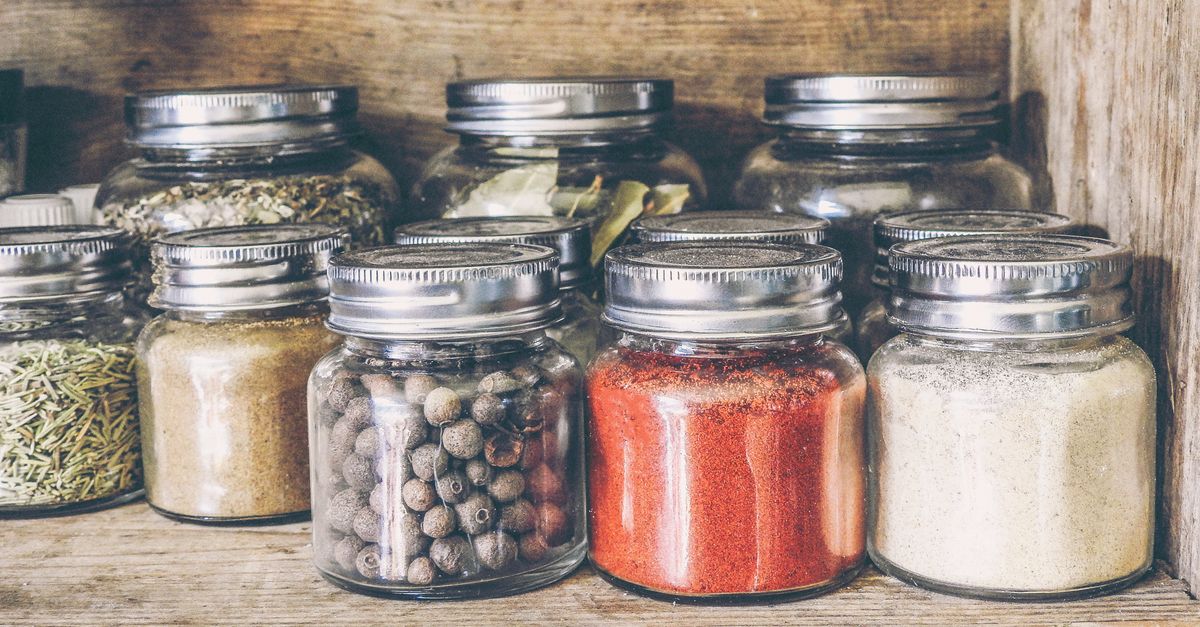
Almost nobody’s spices are off. They are just dead. A jar of ground coriander does not spoil in any safety sense; it simply loses the volatile oils that made it taste of anything, and what remains is beige dust that adds texture and false confidence to your cooking. If a curry made from a well-stocked spice cupboard tastes flat, the cupboard is the suspect, not the recipe.
The good news is that spice storage is cheap and easy to fix, and fresh herbs, which genuinely do rot, respond to a couple of tricks borrowed from florists.
Free PDF
Free Oven Temperature & Gas Mark Chart
A printable one-page conversion chart for your kitchen: degrees, fan, gas mark and the descriptions in between. Pop your email in and the PDF is yours, plus the odd straight-talking kitchen tip.
Free, unsubscribe any time. The download starts as soon as you sign up.
How long spices really last
Flavour in spices lives in volatile oils, and those oils escape faster the more surface area is exposed. That single fact explains the whole table: whole spices keep for years because the seed coat protects the oils; ground spices are all surface area and fade in months.
| Form | Full strength for | Usable until roughly |
|---|---|---|
| Whole spices (cumin seed, peppercorns, cardamom, cloves, cinnamon stick) | 2 to 3 years | 4 years |
| Ground spices (cumin, coriander, paprika, ginger) | 6 to 12 months | 2 to 3 years |
| Ground chilli, cayenne, paprika (fade and dull noticeably) | 6 months | 2 years |
| Dried herbs (oregano, thyme, bay) | 1 year | 2 to 3 years |
| Delicate dried herbs (basil, parsley, chives) | 6 months | 1 year, generously |
| Spice blends (curry powder, garam masala) | 6 months | 1 to 2 years |
| Nutmeg, whole | years, effectively | grate and see |
Those “usable until” figures mean “will still contribute something”. The best-before date on the jar is a quality estimate, not a safety deadline; nothing bad happens the day after it.
The test is your nose, not the calendar. Rub a pinch between your fingers and smell it. A live spice announces itself immediately. A dead one smells faintly of dust and old cardboard. If you have to concentrate to detect anything, it will contribute exactly that much to dinner.
Two practical consequences. First, buy whole where you reasonably can (cumin, coriander, peppercorns, cardamom) and grind as needed; a €10 blade grinder or a pestle and mortar pays for itself in flavour within a month. Toasting whole spices for a minute in a dry pan before grinding wakes them up further. Second, buy ground spices in small quantities. The enormous bargain bag of ground cumin is only a bargain if you cook through it within a year.
Where to keep them (not above the hob)
The enemies of spices are heat, light, air and moisture, and the classic spice rack mounted above or beside the hob delivers three of the four. The steam and heat of cooking age spices faster than anything else in the kitchen, and a clear glass jar in daylight bleaches paprika visibly within months.
- Keep spices in a cupboard or drawer away from the oven and hob. A drawer is ideal: dark, cool, and you can read the lids at a glance.
- Airtight jars, glass or metal, beat the cellophane packets they arrived in. Decant, and label with the date you opened them, because you will not remember.
- Never shake a jar directly over a steaming pan. The steam rises into the jar, moisture cakes the spice, and caked spice is on the fast track to must and, eventually, mould, which is the one way spices actually go off. Tip some into your hand or a spoon instead.
- The fridge is not the answer (condensation every time the jar comes out), with one exception: paprika and chilli powders keep their colour and dodge pantry moths in the freezer, in a genuinely airtight container.
Fresh herbs: two families, two methods
Fresh herbs divide cleanly by stem.
Soft herbs (parsley, coriander, dill, mint, basil): treat them like cut flowers. Trim the stem ends, stand the bunch in a jar with a few centimetres of water, cover loosely with the bag it came in, and put it in the fridge. Parsley and coriander keep two weeks or more this way, against three or four days dying in the salad drawer. Change the water when it clouds.
Basil is the exception in its own family: it is a tropical plant and the fridge blackens it. Keep basil in its jar of water on the worktop, out of direct sun, like the houseplant it wishes it was.
Hardy herbs (rosemary, thyme, sage, oregano, bay): wrap them in a barely damp sheet of kitchen paper, then loosely in a bag or box, and refrigerate. Two to three weeks. They do not want to stand in water.
The same logic that governs herbs governs everything else in the salad drawer; the fuller treatment is in storing fruit and veg, and general fridge lifetimes are in how long food lasts in the fridge.
Freezing herbs
Freezing is the honest answer to half a bunch of coriander, because dried coriander leaf is a waste of a jar. Frozen herbs lose their looks but keep far more flavour than dried, and they go straight from freezer to pan.
- Chopped in oil: chop soft herbs, pack into an ice cube tray, top up with olive or neutral oil, freeze, then bag the cubes. One cube is a portion of instant flavour base. This is the best method for basil, which turns black frozen bare.
- Chopped in water: same idea for herbs destined for soups and stews.
- Whole sprigs, dry: hardy herbs freeze fine in a bag as they are. Frozen rosemary strips off its stem more easily than fresh.
- Straight in, no ceremony: a bag of whole coriander or parsley, frozen flat, crumbles usefully into cooked dishes for a couple of months.
Frozen herbs are for cooking, not garnishing: the texture is gone, the flavour is not. Use them within three to six months. Wider freezer guidance, including labelling discipline, is in freezer storage times.
When to bin, and an honest audit
Bin fresh herbs when they are slimy, blackened or smell fermented; wilted-but-sound herbs are fine cooked. Bin any spice that is caked solid, smells musty, or shows webbing or movement in the jar (pantry moths love paprika and chilli). Everything else is a judgement call by nose.
A worthwhile twenty minute job: take every jar out of the cupboard, smell each one, and be ruthless. Most kitchens are running on eight live spices and twenty dead ones, and the dead ones are actively harmful in one specific way: they let you believe you seasoned the dish. Replace the five you actually use, whole where possible, small jars otherwise, dated on the lid, in a drawer away from the hob. Your cooking will improve without a single new technique.