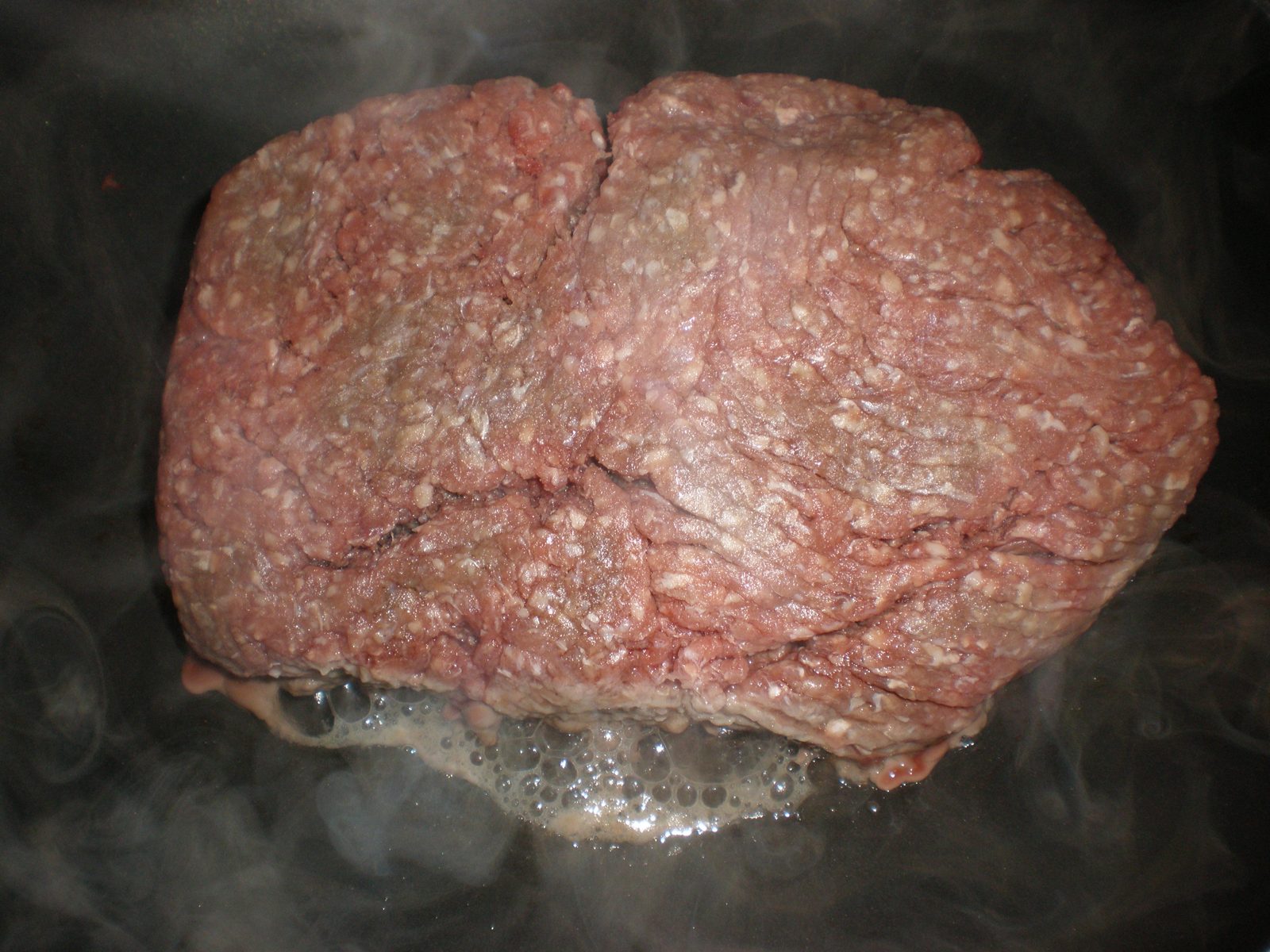
Mince is the workhorse of my kitchen. A big pan of it on a Sunday quietly becomes bolognese one night, chilli the next and a cottage pie by Thursday, which is exactly why the “how long is this still good?” question comes up so often in our house. The honest answer is shorter than most people assume, and mince earns that shorter window for a reason worth understanding. So here is how long a batch of cooked mince actually lasts, fridge and freezer, and the handful of rules that keep a batch-cook from turning into a bad night.
Free PDF
Free Oven Temperature & Gas Mark Chart
A printable one-page conversion chart for your kitchen: degrees, fan, gas mark and the descriptions in between. Pop your email in and the PDF is yours, plus the odd straight-talking kitchen tip.
Free, unsubscribe any time. The download starts as soon as you sign up.
The short version
Cooked mince keeps for two days in the fridge and up to three months in the freezer, provided you cooled it quickly and got it cold within two hours of cooking. Reheat it once, until it is piping hot all the way through, and never a second time. That is the whole thing. The rest of this is why mince is stricter than a joint of meat, and how to cook a big batch without any of it going to waste.
Why mince is a special case
A whole steak or a joint carries its bacteria on the outside, which is why you can eat a steak rare: the surface gets seared and the inside was sterile to begin with. Mincing changes that completely. The grinder takes whatever was on the surface of the meat and mixes it all the way through, so bacteria that would have sat harmlessly on the outside of a joint are now spread through every part of the mince, middle included.
That is the reason the NHS and the Food Standards Agency are firm that mince, burgers and sausages must be cooked right through until there is no pink meat left and the juices run clear. Bugs like E. coli O157 live on the surface of beef, and mincing folds them into the centre, so only cooking the whole lot properly makes it safe. It is also why cooked mince deserves the more cautious end of the leftovers rules rather than the relaxed one.
Raw mince is on a short clock to begin with. It keeps only a day or two in the fridge, less than a steak, because all that extra surface area gives bacteria far more room to multiply. Cook it before that runs out, or freeze it, where it holds its quality for three to four months.
In the fridge: two days, cooled fast
Once mince is cooked, the clock that matters is how quickly it gets cold. Bacteria multiply fastest in what the FSA calls the danger zone, between 8 and 63C, and a pan of mince left cooling on the hob sits right in the middle of it. The rule I follow, straight from NHS guidance, is to cool leftovers as quickly as I can and get them into the fridge within two hours, then eat them within two days.
You will see American sources, and plenty of blogs quoting them, give cooked meat three to four days. That is the USDA figure, and it is not wrong for their conditions, but the UK advice is tighter and I stick with it for mince specifically. Two days is the number I plan around. If I know a batch will not get eaten inside that window, it goes in the freezer on day one rather than lingering hopefully in the fridge until day three.
A few things that make the cooling actually work:
- Split it up. A single deep tub of mince holds its heat for hours. Spread it across shallower containers and it cools far faster.
- Do not wait for it to be stone cold before it goes in. Get it down to roughly room temperature, then straight into the fridge. Leaving it out longer to “protect the fridge” just gives bacteria more time.
- Keep the fridge at 0 to 5C. Warmer than that and the two-day window is optimistic. This is the same cold-chain thinking behind how long food lasts in the fridge.
Mince behaves here exactly like cooked rice and cooked pasta: it is the slow cooling, not the reheating, that catches people out. The same cool-quickly rule I bang on about in how long does cooked rice last is doing the heavy lifting for mince too.
In the freezer: three months for quality
The freezer is where mince really shines, because a cooked, sauced batch freezes beautifully. Frozen solid at -18C, cooked mince is safe more or less indefinitely; bacteria cannot multiply at freezer temperatures at all. What actually runs down is quality, not safety. After about three months the texture starts to dry out and the flavour fades, so three months is the line I aim to use it within rather than a hard safety cut-off.
A sauced mince, a bolognese or a chilli, freezes better than plain browned mince, because the sauce protects it from freezer burn and the drying that comes with it. I freeze in meal-sized tubs or flat in bags, labelled with the date, because a freezer full of anonymous frozen bricks is a freezer full of things you will never quite trust. There is more on stacking a freezer this way in freezer storage times.
To use it, defrost in the fridge overnight rather than on the counter, for the same danger-zone reason as always. The full set of safe thawing methods is in defrosting food safely.
Reheating: hot, and only once
This is the rule I will not bend on. You reheat cooked mince once, and you make sure it is piping hot all the way through, steaming in the middle, not just warm around the edges. Every cool-and-reheat cycle is another trip through the danger zone and another chance for bacteria to breed, which is why the NHS is clear that leftovers should only ever be reheated a single time.
That single reheat has a practical knock-on for batch cooking: portion the mince into the amounts you will actually eat before you chill or freeze it, so you only ever reheat what is going on the plate that night. If I reheat a whole tub to serve two people, the leftovers from that reheated tub do not get a second turn; they go in the bin. Far better to take out one portion, heat it hard, and leave the rest untouched and cold. The wider reheating rules, including the piping-hot test, are in reheating leftovers safely.
How to batch-cook mince without the worry
Batch-cooking mince is one of the best habits in a busy kitchen, and it is perfectly safe if you build the cooling and portioning in from the start. The shape I use:
- Cook the whole batch through properly. No pink, juices clear. This is the step that makes it safe, so do not rush it.
- Cool it fast. Off the heat, split into shallow containers, and into the fridge within two hours. On a warm day I sit the containers in a sink of cold water for ten minutes first to knock the temperature down.
- Portion before storing. Meal-sized tubs for the freezer, a day-or-two’s worth in the fridge. Portioning now saves you the reheat-once headache later.
- Label with the date. Two days for the fridge, three months for the freezer, and you will not have to guess.
Scaling a recipe up to batch size is where a lot of people trip, doubling the meat but not the seasoning, or the other way round. The recipe scaler keeps the ratios honest when you go from a family portion to a freezer-filling batch, and if the bigger dish moves you up an oven dish or roasting tin, the cake tin converter sorts the swap.
How to tell if cooked mince has turned
The dates above are your real safety net, but your senses are the veto. Cooked mince that has gone off usually smells sour or sharp, feels slimy or tacky rather than moist, and may look greyer or duller than it did. Any of those and it goes straight in the bin, no sniffing twice, no “it will be fine once it is reheated.”
The catch, and it is an important one, is that the tests only ever work in one direction. A bad smell tells you to throw it out. The absence of a bad smell does not tell you it is safe, because the bacteria that make you ill often leave no smell, taste or change in look at all. That is the same veto-not-a-green-light logic I set out in how to tell if chicken has gone off, and it matters just as much for mince. Trust the dates first and your nose second, never the other way round.
The rule in one line
Cooked mince keeps two days in the fridge and three months in the freezer if you cool it fast, and you reheat it once until it is piping hot. Cook it through, portion it early, label the date, and a Sunday batch will see you cleanly through the week.