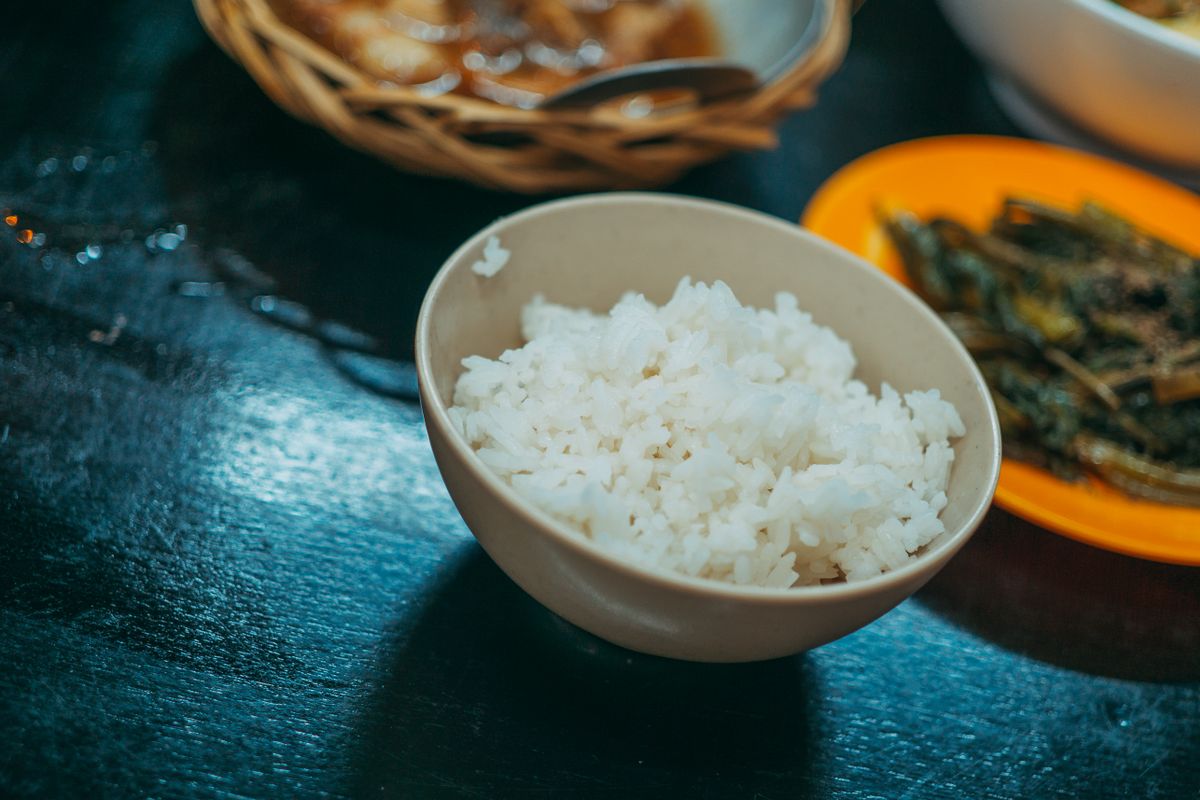
Cooked rice is the one leftover in my kitchen that I treat with genuine respect, and it took me a while to understand why. For years I did what most people do: cooked a big pan, ate what we needed, and left the rest sitting in the pan on the hob until it was cold enough to bother putting away, which on a busy evening could be two or three hours. Nobody ever got ill, so I assumed it was fine. It was not fine. It was luck, and once I understood the actual mechanism I changed the way I handle rice completely. The rules are simple, they are not fussy, and they matter more than for almost any other leftover.
Free PDF
Free Oven Temperature & Gas Mark Chart
A printable one-page conversion chart for your kitchen: degrees, fan, gas mark and the descriptions in between. Pop your email in and the PDF is yours, plus the odd straight-talking kitchen tip.
Free, unsubscribe any time. The download starts as soon as you sign up.
Why rice is different
The problem has a name: Bacillus cereus. It is a bacterium whose spores live naturally on rice, and here is the part that catches people out. Those spores survive cooking. You can boil rice to a rolling boil for as long as you like and the spores are still there afterwards, unbothered. This is not a sign your rice is dirty or your cooking is bad. It is simply a feature of the raw grain, and it is true of essentially all rice.
The spores themselves do you no harm. The trouble starts when cooked rice sits at room temperature. Warm, moist, cooked rice is an ideal home, and the spores wake up, multiply into active bacteria, and some strains produce a toxin as they grow. The Food Standards Agency is blunt about it: the longer cooked rice is left standing at room temperature, the more likely it is that the bacteria will multiply and produce toxins that make the rice unsafe.
That is the whole story in one sentence. It is not the rice, and it is not the reheating. It is the hours spent cooling slowly on the worktop.
The one-hour cooling rule
Because the risk is all about time spent warm, the single most useful thing you can do is cool cooked rice fast. The FSA advice is to chill leftover rice as quickly as possible, ideally within one hour of cooking. That one hour is the number I keep in my head.
An hour sounds tight, but a hot pan of rice left whole will not come close, so the trick is to help it along. What I actually do:
- Spread it out. A deep pan of rice holds its heat for ages. Tip the rice into a wide, shallow dish or a cold plate and spread it thin, and it sheds heat in a fraction of the time.
- Get it out of the cooker. Do not leave rice sitting in the rice cooker, the steamer or the pan to cool down. Those hold warmth deliberately, which is exactly the wrong thing here. The FSA calls this out specifically.
- Divide big batches. Split a large amount into two or three smaller portions and each one cools faster than one big mass.
- Do not seal it hot. A lidded box full of steaming rice traps the heat and cools slowly, which is the opposite of what you want. Let it cool, then cover and refrigerate.
Once it is cold, into the fridge it goes, ideally at 5C or below. There is no need to overthink any of this. It is spread it out, cool it fast, put it away.
The one-day fridge limit
This is where rice parts company with most of my other leftovers. Cooked chicken I will keep two days, a stew maybe two or three. Cooked rice I give one day, and one day only. The FSA line is to eat cooked rice within 24 hours of cooking it.
I know one day feels conservative, and I know plenty of people push it further and come to no harm. But the reason for the tight limit is the same reason cooling matters: every extra hour is more time for anything that survived to keep working, and the toxin that some strains produce is not something you can see, smell or taste. There is no sniff test that saves you here, which is a big part of why I do not gamble on rice the way I might risk another day on a hardy leftover. If it has been in the fridge since yesterday, it gets eaten today or it goes.
Why reheating does not fix it
This is the single most important thing to understand, and it is the thing almost nobody knows. Reheating does not undo the problem.
You would think blasting rice piping hot would kill whatever is in there and reset the clock. It does kill the active bacteria. The catch is the toxin. The poison that Bacillus cereus produces as it grows is heat-stable, which is a plain way of saying that heat does not destroy it. Once the toxin has formed in rice that sat out too long, it is there for good, and reheating gives you hot rice with the toxin still in it.
That is why the storage matters so much more than the reheating. As the FSA puts it, it is not the reheating that causes the problem, but the way the rice has been stored before it is reheated. Get the cooling and the timing right and reheating is a formality. Get them wrong and no amount of heat will rescue the rice. This is the fact that changed how I cook, because it means the safe rice is decided at the cooling stage, not at the reheating stage.
How I actually reheat it
When I do reheat rice, the rule is simple: once, and until it is piping hot all the way through. Steaming hot, right to the middle, not just warm around the edges. If I am using the microwave I stir it halfway and give it a moment to settle, because microwaves leave cold pockets and a cold pocket is an unheated pocket.
And I never reheat rice more than once. This is FSA advice too, and it follows from everything above. Each reheat means another warm-up and cool-down, another window for trouble, and the rice has already had its one day. So I only reheat the portion I am going to eat, and whatever is left after that does not go back in the fridge for a third life. It gets binned. A splash of water before reheating keeps it from drying out, which is a nice bonus, but the water is for texture, not safety.
If you want the fuller picture on reheating other leftovers, I have written that up in reheating leftovers safely. Rice is the strictest case, but the principles carry across.
Freezing cooked rice
Freezing is genuinely useful for rice, and it sidesteps the one-day fridge problem neatly. Freezing does not kill the spores or destroy the toxin either, so it is not a magic reset, but it does stop everything in its tracks the way cold storage is meant to. The key is that the same cooling rule applies before it goes in: cool the rice fast, within the hour, then freeze it once it is cold.
I freeze rice in meal-sized portions in flat, sealed bags or boxes, cooled and dated. It keeps well for a month or so with good texture, and it reheats straight from frozen, which is one of the great weeknight shortcuts. Break it up, add a splash of water, and get it steaming hot all the way through in the microwave or a hot pan. Same rule as ever: once, and piping hot. For how freezing fits with the rest of the freezer, see freezer storage times.
The only thing I would flag is the same-day habit. Rice I mean to freeze, I cool and freeze on the day I cook it, not after it has already spent a day in the fridge. It has one journey through the danger zone in it, and I would rather spend that journey getting it into the freezer.
The takeaway fried rice question
People often ask why takeaway fried rice specifically has a reputation, and it is worth understanding because it is the same story in a professional kitchen. Fried rice is very often made from rice that was boiled earlier, sometimes the day before, and then fried to order. That is a perfectly good way to make it. The risk creeps in if that pre-cooked rice was cooled slowly or held warm for hours before frying, because frying, like reheating at home, does not remove a toxin that has already formed. A busy kitchen that cools and stores its rice properly serves safe fried rice all day long. The dish gets blamed, but the real variable is always how the rice was stored between the boil and the wok.
At home the lesson is the same when I make egg fried rice from yesterday’s leftovers, which I love doing. It only works safely if that leftover rice went into the fridge fast, within the hour, the day before, and is getting its one and only reheat now as I fry it. Cooked properly the first time and cooled properly, it is one of the best uses for leftover rice there is. If you want to nail the first cook so you have good rice to work with, I have a method in how to cook perfect rice.
The short version
None of this is meant to make anyone nervous about a bowl of rice. Cooked rice is safe, easy and endlessly useful, and I make it several times a week without a second thought, because the handling is now automatic. The whole thing comes down to four habits:
- Cool it fast, within one hour. Spread it thin, get it out of the pan, do not seal it hot.
- Fridge for one day only. No sniff test will save you, so do not push it.
- Reheat once, until piping hot. And accept that reheating cannot fix rice that was stored badly.
- Freeze on the day if you want longer. Same cooling rule first, then it keeps for a month.
Do those four things and rice stops being a worry and goes back to being what it should be, which is the cheapest, most useful staple in the kitchen. The respect I give it is not fear. It is just a routine, and once it is a routine it costs you nothing.