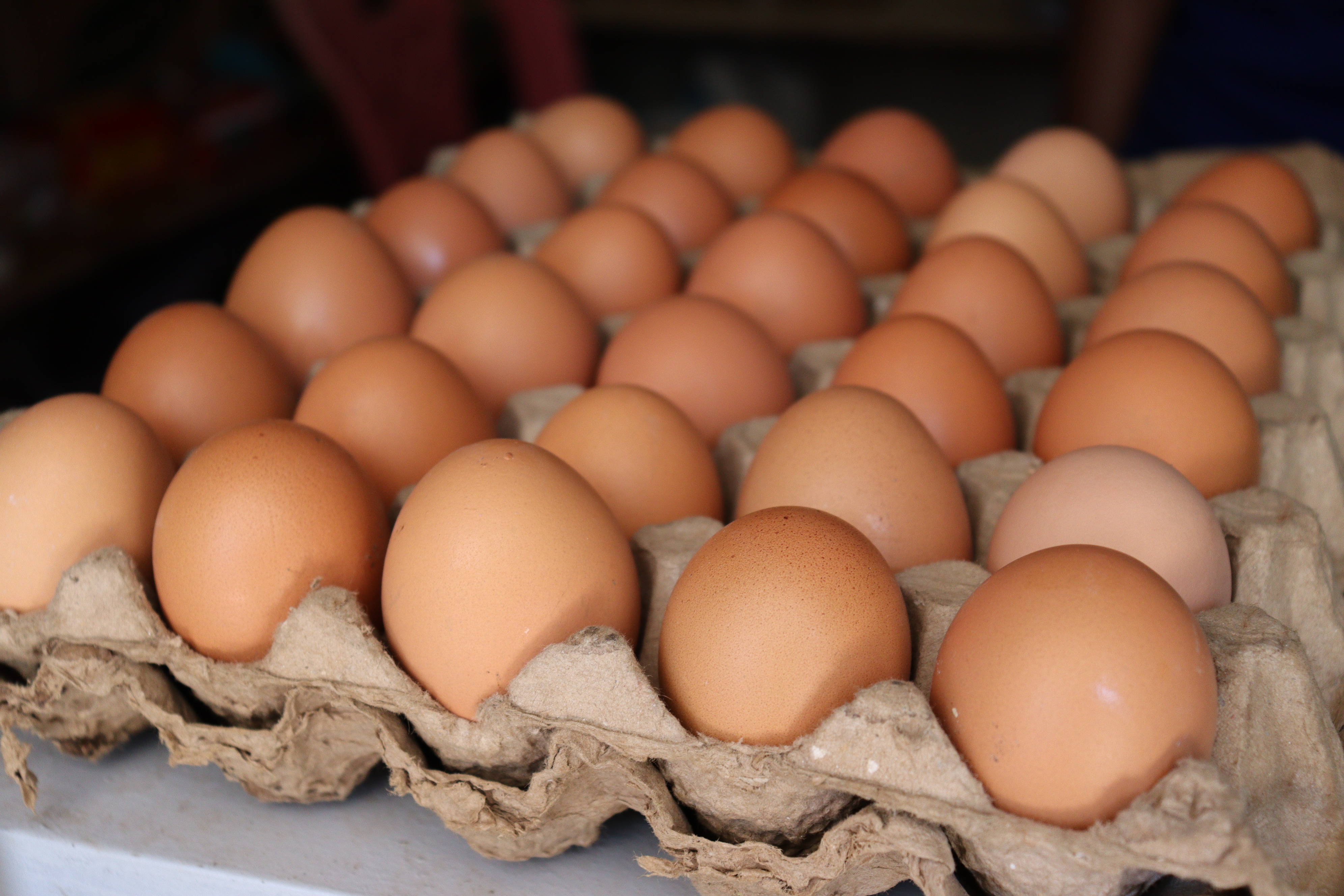
Eggs are the item I most often find myself with too many of. A box bought when there was already half a box in the fridge, the three yolks left over from a pavlova, the four whites left over from a custard, the dozen from a neighbour with more hens than sense. For years I treated eggs as a use-them-or-lose-them thing, and a fair few got binned as the date crept past. Then I learned you can freeze them, which felt almost like cheating. You can, and it works well, but there are a couple of rules you have to get right or you end up with something unusable. Here is how to do it properly: what to do before they go in, how long they keep, and how to bring them back safely.
Free PDF
Free Oven Temperature & Gas Mark Chart
A printable one-page conversion chart for your kitchen: degrees, fan, gas mark and the descriptions in between. Pop your email in and the PDF is yours, plus the odd straight-talking kitchen tip.
Free, unsubscribe any time. The download starts as soon as you sign up.
Yes, but never in the shell
Start with the one thing you must not do. Never freeze an egg in its shell. The USDA is clear on this, and the reason is simple physics: the liquid inside expands as it freezes, and the shell cannot give, so it cracks. A cracked shell in the freezer is not just messy, it is an open door for bacteria, and a shell that splits in the freezer has lost the barrier that was keeping the egg safe. So the shell always comes off first. This holds for whole raw eggs and it holds for hard-boiled eggs too, which freeze badly anyway; the cooked white turns rubbery and weeps water, so hard-boiled eggs are one of the few egg forms simply not worth freezing.
What you freeze instead is the egg out of its shell: whole and beaten, or the whites and yolks separated. All three freeze well, and each is useful in a slightly different way.
The yolk problem, and the pinch that fixes it
Here is the bit almost no one knows until they get caught out. Egg yolks, frozen on their own with nothing added, undergo something called gelation. The freezing makes the yolk thicken and gel, and once it has done so it stays that way even after thawing, turning into a stubborn, gluey paste you cannot properly whisk back into a recipe. Freeze a bowl of plain yolks and you may find them close to useless on the other side.
The fix is a pinch of salt or a little sugar, beaten into the yolks before they go in. Both stop the gelation. Which you choose depends on what you plan to cook: salt for savoury (scrambled eggs, quiche, mayonnaise), sugar for sweet (custards, cakes, ice cream). The National Center for Home Food Preservation gives clear amounts: for every quarter cup of yolks, which is about four yolks, beat in either an eighth of a teaspoon of salt or one and a half teaspoons of sugar. Whisk it through gently, without beating in air, then freeze. Label it clearly with whether you went salt or sugar and how many yolks it holds, because a frozen tub of yolk gives you no clues later and salted yolk in your ice cream is not the surprise you want.
The same stabiliser trick applies to whole beaten eggs, since a whole egg contains yolk: a pinch of salt or a little sugar per couple of eggs keeps the texture right. Whites are the easy ones. Egg whites freeze perfectly well with nothing added at all; just tip them into a container and freeze.
How to freeze them, step by step
For whole eggs, crack each one into a bowl and beat the yolk and white together gently until just combined, not frothy. Add your pinch of salt or sugar if you like, though for whole eggs it is less critical than for pure yolks. Then freeze.
The trick I rely on is an ice cube tray. Beat your eggs, pour the mixture into the compartments, freeze until solid, then pop the cubes out into a labelled freezer bag. Portioned like this you can take out exactly what a recipe needs. As a rough guide, three tablespoons of beaten whole egg equals one whole egg, one tablespoon of yolk mixture equals one yolk, and two tablespoons of white equals one white. I write the conversion on the bag so I am not doing sums at seven in the morning. If you would rather not measure, freeze one egg per compartment and label it as such.
Whatever the format, get the air out and seal well. Eggs pick up freezer smells and dry out at the edges if left exposed, so a tight container or a well-squeezed bag makes the difference between eggs you are glad to find and eggs you thaw out of guilt.
How long they keep, and thawing them safely
Frozen raw eggs keep well for up to a year, though I aim to use mine within a few months while the texture is at its best. As with all frozen food, they stay safe indefinitely at a proper freezer temperature; the time limit is about quality, not danger.
Thawing is where a little care matters, because egg is a food that bacteria are happy to grow on, and Salmonella is the reason we treat eggs with respect. Thaw frozen eggs in the fridge overnight, not on the worktop, so they never sit in the warm zone where bacteria multiply. If you are in a hurry, you can thaw the sealed container under cold running water. Once thawed, use them promptly, within a day, and do not refreeze raw thawed egg.
The most important safety point of all: cook thawed eggs thoroughly. Previously frozen eggs are best kept for dishes that will be properly cooked through, scrambled eggs, omelettes, baking, quiche, rather than anything where the egg stays raw or barely set. That means giving a wide berth to homemade mayonnaise, mousses, soft-set custards and runny fried eggs made from previously frozen egg. Thorough cooking is what deals with any Salmonella, and a dish that leaves the egg raw or lightly cooked skips that step. Whites are more forgiving, since meringue and the like bake for a long time, but for whole eggs and yolks, treat thawed egg as an ingredient for cooked dishes and you will not go wrong.
The waste it saves
Freezing eggs has quietly changed how I bake. Leftover whites from a batch of custard no longer nag at me from the fridge; they go into the freezer and come out weeks later for a pavlova or to gloss a loaf. Spare yolks get a pinch of sugar and wait for the next ice cream. A box nearing its date gets cracked, beaten and cubed rather than binned. It is a small habit, but over a year it adds up to a lot of eggs that would otherwise have gone in the food waste caddy.
If you are getting into stocking the freezer more deliberately, it is worth knowing the keeping times for everything else too; our guide to freezer storage times lays them out, and defrosting food safely covers the thawing rules that matter for the higher-risk foods. If your leftover eggs are more of a freshness question than a freezing one, how to tell if an egg has gone off explains the float test and the smell test and which one actually settles it. And when a recipe needs scaling to match the eggs you have, the recipe scaler and ingredient converter will do the arithmetic for you.