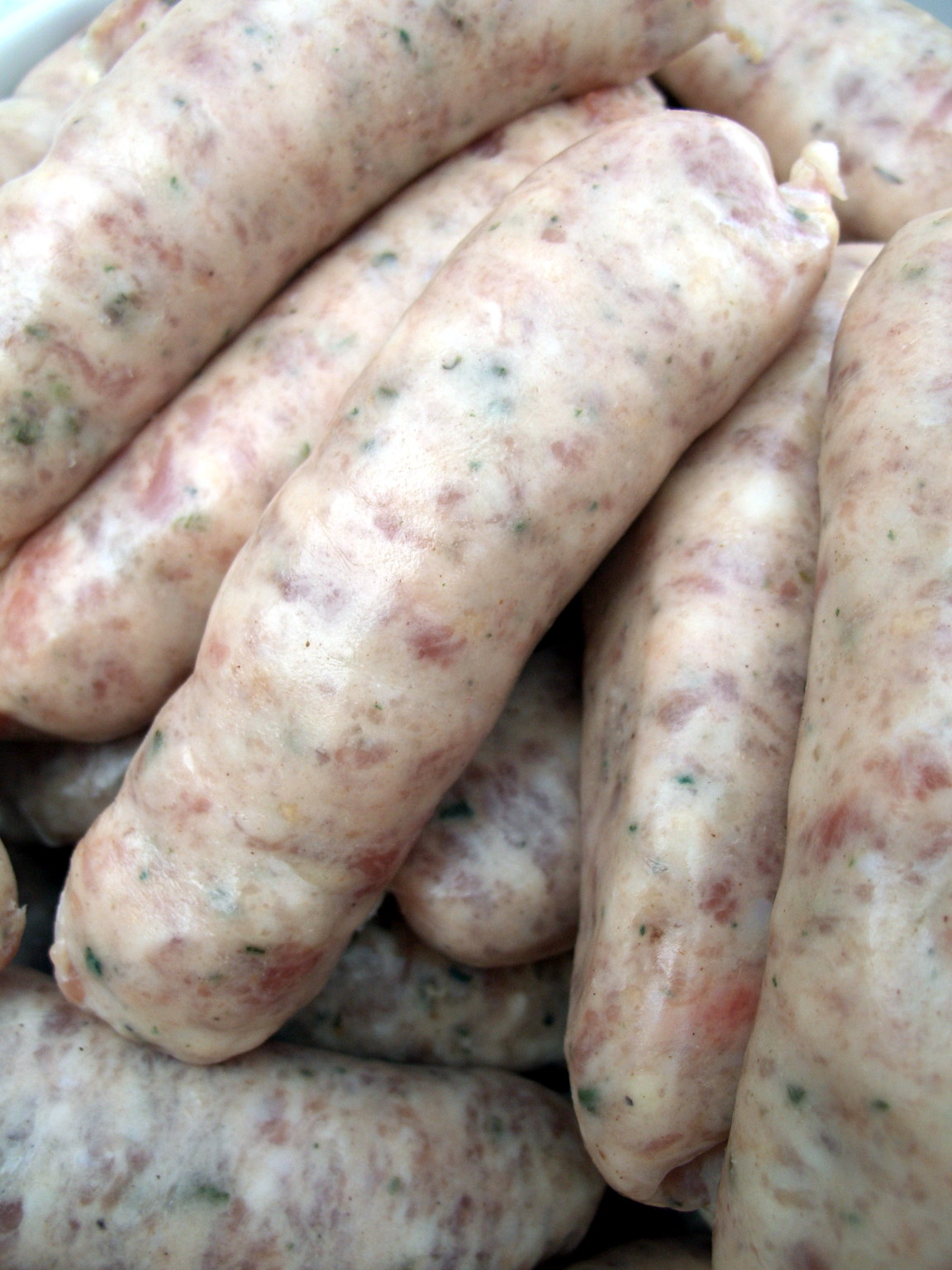
Yes, you can freeze sausages, raw or cooked, and they are one of the better things to keep in the freezer because a pack always seems to hold one or two more than a meal actually needs. Raw sausages keep their best quality for about 1 to 2 months frozen, cooked ones for around 2 to 3 months, and both stay safe well beyond that even as the texture slowly slips. The catch is not the freezing, it is the thawing and the cooking, because sausages are the classic food that looks done on the outside while the middle is still cold. Get that part right and a multipack becomes three or four easy dinners instead of a use-by-date panic.
I nearly always freeze half a pack the day it comes in. It costs nothing, and it means the sausages that would otherwise have quietly aged in the fridge for a week are safely paused instead.
Free PDF
Free Oven Temperature & Gas Mark Chart
A printable one-page conversion chart for your kitchen: degrees, fan, gas mark and the descriptions in between. Pop your email in and the PDF is yours, plus the odd straight-talking kitchen tip.
Free, unsubscribe any time. The download starts as soon as you sign up.
Freeze them on the day, within the use-by date
The single most useful habit is to freeze sausages while they are still fresh, not on the last afternoon before the use-by date when you have decided you cannot face them. The UK Food Standards Agency says you can freeze food right up to and including its use-by date, and freezing stops bacteria in their tracks, but it does not undo any spoiling that has already happened. Raw sausages carry a use-by date, not a best-before, and that is a safety date. Never freeze, cook or eat sausages that are past it.
So the rule I go by: if I know on day one or two that I will not use the whole pack, that is when it goes in the freezer, at its best, not scraped in at the eleventh hour.
How to freeze raw sausages so you can grab just a few
The mistake is freezing the whole pack solid in one lump, because then you have to thaw the lot to cook two. A few better ways:
- Separate them first. Lay the sausages on a tray in a single layer, not touching, and open-freeze them for an hour or two until firm, then tip them into a labelled freezer bag. Now they are loose and you can take out exactly as many as you want.
- Or layer with greaseproof. If you are short on tray space, stack them with a strip of greaseproof paper between each one so they do not weld together.
- Squeeze the air out. Press the air from the bag before sealing. Air is what causes freezer burn, those dry grey patches that make sausages taste stale.
- Label with the date and type. Frozen sausages look much like every other frozen tube of meat once they are hard, and a chest freezer swallows unlabelled bags whole.
Do the same with sausage meat, freezing it flat in a bag so it thaws quickly and you can snap off a portion.
How long frozen sausages actually keep
Freezing keeps them safe more or less indefinitely, so these are quality windows, not safety deadlines. Sausages are fatty and usually seasoned, and fat and salt both go off in flavour faster than plain lean meat, so they do not last as long in the freezer as, say, a chicken breast.
- Raw sausages: best within 1 to 2 months. Still safe beyond that, just increasingly dull and prone to freezer burn.
- Cooked sausages: best within 2 to 3 months.
- Sausage meat: treat like raw, 1 to 2 months for best quality.
If a thawed sausage smells rancid or sharp, or is covered in grey freezer burn, that is a quality call rather than a safety one, but I would not serve it. When you genuinely cannot tell whether something is still good, throw it out.
Defrosting sausages safely
Thaw raw sausages in the fridge, not on the worktop. On the counter the outside warms into the temperature range where bacteria multiply while the middle is still frozen, and sausages, being ground meat with a lot of surface area mixed through them, are exactly the food where that matters most. A few sausages thaw overnight in the fridge; a full pack may want a good 24 hours, so plan a day ahead. Stand them on a plate or in a tub so any drips do not land on other food.
Once they are thawed, cook them within 24 hours and do not refreeze them raw. That last rule trips people up, so it gets its own section. For the full picture on thawing any meat, the defrosting food safely guide goes deeper.
Can you cook sausages straight from frozen?
Sometimes, and here is the honest version rather than the reassuring one.
If the pack says the sausages are suitable to cook from frozen, follow that instruction and you are fine. Those products are designed and tested for it. Cook them low and slow, allow noticeably longer than the fresh time, and check the middle is piping hot before you serve.
If they are ordinary raw sausages you froze yourself loose in a bag, cooking from frozen is riskier, not because it cannot be done but because it is easy to get wrong. The outside browns and looks ready long before the dense, cold centre has come up to a safe temperature, so you end up with a charred skin around a cool pink middle. My strong preference is to thaw them fully in the fridge first, then cook. If you are genuinely stuck and must cook from frozen, do it gently, turn them often, give them far longer than usual, and check the core before serving.
Whichever route you take, the target is the same. Cook sausages until the centre reaches 70°C and holds it for 2 minutes, which is the standard the FSA gives for cooking meat safely. In practice that means piping hot all the way through, no pink meat, and juices that run clear. A cheap probe thermometer settles the argument in seconds; if you want the temperatures for other meats too, the meat doneness temperatures guide has them, and if you are doing a big tray in the oven the roasting time calculator or the air fryer conversion calculator help you judge the timings.
The refreezing rule, in plain terms
You cannot refreeze raw sausages that have thawed. Once they have defrosted, bacteria that were paused start multiplying again, and refreezing simply parks a bigger bacterial load for later, it does not reset anything. The FSA is firm on this: do not refreeze raw food that has been defrosted.
There is a legitimate way round it, though, and it is genuinely useful. You can cook the thawed sausages and then freeze them cooked. Take a pack out, thaw it, fry or bake the lot, cool the cooked sausages quickly, and freeze the ones you did not eat. Now you have grab-and-go cooked sausages for a quick pasta, a sandwich or a plate with beans, and you have broken no rules. Cooking is the step that makes a second freeze safe. The can you refreeze meat piece walks through the same logic for meat in general.
The short version
Freeze sausages fresh, within the use-by date, open-frozen and bagged so you can take a few at a time. Best quality is 1 to 2 months raw, 2 to 3 months cooked. Thaw in the fridge, never on the counter. Cook to 70°C for 2 minutes, piping hot with no pink, and only cook from frozen if the pack says so or you are very patient about the middle. Do not refreeze them raw, but do cook and then freeze if you want a second round. None of this replaces the advice on the packet, which is written for that specific product and always takes priority.
For the rest of what lives in the freezer, the freezer storage times chart has the full list, and if you are ever unsure which date on a pack is the safety one, the use-by vs best-before guide clears it up.