Cooked food should not sit out at room temperature for more than two hours, and no more than one hour if the room is properly hot, say a warm kitchen in summer or food on a table in the sun. That is the working rule the UK Food Standards Agency, the NHS and the USDA all land on, and it is the one I go by at home. The pan of bolognese left on the hob while everyone drifts off after dinner, the roast cooling on the side, the rice you meant to put away: the safe move is to get them cooled and into the fridge inside a couple of hours, not to leave them until bedtime.
The reason is not fussiness. It is what happens to bacteria in the warm, and once you understand that, the rest of the advice on this site about leftovers, reheating and cooling makes a lot more sense. Here is the honest version, including the bit most articles skip: why you cannot always tell.
Free PDF
Free Oven Temperature & Gas Mark Chart
A printable one-page conversion chart for your kitchen: degrees, fan, gas mark and the descriptions in between. Pop your email in and the PDF is yours, plus the odd straight-talking kitchen tip.
Free, unsubscribe any time. The download starts as soon as you sign up.
The danger zone, in plain terms
Bacteria that cause food poisoning grow fastest in a band of temperatures between roughly 8°C and 63°C. This band is what food safety people call the danger zone (the USDA puts it at 40°F to 140°F, which is much the same range in different units). Below it, in a fridge at 5°C or colder, bacteria slow right down. Above it, at proper cooking and reheating temperatures, they are killed. In the middle, and especially around body temperature, they are in their comfort zone and they multiply.
And they multiply quickly. In the right conditions a single bacterium can double roughly every twenty minutes. That means a small, harmless number on a plate of cooked food can become a large, dangerous number in a few hours at room temperature, without the food looking any different. Two hours out is about the point at which that growth stops being trivial, which is where the rule comes from. One hour is the tighter limit when the room is hot, because heat speeds the whole process up.
Cooked food is not off the hook here. People assume the danger is raw meat, but cooking kills the bacteria that were there, it does not vaccinate the food against new growth. Cooked rice, pasta, meat, gravy and made-up dishes sitting warm on the side are all prime territory, which is exactly why the two-hour rule applies to leftovers just as much as to anything raw.
The clock is cumulative, which is the part people miss
Here is the detail that changes how you handle food, and it is the one I wish someone had told me years ago. The two hours is not a fresh allowance each time the food comes out of the fridge. It is a running total for the food’s whole life out of the cold.
So if a dish sat out for an hour and a half while you served and ate, then went in the fridge, then came out again for another hour at lunch the next day, you are well past the limit, even though it was never out for two hours in one go. Every stint at room temperature adds to the same tally. This is why food that has been picked at across a long buffet, or repeatedly taken out and put back, is riskier than the raw hours might suggest.
The practical version I actually use: cool it fast, put it away once, take it out once to reheat, and eat it. The more times food loops through the warm, the more the total time in the danger zone stacks up.
Cooling fast matters more than the exact minute
If you take one habit from this, make it this one. Do not wait for hot food to go stone cold before it goes in the fridge, and do not put a large steaming pot straight in either. The trick is to help it cool quickly so it spends as little time as possible in that warm band.
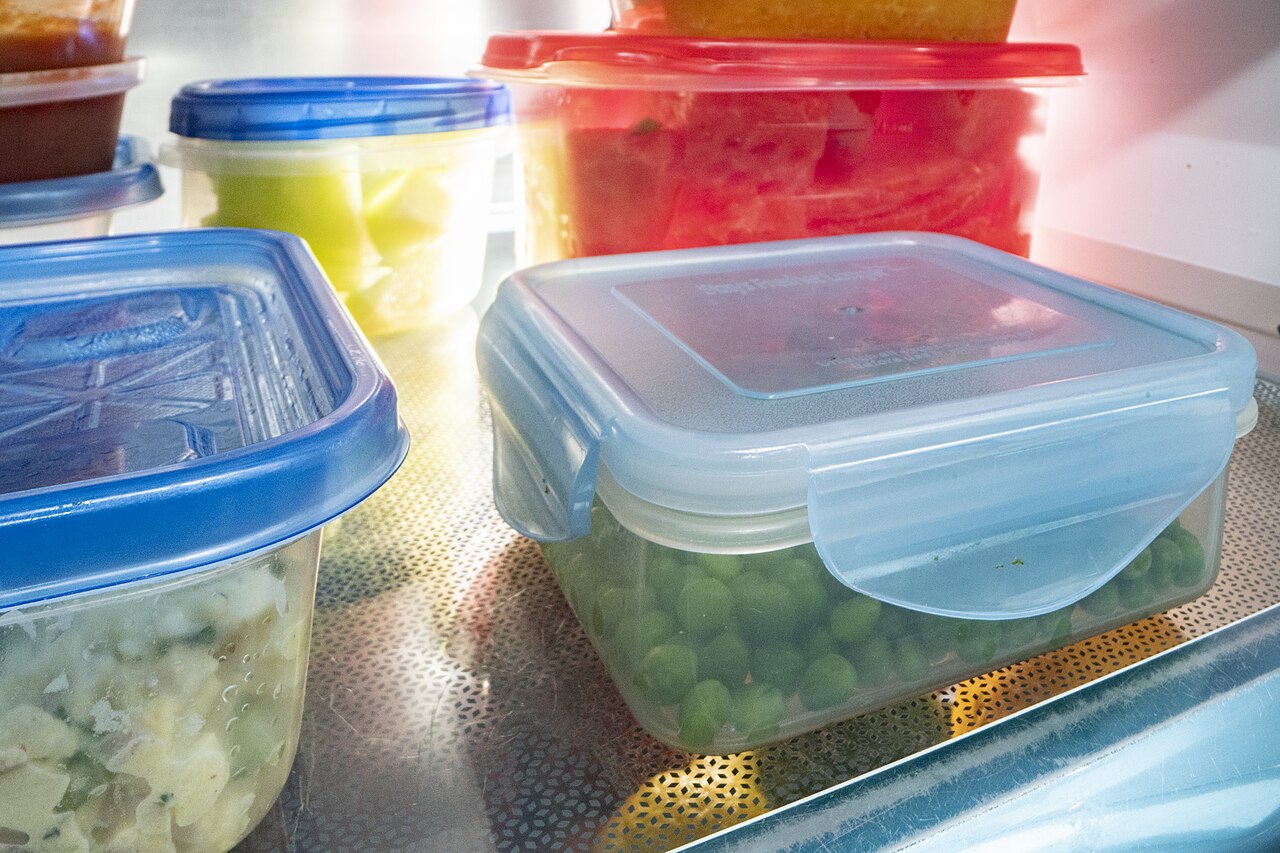
What I do: split a big batch into shallow containers rather than leaving it as one deep pot, because a thin layer loses its heat far faster than a dense mass that stays warm in the middle for ages. Stirring helps, and for something like a big pan of stock or chilli, standing the pan in a sink of cold water for a bit brings the temperature down quickly before it goes in. The NHS advice is to cool cooked food as fast as you can, ideally within two hours, then refrigerate it. Aim to get it into a fridge running at 5°C or below, and you have moved it out of the danger zone and paused the whole problem.
Once it is chilled, eat leftovers within two days. My guide to how long food lasts in the fridge has the item-by-item version, and reheating leftovers safely covers the other end: reheat only once, and make sure it is steaming hot all the way through, not just warm at the edges, before you eat it.
Rice, and why it gets a special mention
Cooked rice deserves its own warning because it behaves badly if left out. Uncooked rice can carry spores of a bacterium called Bacillus cereus that survive cooking. If cooked rice is then left to sit at room temperature, those spores can grow and produce toxins, and reheating later will not always destroy the toxins even if it kills the bacteria. That is the mechanism behind so-called fried rice syndrome.
The fix is the same rule, applied a bit more strictly: cool leftover rice as quickly as you can, ideally within an hour, get it in the fridge, use it within a day, and reheat it once until piping hot. I go into the detail in how long does cooked rice last, but the short version is that rice is the food I am most careful about leaving out, more so than the meat.
Why you cannot just smell it
This is the honest limit, and it is important enough to say plainly. Food that has spent too long in the danger zone often looks, smells and tastes completely normal. Many of the bacteria that cause food poisoning, and the toxins some of them produce, leave no odour, no slime and no visible sign at all. The sniff test is genuinely useful for spotting food that has gone off in the spoilage sense, sour milk or rancid fat, but it does not detect the invisible growth that comes from food sitting out too long. And you should never taste a small bit to check, because a tiny amount of the wrong toxin is enough to make you ill.
So the time rule is the test, not your nose. If cooked food has been out for more than two hours, or more than an hour in a hot room, or you genuinely cannot remember how long it has been sitting there, the safe answer is to throw it out. It feels wasteful, and I hate waste as much as anyone, but a binned portion is a far better outcome than a night of food poisoning. When in doubt, throw it out.
This matters most for the people least able to shrug off a bad bout: anyone pregnant, very young children, older people, and anyone whose immune system is not at full strength. If you are cooking for someone in one of those groups, err firmly on the cautious side of every time above.
The short answer
Cooked food is safe out of the fridge for up to two hours, or one hour if the room is hot, and that time is a running total across everything the food has been out for, not a fresh allowance each time. Bacteria multiply fast in the danger zone between about 8°C and 63°C, so the job is to cool food quickly, in shallow containers, and get it into a fridge at 5°C or below, then reheat it once until steaming hot and eat leftovers within two days. You cannot rely on how it looks or smells, because the growth that makes you ill is often invisible, so let the clock decide. Past the limit, or unsure, bin it. For the follow-on questions, defrosting food safely and how many times you can reheat food cover the rest of the leftover’s journey.
This is a general kitchen reference, not medical advice. If you think you have eaten something unsafe or feel unwell, follow NHS guidance or speak to a doctor.