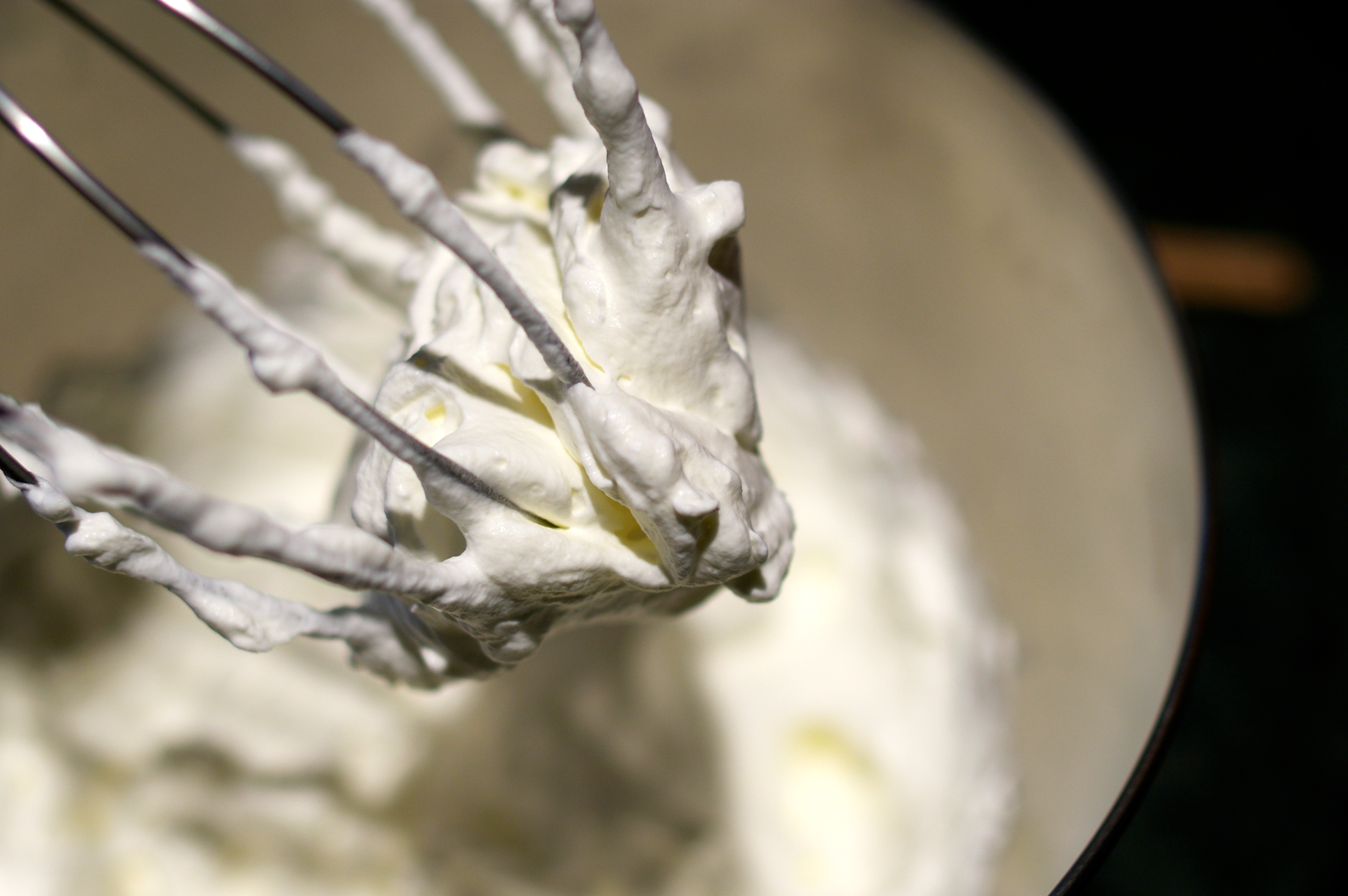
Yes, you can freeze cream, but which cream you have changes the answer more than any other freezing question I get asked. Double cream freezes well and comes back fine for cooking. Single cream tends to split into watery liquid and greasy flecks when it thaws, so it is the one to be wary of. Whipping cream sits in the middle, and it does best if you whip it first and freeze it in that form. Get the type right and you can stop pouring the last of a pot down the sink, which is exactly the sort of small waste that used to nag at me every week.
The reason it works at all is simple. Freezing does not spoil cream, it just rearranges the fat. The higher the fat, the better the cream holds together through freezing and thawing. That single fact explains everything below.
Free PDF
Free Oven Temperature & Gas Mark Chart
A printable one-page conversion chart for your kitchen: degrees, fan, gas mark and the descriptions in between. Pop your email in and the PDF is yours, plus the odd straight-talking kitchen tip.
Free, unsubscribe any time. The download starts as soon as you sign up.
The quick answer by type
Here is the short version, then I will go through each one properly.
- Double cream (about 48% fat): freezes well. Use it in cooking, sauces and baking after thawing. Keeps around 3 months for best quality.
- Whipping cream (about 35% fat): freeze it whipped, in dollops, rather than as liquid. Keeps around 2 to 3 months.
- Single cream (about 18% fat): usually splits on thawing. Freeze only if you will cook it into something, and expect to whisk it back together. Not for pouring fresh.
- Clotted cream: freezes reasonably well in its tub; thaw in the fridge and give it a gentle stir.
- Soured cream and crème fraîche: these separate badly and turn watery. I do not bother, except stirred into a cooked dish where the texture does not matter.
If you are not sure which cream you have, check the fat percentage on the pot. Above about 35% and you are in safe territory. Below that and you are freezing for cooking, not for pouring.
Why single cream splits and double cream does not
Cream is fat suspended in water. When it freezes, ice crystals form in the watery part and shove the fat molecules together into clumps. With double cream there is so much fat, and so little water, that the clumps mostly hold their shape and a good stir brings it back. With single cream there is far more water and far less fat, so the crystals do more damage, the fat separates out, and you are left with something curdled looking that no amount of stirring fully fixes.
This is not a safety problem. Split cream is still safe to eat if it has been stored properly. It is a texture and appearance problem, which matters a great deal if you wanted to pour it over a pudding and not at all if you are about to stir it into a soup.
How to freeze double cream
This is the one worth doing. Two ways work well.
In portions. Pour the leftover cream into an ice cube tray, freeze until solid, then tip the cubes into a labelled freezer bag. A standard cube holds roughly 15 to 30ml, so you can drop two or three straight into a pan of sauce without thawing a whole tub. This is how I deal with the last inch of a pot, and it has saved me more small amounts of cream than anything else.
In a tub or bag. If you know you will use the lot at once, leave a couple of centimetres of headspace in a tub because cream expands as it freezes, or lay a freezer bag flat so it freezes thin and thaws quickly. Label it with the date and the type, because frozen cream and frozen milk look identical once they are solid.
Thaw double cream overnight in the fridge, never on the worktop, and give it a proper stir when it comes back. If it looks slightly grainy, keep stirring or a quick whisk usually smooths it. It will not whip to stiff peaks as reliably as fresh, so I keep thawed double cream for sauces, mashed potato, scrambled eggs, soups and bakes rather than for piping.
How to freeze whipping cream, and the whip-first trick
Liquid whipping cream is a gamble; at 35% fat it is right on the edge and often separates. The reliable move is to whip it first, then freeze it. Whip it to soft peaks (not stiff, or it goes buttery), then either freeze it in a tub or, better, spoon little dollops onto a baking tray lined with greaseproof paper, freeze them solid, and bag them up. You then have ready-made blobs of whipped cream you can lift straight onto a hot chocolate, a bowl of fruit or a slice of pie, where they thaw in a few minutes and hold their shape. It feels like a small kitchen magic trick the first time you do it.
Thaw whipped cream in the fridge if you are using a larger amount, or straight from frozen on top of a warm drink or pudding.
How long frozen cream keeps
Freezing keeps cream safe more or less indefinitely, but quality slides over time, so these are best-before-quality windows, not safety cliffs.
- Double cream: about 3 months.
- Whipping cream (whipped): about 2 to 3 months.
- Single cream and the soured creams: I would use within a month or two and only in cooking.
Label everything with the date it went in. A chest freezer is a place where good intentions go to be forgotten, and cream you cannot date is cream you will end up binning anyway.
Using frozen cream, and one honest limit
Thawed cream that has split or gone grainy is at its best cooked into something rather than served cold and proud. It melts invisibly into a curry, a pasta sauce, a soup, a tray of dauphinoise or a batch of scrambled eggs. In baking it behaves fine folded into a batter. What it will not reliably do is sit on a trifle looking glossy, so plan around that.
One safety point worth keeping straight, because it applies to all dairy. Freeze cream while it is still within its use-by date, not after. The UK Food Standards Agency is clear that you can freeze food right up to and including the use-by date, and freezing pauses the clock, but it does not wind it back. Freezing cream that has already turned does not rescue it. Once thawed, treat it as you would fresh cream from the fridge and use it within a day or two, and if it smells sour or sharp when it comes back, that is your answer: bin it. When you genuinely cannot tell, throw it out. This is not a substitute for the guidance on the pack, which always wins.
The waste angle, which is the whole point
Cream comes in pots sized for recipes, not for real weeks, so there is almost always a leftover slug of it in the fridge after a Sunday pudding. Frozen in cubes, that leftover becomes next week’s silky sauce instead of Thursday’s guilty pour down the plughole. If you scale recipes up and down a lot and end up with these odd amounts, the recipe scaler helps you buy the right quantity in the first place, and the ingredient converter sorts out the millilitres-to-tablespoons question when a recipe only wants a splash. For everything else that lives in the freezer, the freezer storage times guide has the rest of the list, and if you are freezing dairy generally, the can you freeze milk and can you freeze butter pieces cover their own quirks.
Freeze the double, whip the whipping, be sceptical of the single, and label the lot. Do that and cream stops being one of the things you waste.