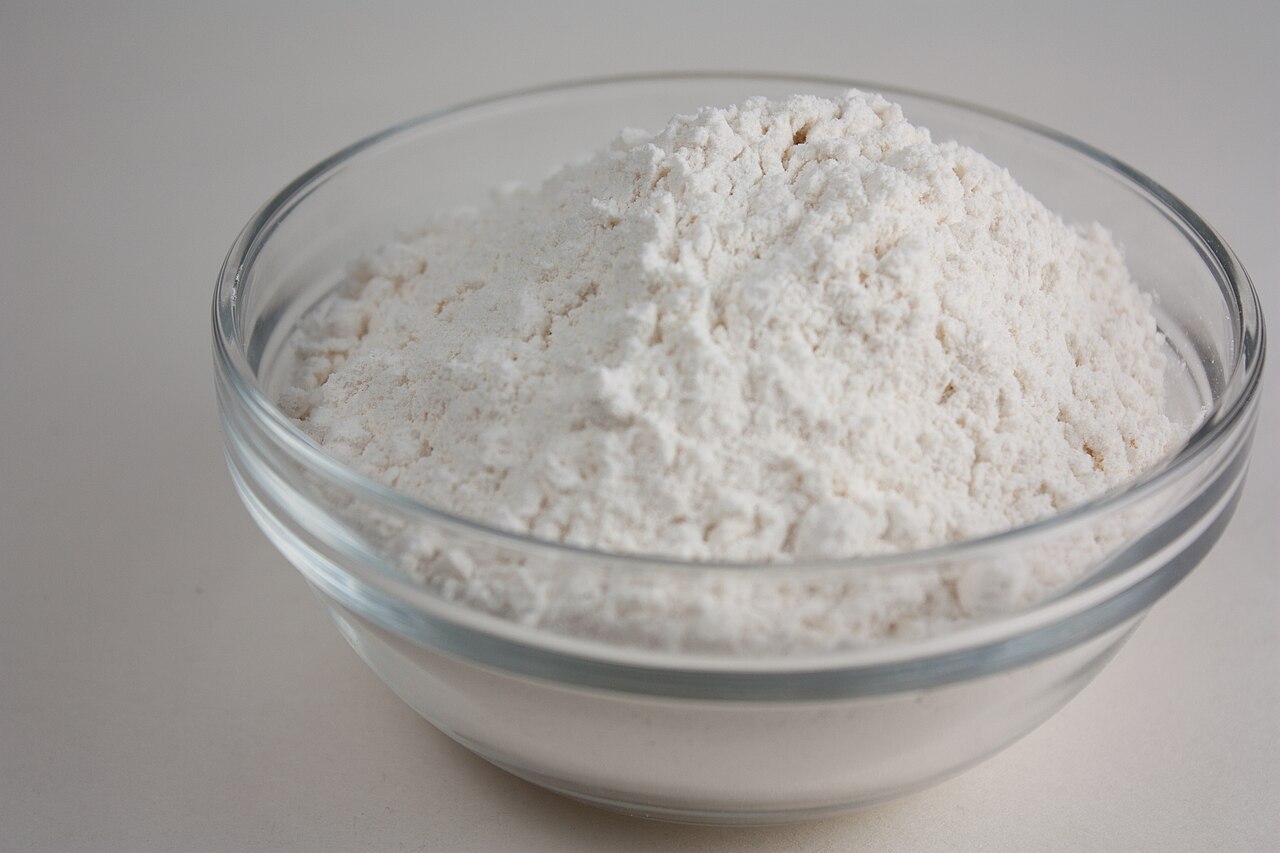
You are halfway through a recipe, the tin is greased, and the bag in the cupboard says plain when the recipe wanted self-raising. This happens to me more often than I would like to admit, usually on a Sunday when the shops feel a long way off. The good news is that you almost never need to stop. Self-raising flour is just plain flour with a raising agent already mixed through it, so you can make your own in the time it takes to find a whisk. Add 2 level teaspoons of baking powder to every 150g of plain flour, mix it well, and you have self-raising flour that behaves exactly as the shop-bought kind.
Below is the ratio worked out for the amounts you actually weigh, plus the couple of things that trip people up: why baking powder is not the same as bicarbonate of soda, and the recipes where this swap quietly goes wrong.
Free PDF
Free Oven Temperature & Gas Mark Chart
A printable one-page conversion chart for your kitchen: degrees, fan, gas mark and the descriptions in between. Pop your email in and the PDF is yours, plus the odd straight-talking kitchen tip.
Free, unsubscribe any time. The download starts as soon as you sign up.
The ratio, and the maths for any amount
The number to remember is 2 teaspoons of baking powder per 150g of plain flour. That is the standard used by most British bakers and it lines up with a good pinch of salt too if you want to match shop flour exactly, though the salt is optional and I usually leave it out.
From that one figure everything else follows. Here is the worked version for the weights you are most likely to reach for:
- 100g plain flour: a generous 1 teaspoon of baking powder (about 1¼ teaspoons if you are being precise).
- 150g plain flour: 2 teaspoons of baking powder.
- 200g plain flour: a scant 3 teaspoons of baking powder.
- 300g plain flour: 4 teaspoons of baking powder, which is a heaped tablespoon plus a touch more.
- 450g plain flour (a common cake weight): 6 teaspoons, or 2 tablespoons.
If you prefer to weigh everything, that works out at roughly 5g of baking powder for every 100g of flour. A kitchen scale that reads to the gram will get you there, though for something as forgiving as this I honestly just use teaspoons.
The one instruction that matters is to combine them properly. Tip the flour and baking powder into a bowl and whisk them together for a good ten or fifteen seconds, or sift them together if you have a sieve out anyway. Baking powder that sits in a clump will give you one bitter, over-risen patch and a flat rest, so spreading it evenly through the flour is the whole job. If you are scaling a recipe up or down while you are at it, the recipe scaler keeps the flour and everything else in step, and the ingredient converter sorts out grams to cups if the recipe is written the American way.
Baking powder, not bicarbonate of soda
This is the mistake I see most, and it is worth being clear about because the two tubs look similar in the cupboard. Baking powder and bicarbonate of soda are not interchangeable.
Baking powder is a ready-made raising agent. It already contains bicarbonate of soda plus a dried acid (usually cream of tartar) and a little starch to keep them apart until they meet liquid. Add water and heat and it produces the carbon dioxide that lifts a sponge, all on its own. That is why baking powder is the right thing to turn plain flour into self-raising.
Bicarbonate of soda on its own is only half the story. It needs an acid in the recipe, such as buttermilk, yoghurt, lemon juice or treacle, to react and rise. Put plain bicarb into a plain cake mix with no acid and you get very little lift and a faintly soapy, metallic taste for your trouble. So when you are making self-raising flour, reach for the tub that says baking powder, not the one that says bicarbonate of soda. If a recipe you are following separately asks for bicarb, it has an acid in the ingredients somewhere to match it.
When the swap works, and when it does not
For the everyday bakes that call for self-raising flour and nothing else in the way of a raising agent, this substitution is genuinely undetectable in practice. Victoria sponges, cupcakes, plain scones, muffins, quick loaves and most traybakes all come out the same whether the self-raising flour came from a bag or from your own mixing bowl. I have made the same lemon drizzle both ways more times than I can count and could not tell you which was which.
There are a few situations where you want to pay closer attention.
If the recipe already lists baking powder or bicarbonate of soda on top of self-raising flour, do not double up. Some cakes deliberately use self-raising flour plus an extra spoon of baking powder for a very light crumb. In that case, keep your homemade self-raising flour at the standard ratio and add the extra raising agent the recipe asks for separately. Just do not fold the recipe’s extra raising agent into your flour calculation and add it twice.
If the recipe is one where the rise is doing something delicate, such as a genoise sponge whisked to hold air, or an enriched bread dough that relies on yeast, then self-raising flour, homemade or not, is not what it wants. Those are different techniques and swapping flour will not fix them.
And a small point on freshness: make self-raising flour as you need it rather than mixing up a big jar to keep. Baking powder slowly loses its fizz once it is out of the tub and exposed to air and moisture, so a batch of homemade self-raising flour left in the cupboard for months will not rise as well as a fresh mix. Making it per bake sidesteps that entirely. If you ever suspect your baking powder itself has gone flat, drop half a teaspoon into a little hot water; fresh powder froths up straight away, tired powder barely bubbles.
Going the other way, and the American version
People often ask about the reverse, turning self-raising flour back into plain. It is much harder, because you cannot easily pick the baking powder back out of the flour. The honest answer is to keep a bag of plain in the cupboard for the recipes that need it, such as pastry, shortbread, roux and Yorkshire puddings, where you do not want any rise at all. Using self-raising flour in shortcrust pastry, for instance, gives you a puffy, cakey result rather than the crisp, short texture you are after.
One more thing worth knowing if you bake from American recipes. Their “self-rising flour” is close to our self-raising, but it is made from a softer, lower-protein flour and it always includes salt. For most cakes the difference is small and you can treat them as the same. If a US recipe specifies self-rising flour and you are mixing your own from British plain flour, add a pinch of salt (about ¼ teaspoon per 150g) along with the baking powder to match it more closely.
The short answer
To make self-raising flour, add 2 level teaspoons of baking powder to every 150g of plain flour and whisk them together thoroughly. That scales to a generous teaspoon per 100g, 4 teaspoons per 300g, or roughly 5g of baking powder per 100g of flour by weight. Use baking powder, not bicarbonate of soda, mix it in evenly so you get an even rise, and make it fresh each time rather than storing a jar of it. For the ordinary cakes, scones and traybakes that ask for self-raising flour, the homemade version is a straight swap, and it has saved my baking on many a Sunday when a trip to the shop was the last thing I fancied. If a recipe already piles baking powder on top of self-raising flour, keep your flour at the standard ratio and add that extra separately. While you have the scales out, the ingredient converter, the recipe scaler and my guide to baking ingredient substitutions cover most of the other “I have run out of” moments, and the oven temperature converter handles the gas mark side once the tin goes in.