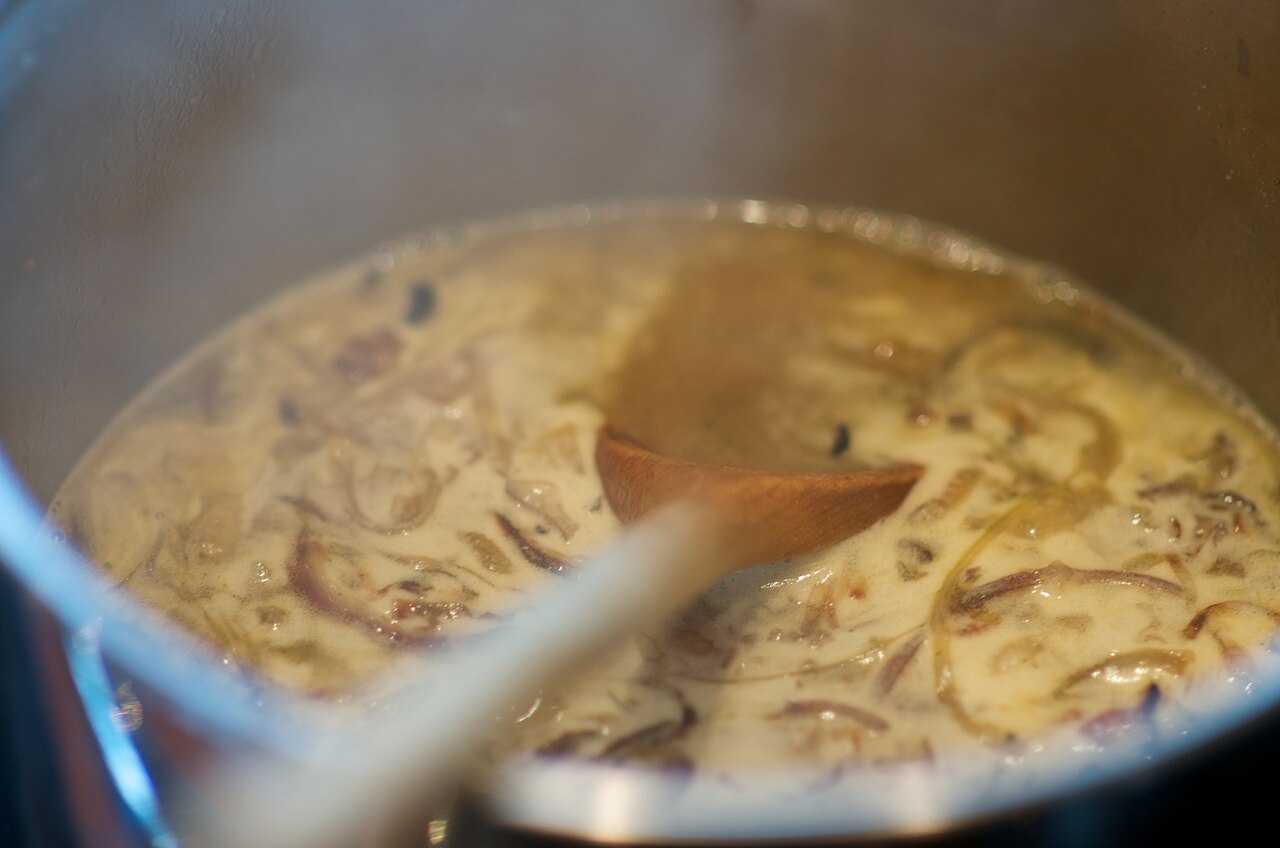
Yes, you can freeze gravy, and I almost never pour leftover gravy down the sink any more. Meat gravies, onion gravy and stock-based gravies all freeze well and keep their quality for about three to four months. The one quirk to know about is that thickened gravy often looks split or grainy when it thaws, which puts people off needlessly, because it comes back together with a whisk and a bit of gentle heat. Get the freezing and the reheating right and a jug of Sunday gravy becomes the thing that rescues a dull midweek plate.
Free PDF
Free Oven Temperature & Gas Mark Chart
A printable one-page conversion chart for your kitchen: degrees, fan, gas mark and the descriptions in between. Pop your email in and the PDF is yours, plus the odd straight-talking kitchen tip.
Free, unsubscribe any time. The download starts as soon as you sign up.
Which gravies freeze well
Most do. A proper meat gravy made from the roasting juices, a good onion gravy, or anything built on stock all freeze happily and reheat to something very close to how they started. These are the ones worth making extra of on purpose.
The gravies that need a little thought are the very creamy ones. If you have enriched a gravy with a good slug of double cream or crème fraîche, the dairy can separate and go slightly oily or grainy when it thaws, in the same way a creamy curry sometimes does. It is not spoiled and it is not dangerous, it just needs coaxing back together, which I will come to. If you know in advance that you are freezing it, you can hold the cream back and stir it in fresh when you reheat.
How to freeze gravy in useful portions
The trick with gravy is to freeze it in the amounts you will actually reach for, because a solid litre of frozen gravy is a nuisance and a couple of tablespoons is a gift.
- Cool it first. Never freeze gravy while it is still warm. Let it cool quickly, ideally within an hour or two, then get it into the freezer. A warm container warms everything around it.
- Flat freezer bags are my default for a full portion. Ladle the cooled gravy in, press out the air, seal, and lay the bag flat to freeze. It stacks neatly and thaws fast.
- Ice-cube trays or a muffin tin are perfect for small amounts. Freeze the gravy in the moulds, then pop the cubes into a labelled bag. A couple of cubes dropped into a midweek pan sauce or a shepherd’s pie is exactly the kind of thing I use them for, and nothing goes to waste.
- Rigid tubs work too; just leave a little headroom at the top, because gravy expands as it freezes.
- Label it with what it is and the date. Every frozen brown sauce looks like every other frozen brown sauce.
If you are deliberately making a big batch to freeze, my recipe scaler takes the guesswork out of multiplying a gravy up.
How long frozen gravy keeps
Kept properly frozen at minus 18°C or below, gravy stays safe for a long time, but for the best flavour I use it within three to four months. Past that it is still safe if it has stayed frozen solid, it just starts to lose its depth and can pick up freezer burn and off notes from the freezer. In the fridge, rather than the freezer, cooled gravy keeps for only about three to four days, so if you are not going to use it in that window, freeze it. There is a fuller rundown in my guide to how long food lasts in the fridge.
Why thawed gravy looks split, and how to fix it
This is the part that worries people, so it is worth explaining. When you thaw a gravy that was thickened with flour or cornflour, it often looks wrong: watery, separated, a bit grainy, with liquid weeping out of a claggy mass. That is not spoilage. It happens because the starch that thickened the gravy changes structure as it chills and freezes, and the neat, glossy suspension breaks down. Fat can rise and separate on top too.
The fix is easy. Reheat the gravy slowly in a saucepan over a low to medium heat and whisk it, steadily and constantly, as it comes back up to temperature. Nine times out of ten the whisking and the warmth pull it straight back into a smooth, glossy gravy. If it stays a bit thin, let it bubble gently to reduce, or whisk in a small slurry of cornflour and cold water to re-thicken. If it stays lumpy, a quick go with a stick blender sorts it out. If a lot of fat has separated, either skim it off or just whisk it back in as it warms.
Thawing and reheating it safely
You have two good options. Either move the gravy from the freezer to the fridge and let it thaw overnight, or reheat it gently straight from frozen in a pan, breaking up the frozen block as it loosens and whisking as it goes. Do not thaw gravy by leaving it out on the worktop all afternoon, for the same reason that applies to any cooked food: the outside sits warm long before the middle catches up.
However you thaw it, reheat gravy until it is properly, steaming hot all the way through, not just warm. Bringing it to a gentle bubble and stirring it well is the simplest way to be sure. And reheat it only once. Each cool-and-reheat cycle is another spell in the temperatures bacteria like, so decant only what you need and keep the rest frozen. I cover this in more depth in reheating leftovers safely and how many times you can reheat food.
If the gravy was made with or poured over meat that has already been cooked and cooled, treat the whole thing as leftovers: cool it fast, get it chilled or frozen without dawdling, and do not leave it standing at room temperature. My note on how long you can leave food out has the timings.
Make-ahead gravy for the big roast
This is where freezing gravy really earns its place. If you make a large batch of gravy from good stock and roasting juices in the quiet days before a Christmas dinner or a big Sunday lunch, freeze it flat, and thaw it in the fridge the day before, you take the single most stressful, last-minute job off the stove at the worst possible moment. On the day you reheat it gently, whisk it smooth, and lift it with a spoonful of the fresh resting juices from whatever you have roasted, which brings it right back to life. I have done my Christmas gravy this way for years and would not go back to making it in a panic while everything else needs plating. Make more than you think you need; cold leftover roast with hot gravy is one of the best plates of the week, and any surplus goes straight back into the freezer in cubes.
When to bin it instead
Gravy is low-risk as leftovers go, but the usual rule still holds. If it smells sour or fermented, if it has been in the fridge longer than about four days, if it was left standing out for hours before you got round to it, or if you simply cannot remember how old it is, pour it away. Bear in mind that many harmful bacteria leave no smell or taste at all, so a clean sniff is reassuring but not proof.
When in doubt, throw it out. A jug of gravy is easy to make again; a bad stomach is not worth the gamble, least of all for anyone pregnant, very young, elderly or unwell, who should always play it safe. This is a home cook’s reference rather than medical advice, so for anything you are unsure about, follow the NHS and Food Standards Agency guidance and let anything doubtful go.