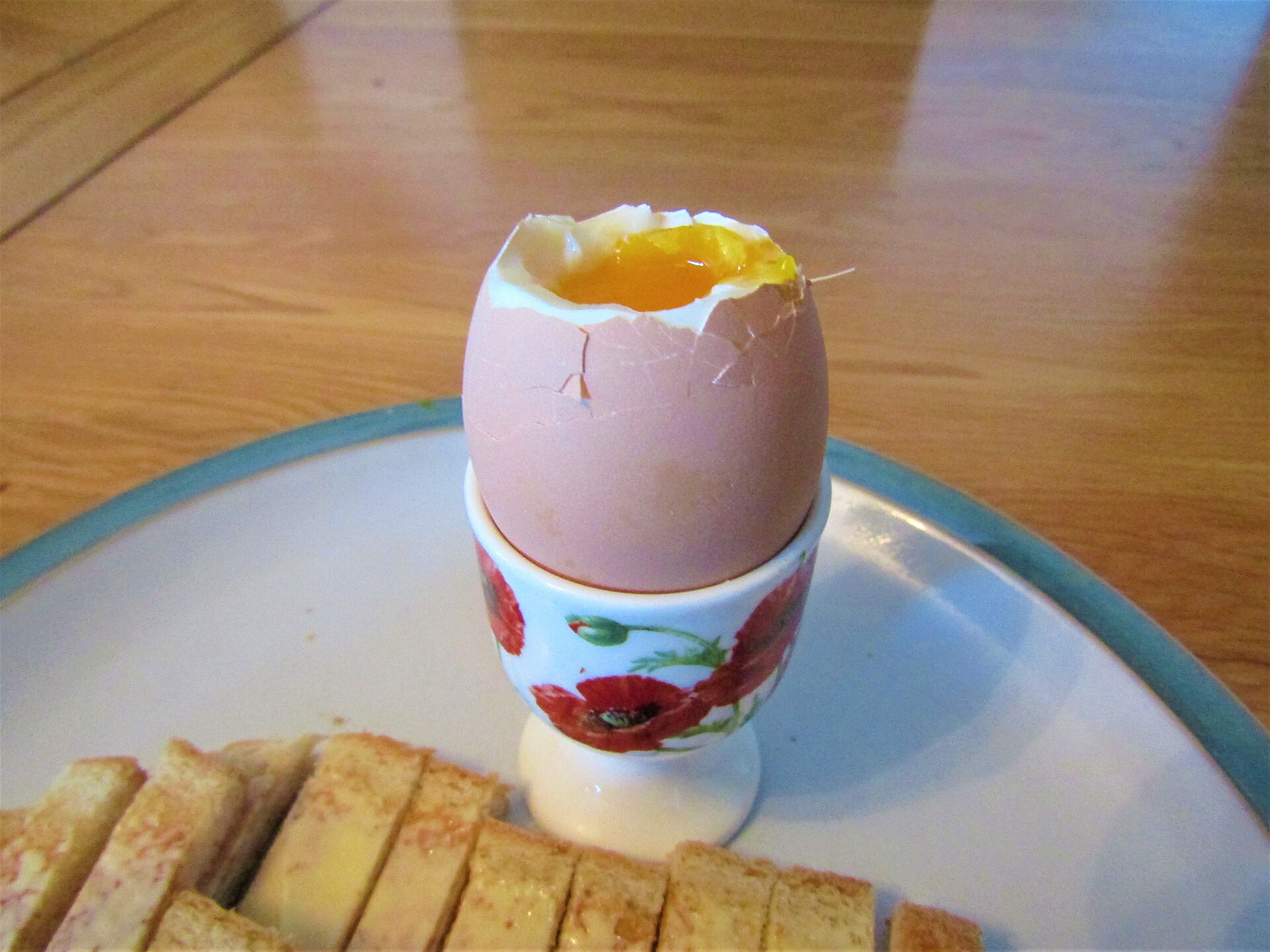
For most people, yes, runny eggs are fine and always have been. The bigger news is that since 2017 the advice has also changed for the people who used to be told off for a dippy egg: if your eggs carry the red British Lion mark, pregnant women, babies on solids, young children and the over-65s can now eat them runny or even raw. That is the headline, and it genuinely surprised me when I first read it, because “no soft eggs when you’re expecting” had been drummed into everyone for decades.
So the real question is not “are runny eggs safe”, it is “are these eggs Lion eggs”. Get that straight and the whole thing becomes simple. Here is who the rule covers, who it leaves out, and which eggs you still need to cook until they are firm.
Free PDF
Free Oven Temperature & Gas Mark Chart
A printable one-page conversion chart for your kitchen: degrees, fan, gas mark and the descriptions in between. Pop your email in and the PDF is yours, plus the odd straight-talking kitchen tip.
Free, unsubscribe any time. The download starts as soon as you sign up.
The short answer
- Healthy adults and older children: a runny yolk has always been low risk. Carry on.
- Pregnant, feeding a baby, over 65, or generally run down: runny or raw eggs are fine if they show the British Lion mark (or come from the Laid in Britain scheme). No mark, cook them through.
- Severely immunocompromised and on a medically supervised diet: cook all eggs thoroughly, Lion or not. This is the one group the new advice does not cover.
- Duck, goose and quail eggs: always cook these until the white and yolk are firm, whoever is eating them.
That is the whole of it. The rest is just explaining why, and spotting the raw egg hiding in things you would not think of.
What changed, and why the Lion matters
The old worry was salmonella. Thirty-odd years ago British eggs had a real problem with it, and the blanket advice to vulnerable groups was simple: no runny eggs, ever.
Then the egg industry cleaned house. The British Lion scheme, which now covers the large majority of eggs sold in UK supermarkets, vaccinates the hens against salmonella, tests the flocks and the production chain, keeps the birds and their housing to a hygiene standard, stamps a best-before date on every egg, and audits the whole lot independently. In 2016 the government’s food safety advisers (the ACMSF) looked at the results and rated the salmonella risk from Lion eggs as very low. On the back of that, in 2017 the Food Standards Agency changed its advice so that vulnerable groups could eat Lion eggs runny or raw.
So the Lion mark is not a brand gimmick. It is shorthand for a specific set of controls, and the relaxed advice rides entirely on those controls. An egg without the mark has not necessarily gone through any of it, which is why the old caution still applies to it.
Who the rule covers, and the one group it does not
The FSA spells out the groups who can now eat Lion eggs runny: infants and young children, people who are pregnant, and people aged 65 or over. In practice that covers almost everyone who used to be warned off.
The exception is people who are severely immunocompromised and on a diet supervised by a medical professional, for example during some cancer treatments or after certain transplants. For them the advice is unchanged: cook every egg until both the white and the yolk are solid. If that is you or someone you cook for, do not take the Lion mark as a green light; take your medical team’s instructions instead.
Everyone else in the vulnerable groups can treat a Lion egg the way the rest of us always have. A soft boiled egg with soldiers while pregnant is, on current UK advice, fine. I still remember how strange that felt to write down the first time.
The eggs that still need cooking through
Three sorts of egg sit outside the relaxed rule, and vulnerable groups should cook all of them until firm:
- Hen eggs with no British Lion mark. Think some market or farm-gate eggs, loose eggs of unknown origin, and eggs bought abroad where the Lion scheme does not run. The egg might be perfectly clean. You just do not have the assurance behind it, so the safe move for anyone vulnerable is to cook it through.
- Duck, goose and quail eggs. These are not part of the Lion scheme at all, and they are more prone to carrying salmonella on and in the shell. Cook them until the white and yolk are firm, and do not serve them runny to anyone, vulnerable or not.
- Any egg past its best-before date. The relaxed advice assumes the egg is eaten in date. An out-of-date egg is a quality and safety question of its own; if you are not sure how old it is, my egg freshness checks will tell you whether it is worth cooking at all, and my piece on how long eggs last covers the dates.
For a healthy adult, a non-Lion runny egg is still low risk rather than dangerous. The point of the stricter line for vulnerable groups is that food poisoning hits them harder, so the margin needs to be wider.
The raw egg you did not know you were eating
“Runny” is easy to spot in a fried or poached egg. The trap is all the dishes that carry raw egg without looking like it, because the same rule applies to them: fine if made with Lion eggs, otherwise off the menu for vulnerable groups.
The usual suspects in a home kitchen:
- Fresh homemade mayonnaise, aioli and hollandaise
- Mousse, tiramisu and homemade ice cream with an uncooked egg base
- Royal icing and anything using raw egg white
- Raw cake batter and cookie dough licked off the spoon (there is a second reason to be wary of raw dough, which I go into in can you eat raw cookie dough)
Two useful shortcuts. Shop-bought mayonnaise, salad cream and most bottled sauces are made with pasteurised egg, so they are safe for everyone regardless of the Lion question. And if you want a raw-egg dish but your eggs are not Lion, you can buy pasteurised egg in cartons and use that instead.
How to spot a Lion egg, and keep it right
The red lion is printed twice: a small stamp on the shell itself and a logo on the box, usually with a best-before date alongside. If you have thrown the box away and the shell is not stamped, treat it as a non-Lion egg and cook it through for anyone vulnerable.
Storage does the rest of the work:
- Keep eggs in the fridge at home, not on the worktop, and not just in the door where it is warmest. A steady cold slows any bacteria right down. My piece on what temperature a fridge should be explains why that number matters.
- Eat them before the best-before date. The relaxed runny-egg advice assumes an in-date egg.
- Cook from fridge-cold without worrying; you do not need to bring eggs up to room temperature first for safety.
- Wash your hands and anything the raw egg touched, because salmonella spreads from the shell and the white as much as from eating it.
If you ever want to stretch a glut of eggs further, they do freeze, out of the shell and beaten, which I cover in can you freeze eggs.
When in doubt
The honest limit here is that salmonella leaves no smell, taste or look. You cannot sniff your way to a safe egg, which is exactly why the whole system leans on the Lion controls and the date rather than on your senses. Salmonella is unlikely to harm an unborn baby directly, but the food poisoning it causes can make you seriously unwell at a time when you least need it, so the caution for vulnerable groups is about you, not just the baby.
So the rule I actually use in my kitchen: Lion mark and in date, runny is fine for the whole family. No mark, past its date, or feeding someone who is severely immunocompromised, cook it until it is firm. And if you genuinely cannot remember how old an egg is or where it came from, cook it through or bin it. An egg is not worth a bad week.
This is general reference based on current UK Food Standards Agency and NHS guidance, not medical advice. If you are pregnant, feeding a baby or managing a health condition and you are unsure, follow the advice of your midwife, GP or medical team.