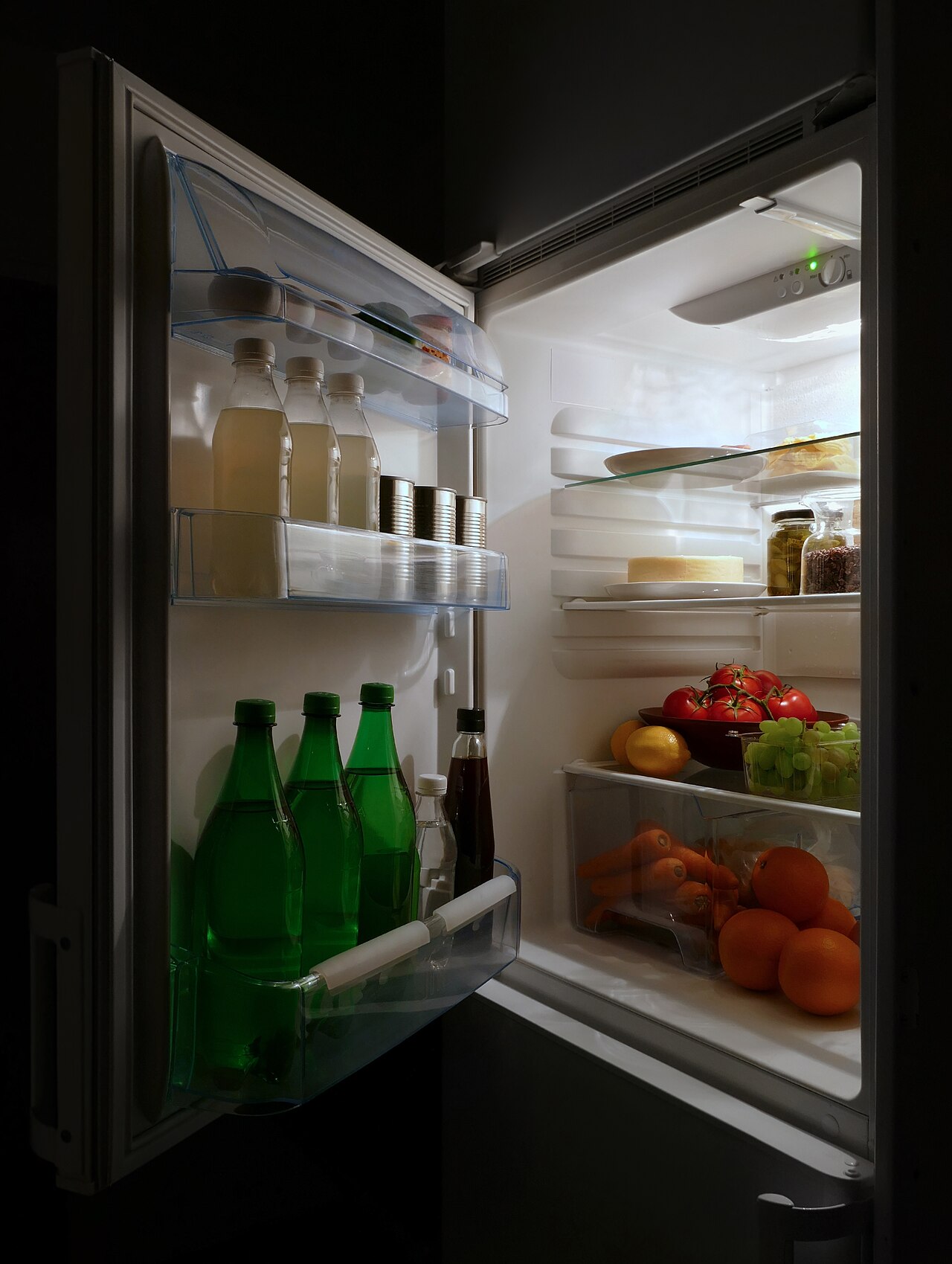
Your fridge should sit between 0 and 5C. That is the number the Food Standards Agency gives, and it is the single most useful fact on this whole site, because every storage time I have ever written assumes your fridge is actually that cold. If it is running warm, the “three days” on a tub of leftovers quietly becomes a much shorter and far less safe window, and nothing on the label will warn you. So before you worry about any use-by date, it is worth knowing what your fridge is really doing.
The uncomfortable part is that a lot of home fridges are not that cold. A Food Standards Scotland study found that more than half the fridges it monitored were running above 5C on average. People trust the dial, the dial lies, and the food pays for it. Here is what the right temperature is, why it matters so much, and how to check and fix yours in about two minutes.
Free PDF
Free Oven Temperature & Gas Mark Chart
A printable one-page conversion chart for your kitchen: degrees, fan, gas mark and the descriptions in between. Pop your email in and the PDF is yours, plus the odd straight-talking kitchen tip.
Free, unsubscribe any time. The download starts as soon as you sign up.
The number: 0 to 5C
Keep your fridge between 0 and 5C. If your fridge only lets you set one target, aim for 5C or below and you are safe. You do not want it colder than 0C, because at that point things at the back start to freeze, lettuce goes glassy and milk develops ice crystals, which is its own kind of waste.
For the freezer, the figure to remember is -18C. That is cold enough to hold food safely for months, and most of my freezer storage advice assumes it.
Why 5C and not, say, 8C, which you may also have read? Eight degrees is the legal maximum that chilled food must be held at in the UK, the line a shop or caterer must not cross. It is a backstop, not a target. For your food at home, every degree below 8C buys you noticeably slower bacterial growth, and 0 to 5C is the sensible working range that gives you the full storage times without freezing your salad.
Why a few degrees changes everything
Here is the principle the whole thing hangs off. Chilling does not kill the bacteria that spoil food and make you ill; it only slows them down. Between roughly 8C and 63C, the stretch food-safety people call the danger zone, bacteria multiply fastest, some of them doubling in number every twenty minutes or so in the warmer part of that range. The job of your fridge is to drag food well below that zone so the multiplying slows to a crawl.
The difference between a fridge at 4C and one at 8C is not small, even though four degrees sounds like nothing. At 8C your food is sitting at the bottom edge of the danger zone, and bacteria are still ticking along. At 4C they are barely moving. The storage times you see quoted, mine included, are worked out for a properly cold fridge. Run yours warm and you are spending that safety margin without knowing it, which is exactly how food that looks and smells fine still makes someone ill. Many of the bacteria that cause food poisoning leave no smell, no taste and no visible sign at all, so you cannot sniff your way out of a warm fridge.
The dial is not a temperature
This is the bit that catches most people out, and it caught me out for years. The numbers on a fridge dial, usually 1 to 5 or 1 to 7, are not degrees. They are just settings, and a higher number means colder, which is the opposite of what your instinct says a “5” should mean on a dial that also stops at 5. So someone trying to make the fridge colder turns it down to 1 and makes it warmer instead.
The only way to actually know your fridge temperature is to measure it. A fridge thermometer costs a couple of pounds and is the best tiny purchase I have made for the kitchen. Here is how I check mine:
- Put the thermometer in a glass of water and stand it on the middle shelf, not taped to the back wall. Water holds a steady reading, so you measure the temperature of the food rather than the cold air that rushes in every time the door opens.
- Leave it overnight, or at least a few hours, with the door shut and the fridge working normally.
- Read it first thing, before anyone has opened the door. If it is above 5C, turn the dial up a notch (colder), wait a day and check again.
Do this once or twice a year, and again after any big change: a heatwave, a fridge that has been emptied and restocked, or a new appliance you have not calibrated. It takes the guesswork out completely.
It is not cold in the same place everywhere
A fridge is not one even temperature. Cold air sinks, the door swings open and shut, and the result is a map of warmer and colder spots that is worth knowing.
- The door is the warmest part. It takes the brunt of every opening and never gets as cold as the shelves. That makes it the worst place for anything you are relying on to stay safe. Milk in particular does better on a shelf than in the door, whatever the moulded bottle-shaped slots suggest, and it is one reason milk after opening can turn sooner than you expect. Keep the door for things that cope with a bit of warmth: jars, condiments, a bottle of wine.
- The back and bottom are usually the coldest. In most fridges the cold comes in near the top or back, so the lowest shelf at the back is your coldest spot and the natural home for raw meat and fish, which also need to be at the bottom so they cannot drip onto anything below them.
- The salad drawer is a touch more humid and steady, which is why it suits fruit and veg that would otherwise wilt.
None of this matters if the whole fridge is too warm, which is why the thermometer comes first. But once you are in range, putting the right things in the right spots gets you the best out of it.
The habits that keep it cold
Setting the dial correctly is step one. Staying cold through a normal busy day is the rest, and it comes down to a few habits.
Do not stuff it solid. A fridge cools by moving cold air around, and a wall-to-wall packed fridge has nowhere for that air to go, so pockets of it sit warm. A little breathing space between things actually keeps everything colder. A fairly full fridge does hold its temperature better than an empty one during a power cut, but packed to bursting is a different thing and works against you.
Shut the door. Every long rummage with the door hanging open lets the cold pour out and warm kitchen air in, and the fridge then has to claw the temperature back down. Decide what you want, then open it. This matters most in a hot kitchen or a heatwave, when the fridge is already working hard.
Let hot food cool before it goes in, but not for long. Putting a steaming pot straight into the fridge dumps heat into the whole cabinet and warms everything around it. Let food cool first, but do not leave it sitting out: the rule I work to is to get leftovers cooled and into the fridge within two hours, and I speed big batches along by splitting them into shallow containers or sitting the pan in cold water. There is more on that in my guide to reheating leftovers safely.
Check it after a heatwave or a house move. Fridges struggle when the kitchen is very hot, and a fridge that was fine in spring can drift above 5C in a July kitchen. A thirty-second thermometer check in hot weather is cheap insurance.
When the fridge has been off
If your fridge has been off, whether from a power cut or an accidental switch at the wall, the clock on your food depends on how long and how full it was. A shut, full fridge holds its cold for a few hours. As a rough rule, if chilled food has been above 5C for more than a few hours in total, treat high-risk items such as meat, fish, cooked dishes, dairy and anything with a use-by date as suspect. When you genuinely cannot tell how warm it got or for how long, throw it out. It is a hard habit to build, but “when in doubt, bin it” has saved me from the one bad decision that matters.
The short version
- Set your fridge to 0 to 5C, and the freezer to -18C.
- The dial numbers are settings, not degrees, and higher usually means colder. Do not trust them.
- Check the real temperature with a cheap thermometer in a glass of water on the middle shelf, overnight.
- Keep raw meat and fish on the coldest shelf at the bottom, and remember the door is the warmest spot.
- Give the air room to move, keep the door shut, and cool hot food before it goes in, within two hours.
Get this one number right and everything else on the site works as written. Storage times, use-by and best-before dates and all the rest assume a cold fridge, and a two-minute check tells you whether you have one.
This is general guidance from a home kitchen, not medical advice. For food-safety questions, the UK Food Standards Agency and the NHS are the authorities to follow.