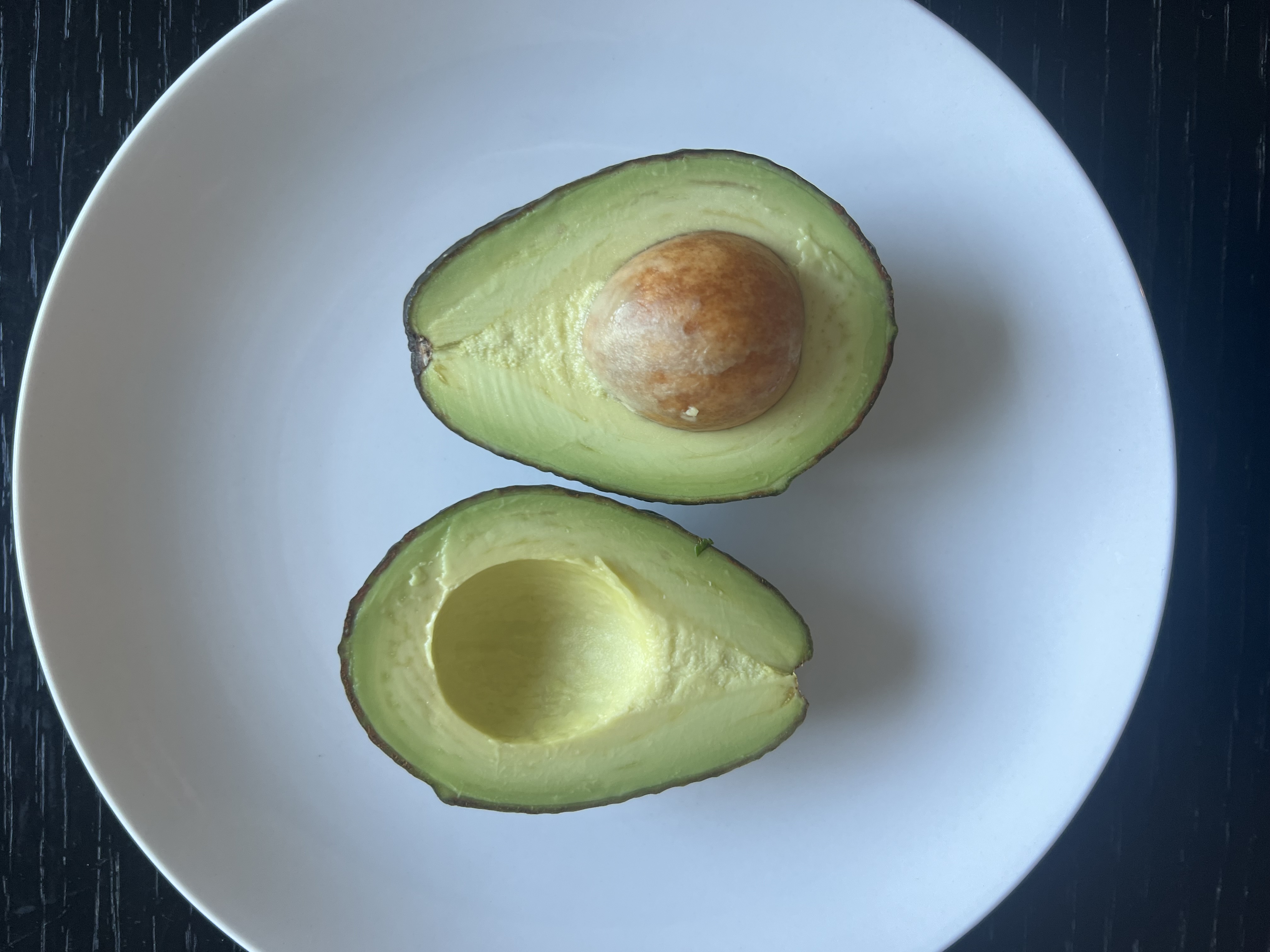
The fastest honest way to ripen an avocado is to put it in a paper bag with a ripe banana, leave it somewhere warm, and give it a day or two. That is as quick as real ripening gets. The one thing I want to be straight about from the start is that you cannot take a bullet-hard avocado and make it ready to eat in ten minutes, no matter what a video promises. The heat tricks you have seen do something, but it is not the same thing, and I will come to why. First, the method that genuinely works.
Free PDF
Free Oven Temperature & Gas Mark Chart
A printable one-page conversion chart for your kitchen: degrees, fan, gas mark and the descriptions in between. Pop your email in and the PDF is yours, plus the odd straight-talking kitchen tip.
Free, unsubscribe any time. The download starts as soon as you sign up.
The short version
- Paper bag plus a banana or apple, kept at room temperature, ripens an avocado in roughly one to two days, against four or five left loose on the side.
- Paper, not plastic. Plastic traps moisture and you get mould rather than a ripe avocado.
- The warmth matters. A cool kitchen slows it right down; a warm spot speeds it up.
- Heat shortcuts (oven or microwave) soften the flesh but do not develop the flavour or the buttery texture, so treat them as a last resort for mashing, not a way to make a good avocado.
- Once it is ripe, move it to the fridge and it will hold for a couple of days before it tips over.
Why avocados ripen off the tree, and how to use that
Avocados are one of those fruits that do most of their ripening after they are picked. They give off a gas called ethylene, and that gas is what drives the ripening along. The trick to speeding things up is simply to trap more of that gas around the fruit, and to add other things that give off plenty of it themselves.
That is the whole secret of the paper bag. You pop the avocado in, add a ripe banana or an apple, both of which are generous with ethylene, and fold the top over. The gas builds up in the bag instead of drifting off into the kitchen, and the avocado ripens noticeably faster. In my kitchen a stubborn avocado that would have taken most of a week on the windowsill is usually ready in a day and a half this way.
Use a paper bag, not a plastic one or a sealed tub. Paper holds the ethylene in while still letting moisture escape. Seal an avocado in plastic and the trapped damp will have it going slimy and mouldy before it is ripe, which helps nobody.
A few things that make the bag work harder:
- Keep it warm. Ripening is a chemical reaction and warmth drives it. On top of the fridge, or near something that gives off a little heat, beats a cold larder. Never the fridge itself; cold is what you use to stop ripening.
- A banana is the best companion. A really ripe, spotty banana throws off the most ethylene. An apple works too.
- Check it daily. This method can move quicker than you expect once it gets going, and an avocado goes from perfect to brown and stringy in not much time at all.
The heat shortcuts, and the honest catch
If you search for how to ripen an avocado fast you will find the microwave trick and the oven trick, so let me tell you what they really do rather than pretend they do not exist.
Wrapping an avocado in foil and baking it low, or microwaving a halved one for a minute or two, softens the flesh. That is all it does. Softening is not the same as ripening. Real ripening develops the nutty, buttery flavour and the smooth texture we actually want from an avocado, and heat does not do that. What you get instead is a warm, softened, rather bland avocado, often rubbery or unevenly cooked, with none of the character.
So I keep these for one narrow situation: I need avocado to mash into something where the flavour is carried by other things, like a dressing or a cooked dish, and I have run out of time. Even then the microwave gives patchy results, and a half that gets genuinely hot starts to taste cooked. For anything where the avocado is the star, guacamole, on toast, sliced into a salad, the heat methods will let you down. There is no shortcut that beats a day in a paper bag. If you have landed here mid-recipe with a hard avocado and a dish to rescue, my notes on rescuing a dish that has gone sideways may be more use than the microwave.
How to tell when it is ready
Two tests, and one honest caveat about both.
The gentle squeeze. Hold the whole avocado in your palm and press softly with your whole hand, not your fingertips. A ripe one yields a little, like the firm part at the base of your thumb. Hard as an apple means it is not ready. If your thumb sinks straight in and leaves a dent, it has gone too far. Pressing with fingertips just bruises the flesh under the skin, so cradle it in your palm instead.
The stem test. Flick off the little dried nub at the stem end. Green underneath means it is ripe and good. Brown underneath means it is overripe and probably stringy or spotted inside. Here is the caveat: neither test is foolproof. The stem test tells you about the top of the fruit, not the bottom, and avocados ripen from the stem end down, so the base can lag behind. The squeeze can be fooled by a bruise. They are good guides, not guarantees, and the only certain test is cutting it open.
Once it is ripe, slow it down
The moment an avocado hits perfect ripeness, the clock starts ticking fast. This is where the fridge comes in. Pop a ripe avocado in the fridge and the cold slows everything to a crawl, buying you two or three days before it turns. So if yours ripens on Tuesday and you want it for the weekend, the fridge is your friend. The same logic sits behind a lot of what I wrote about storing fruit and veg: warmth to ripen, cold to hold.
If you have cut into one and only used half, rub the cut face with lemon or lime juice, press cling film right onto the surface or put it in an airtight tub, and refrigerate it. The flesh will still brown a little; that browning is just the air reacting with it, oxidation, not a sign it has gone off, and you can scrape the dull layer away. For a glut of ripe avocados you cannot get through, you do have the freezer option, though it changes the texture; I went into what does and does not work in can you freeze avocado.
What I actually do
I buy avocados in two states on purpose: one or two already ripe for the next day or so, and a couple still firm for later in the week. The firm ones live on the side, and the day before I want one I move it into a paper bag with whatever banana is going spotty in the fruit bowl. It is ready by the next evening almost every time, and I have stopped doing the thing I used to do, which was buy four hard avocados on Sunday, forget them, and find them all perfect and demanding to be eaten on the same Thursday.
Plan a day ahead and the paper bag does the work for you. Leave it to the last minute and no kitchen trick will conjure a properly ripe avocado out of a hard one; the heat methods only soften it, and a softened avocado is a poor substitute for a ripe one. Buy a mix, keep a paper bag handy, and move the ripe ones to the fridge before they turn. That is the whole of it.