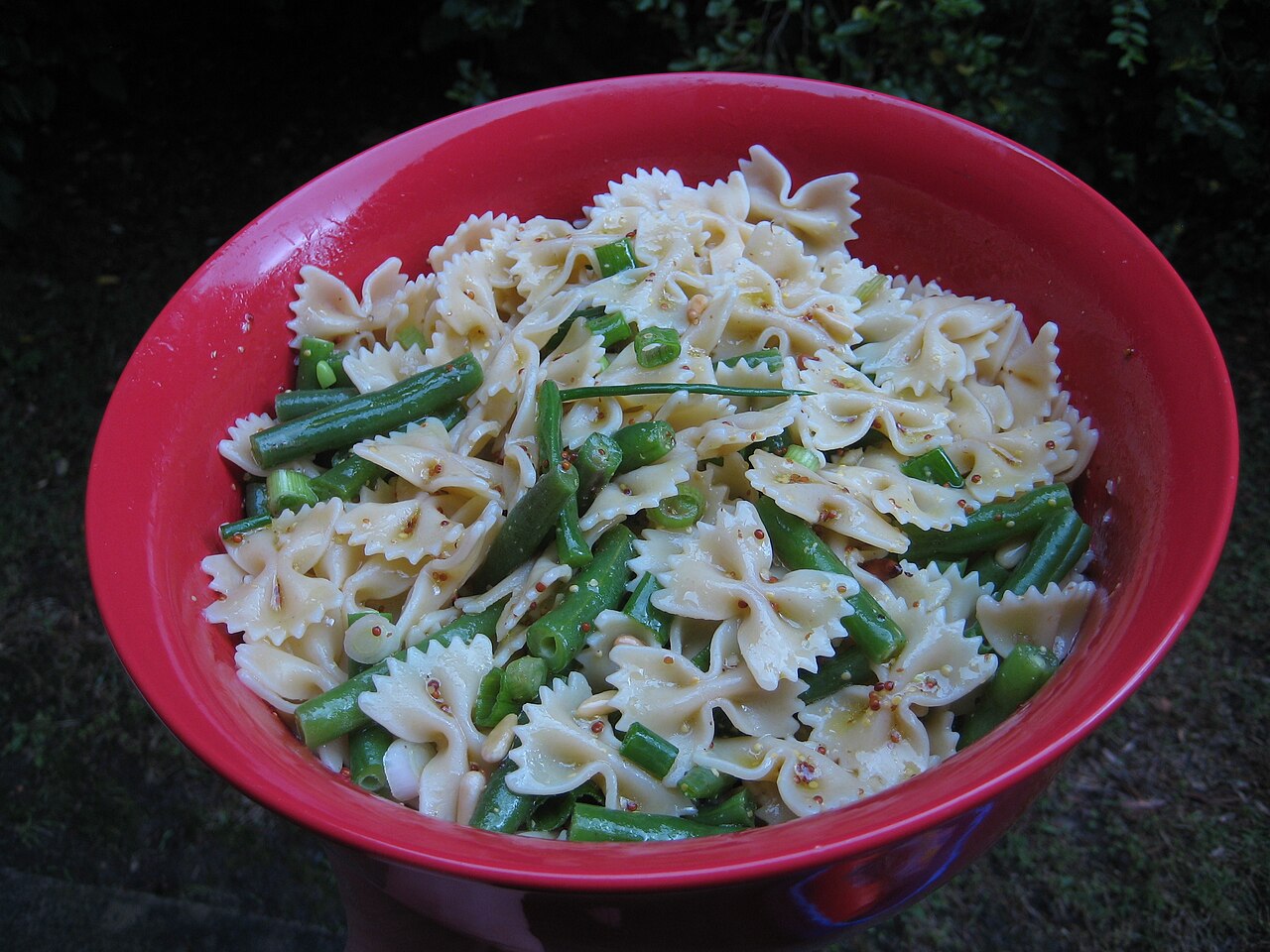
Pasta is the thing I cook most when the evening has run away from me, and I almost always make too much. A bag of penne looks like nothing dry and turns into a mountain once it hits the water, so there is nearly always a tub of leftovers heading for the fridge. The good news is that cooked pasta stores beautifully and reheats into some of the best quick lunches going. The catch is that pasta is a starchy food, and starchy foods play by a stricter set of rules than most people realise. If you have read my piece on rice, some of this will sound familiar, because it is the same story with a different shape.
Free PDF
Free Oven Temperature & Gas Mark Chart
A printable one-page conversion chart for your kitchen: degrees, fan, gas mark and the descriptions in between. Pop your email in and the PDF is yours, plus the odd straight-talking kitchen tip.
Free, unsubscribe any time. The download starts as soon as you sign up.
The short answer
Cooked plain pasta keeps in the fridge for about three days, and in the freezer for two to three months. Pasta already mixed with a sauce is a shorter proposition, and I treat it as any other cooked meal: best eaten within a couple of days. Those numbers only hold if you get the pasta cold quickly and keep it properly chilled, which is where all the real safety lives. So before the timings, the bit that actually matters.
Why cooked pasta is like rice
The reason pasta needs respect is a bacterium called Bacillus cereus, the same one that gives leftover rice its reputation. Its spores live on grains and, by extension, on the flour that pasta is made from, and here is the awkward part: those spores survive boiling. You can cook pasta to a rolling boil and the spores are still there afterwards, entirely unbothered. This is not a sign of dirty pasta or bad cooking. It is simply a feature of starchy foods.
The spores themselves are harmless. Trouble starts when cooked pasta sits at room temperature, warm and moist, which is exactly the conditions the spores wake up in. They multiply into active bacteria, and some strains produce a toxin as they grow. The Food Standards Agency makes the same point about all cooked starchy leftovers that it makes about rice: the longer they are left standing warm, the more likely bacteria are to multiply and produce toxins that make the food unsafe.
The sting in the tail is that this particular toxin is heat-stable. Once it has formed in pasta that sat out too long, reheating does not destroy it. You can get the pasta piping hot and the toxin is still there. That is why storage matters more than reheating, and it is worth understanding properly, so I have written the full version up for its close cousin in how long cooked rice lasts. Pasta is a touch more forgiving than rice in practice, but the mechanism is identical and it deserves the same care.
Cool it fast, then chill it
Because the whole risk is about time spent warm, the single most useful habit is to cool cooked pasta quickly and get it into the fridge. The FSA and NHS line for leftovers is to cool them as fast as you can, within two hours, and then refrigerate. I aim to beat that comfortably, and it is easy to do.
- Drain and rinse if you are storing it. For pasta you plan to eat straight away, never rinse; you wash off the starch that helps sauce cling. But for pasta destined for the fridge, a quick rinse under cold water cools it fast and stops it clumping into a solid brick. This is the one time rinsing earns its keep.
- Spread it out. A deep tub of hot pasta holds its heat for ages. A wider, shallower container sheds heat far quicker.
- Do not seal it steaming. A lidded box of hot pasta traps the warmth and cools slowly. Let it cool, then cover and refrigerate.
- Toss it in a little oil. A spoonful of olive oil stirred through cooled, drained pasta keeps the strands separate and makes it far nicer to reuse.
Once it is cool, into the fridge it goes, at 5C or below. Do not leave a pan of pasta sitting on the hob to cool for hours because you will get to it later. That slow cool on the worktop is the exact thing the rules are written to prevent.
How long in the fridge, honestly
Stored properly, plain cooked pasta is good for about three days. I keep it in a sealed container, chilled fast, and I use it up inside that window without pushing my luck.
Sauce changes the maths. The moment pasta is mixed with a meat ragu, a creamy sauce or anything dairy, its clock is set by the sauce, not the pasta, and I treat those leftovers as I would any cooked dinner: eaten within two days. A pesto or oil-dressed pasta can sometimes stretch a little further than a creamy one, but I do not build a rule around it; two days for anything saucy is a safe habit that has never let me down. Pasta salad dressed with mayonnaise is the shortest-lived of the lot, so make only what you will eat over a day or two.
One thing worth saying plainly: there is no reliable smell test for the Bacillus cereus toxin. It does not announce itself by looking or smelling off. So the storage rules are not there to be second-guessed once the food is in front of you; they are the whole safeguard. If pasta has been in the fridge longer than it should have, I do not sniff it and decide, I bin it.
Freezing cooked pasta
Freezing is where cooked pasta really earns its place, and it neatly sidesteps the short fridge window. Cooked pasta freezes for two to three months with good results. The trick is to freeze it slightly underdone if you are making it specifically to freeze, because it will finish cooking when you reheat it, and nobody wants mushy pasta.
I cool it fast first, the same rule as ever, then portion it into flat freezer bags or tubs, toss with a little oil so it does not fuse into a block, squeeze the air out, and label it with the date. Pasta already combined with a sauce, like a bolognese or a bake, freezes especially well, because the sauce protects the pasta and it all reheats together into a proper meal. Plain frozen pasta reheats straight from frozen: drop it into boiling water for a minute or so, or microwave it with a splash of water. If you tend to batch-cook, working out sensible portion sizes up front saves a lot of guesswork, and our recipe scaler is useful for dividing a big recipe cleanly into freezer-sized amounts. For how pasta sits alongside everything else worth stashing, see freezer storage times.
Reheating it once, and properly
The rule for reheating pasta is the same as for any leftover, and I hold to it strictly: reheat once, and get it steaming hot all the way through.
Steaming hot means hot right to the middle, not just warm around the edges. In the microwave that means stirring halfway and giving it a moment to settle, because microwaves leave cold pockets and a cold pocket is an unheated pocket. A splash of water or a spoon of sauce before reheating stops the pasta drying out, and covering it helps it heat evenly, but the moisture is for texture, not safety. The heat is what does the safety work, so do not stop short.
And once only. Every reheat is another warm-up and cool-down, another window for anything that survived to get going, so I only reheat the portion I am actually going to eat. Whatever is left after that does not go back in the fridge for a third life; it gets binned. I have written more on the general principle in reheating leftovers safely, and it applies to pasta as squarely as to anything.
The short version
Cooked pasta is a brilliant leftover and I lean on it every week, but it belongs in the same careful bracket as rice rather than the relaxed one I keep for a hardy stew. The habits that keep it good:
- Cool it fast, within two hours. Rinse it cold, spread it out, do not seal it hot.
- Plain pasta, about three days in the fridge. Saucy or creamy pasta, two days, no sniff test.
- Freeze it for two to three months. Slightly underdone, tossed in oil, portioned and dated.
- Reheat once, until steaming hot throughout. And know that reheating cannot undo bad storage.
Get the cooling right and none of the rest is a worry. If you want the fuller picture on where cooked pasta sits against every other leftover in the kitchen, it is all in how long food lasts in the fridge.