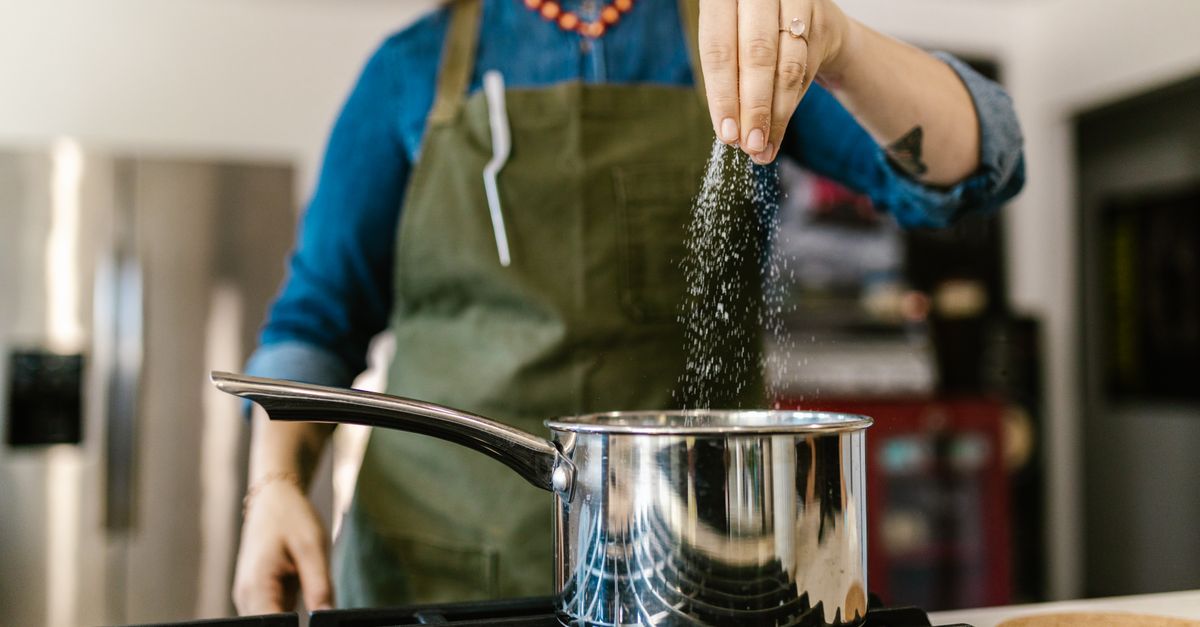
Everyone ruins dinner sometimes. The lid comes off the chilli flakes mid-shake, the stock cube turns out to be double strength, a child “helps” with the sugar. What separates a bad evening from a served dinner is knowing which fixes actually work, and the honest answer is that there are only two real mechanisms: dilution and balance. Everything below is one of those two, plus a clear-eyed list of what cannot be undone.
Free PDF
Free Oven Temperature & Gas Mark Chart
A printable one-page conversion chart for your kitchen: degrees, fan, gas mark and the descriptions in between. Pop your email in and the PDF is yours, plus the odd straight-talking kitchen tip.
Free, unsubscribe any time. The download starts as soon as you sign up.
The two mechanisms
Dilution removes nothing but lowers the concentration of the problem. Add more of everything that is not the problem ingredient: more liquid, more vegetables, more unseasoned base. It is the only fix that genuinely reduces how much salt or chilli is in each spoonful.
Balance changes nothing chemically but changes what you taste. Fat, acid, sweetness and bitterness all interact on the tongue. A dish can contain exactly as much chilli as before and taste half as hot once there is dairy in it. Balancing is faster and does not leave you with a vat of food, but it has limits: you are masking, not removing.
Every rescue is one of these, or both. Now the specific disasters.
Too salty
First, the myth, because it refuses to die: a raw potato does not absorb salt from a dish in any meaningful way. This has been tested repeatedly, including with proper salinity measurements. The potato absorbs some salty liquid, taking salt and water together, so the concentration of salt in the dish, which is what you taste, barely changes. If the potato trick ever seems to work, it is because the potato chunks themselves are bland and dilute each mouthful, which brings us to the real fix.
- Dilute. Add unsalted liquid (water, unsalted stock, passata, coconut milk), or bulk the dish out with unsalted solids: more potato, rice, beans, vegetables, another tin of tomatoes. For a soup or stew this is nearly always the answer. Yes, you get more food. Freeze the surplus.
- Add fat. Cream, butter, olive oil, coconut milk. Fat coats the tongue and genuinely reduces perceived saltiness. A slightly over-salted sauce plus a knob of butter is often job done.
- Add acid or sweetness. A squeeze of lemon or a splash of vinegar redirects the palate; a pinch of sugar softens the salty edge. Small amounts, taste as you go.
- Serve it differently. An over-salted stew over plain rice, unsalted mash or bread is diluted on the plate rather than in the pot. This rescues things nothing else can.
If the dish is drastically over-salted (the double-stock-cube tier), only serious dilution works. Balance tricks handle “a bit much”, not “inedible”.
Too spicy
Chilli heat is capsaicin, and capsaicin is fat-soluble, not water-soluble. That single fact explains all the fixes and why water is not one of them.
- Dairy is the best tool. Cream, yoghurt, soured cream, coconut milk, butter, grated cheese. The fat dissolves and disperses capsaicin, and the casein protein in dairy actively binds to it. This is why raita sits next to curry.
- Sugar helps more than people expect. A teaspoon or two of sugar, honey or even grated carrot noticeably tames heat.
- Acid helps. Lime, lemon or vinegar counters heat and brightens the dish at the same time.
- Dilute with more of the unspiced base, same as for salt.
- Nut butters (peanut butter in a curry or noodle sauce) bring fat and sweetness together and suit many cuisines.
- On the plate: rice, bread, yoghurt on the side let each diner self-rescue. Useful when only one child is at the fire-alarm threshold.
What does not work: water, and time. Simmering longer does not cook the heat out; if anything, reduction concentrates it.
Too sweet
- Acid is the main answer. Vinegar, citrus, tamarind, a splash of wine. Sweet-and-sour is a stable, pleasant balance; plain sweet savoury food is not.
- Salt, in small pinches, sharpens a dish and cuts cloying sweetness.
- Bitterness or heat: a little coffee or cocoa in a chilli or barbecue sauce, extra chilli, mustard, or something bitter like greens.
- Dilute with unsweetened base if it is badly overdone (usually a rogue “tablespoon” of honey that should have been a teaspoon).
Bland
Bland is the easiest fix and the most common complaint, and nine times out of ten the missing thing is salt, acid, or both.
- Salt first. Add a little, stir, taste, repeat. Under-salting is the number one reason home cooking tastes flat next to restaurant food.
- Then acid. If it tastes “fine but dull” and more salt is not helping, it wants lemon juice or vinegar. This is the least-known, most transformative move in home cooking.
- Fat carries flavour. A finishing knob of butter or glug of good olive oil wakes a lean dish up.
- Umami for depth: a splash of soy or fish sauce, tomato purée, Worcestershire sauce, Parmesan, Marmite in a stew. Anchovies dissolve into a sauce and vanish, leaving only savouriness behind.
- Fresh aromatics at the end: herbs, garlic, chilli, citrus zest. Long cooking dulls them, so a second addition just before serving restores the top notes. If you are missing the exact ingredient, the substitutions guide will usually get you close enough.
What cannot be undone
Honesty section. Some mistakes are structural, and no balancing act reverses them:
- Burnt. Burnt flavour permeates everything it touched. Do not stir a caught pot; decant the unburnt top into a clean pan without scraping the bottom, taste, and accept the verdict. If the burnt taste is through the whole dish, it is dinner for the bin.
- Overcooked meat. Dry chicken breast and grey steak do not come back. Slice thin, sauce generously, or shred into something wet. Prevention is a probe thermometer, and the doneness temperatures article covers exactly that.
- Broken emulsions (split mayonnaise, split hollandaise) are the exception: often rescuable by whisking the split sauce slowly into a fresh yolk or a spoonful of hot water. Split cream sauces in a curry, though, mostly stay split; a vigorous whisk or a stick blender is your only shot.
- Mushy pasta, rice and vegetables. Overcooked starch has no reverse gear. Mush becomes soup, fried rice becomes a bad idea, and next time the timer starts two minutes earlier.
Takeaway: dilute the disaster or balance it with fat, acid and sweetness, taste after every change, and know that burnt and overcooked are the two verdicts you cannot appeal.