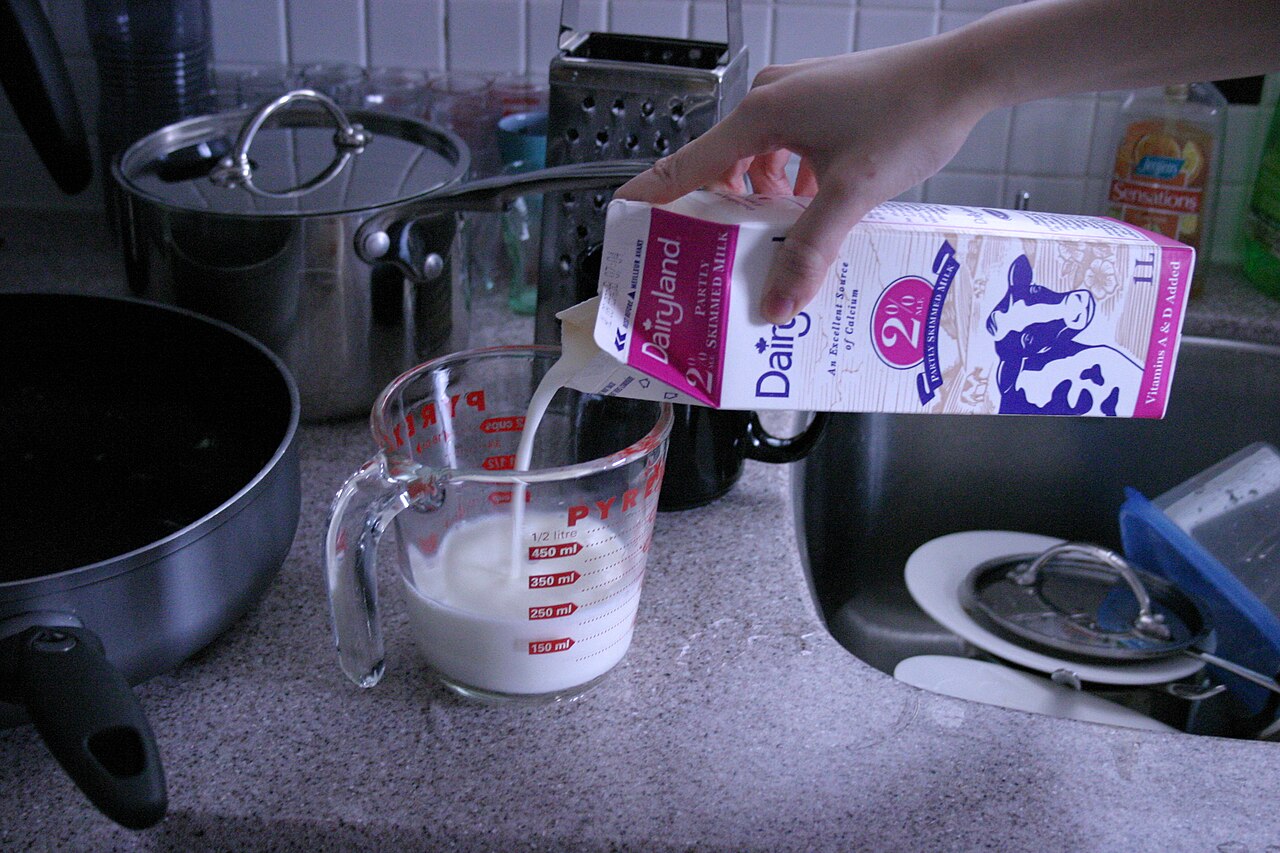
We go through a lot of milk, and every so often the maths goes wrong: a big four-pinter comes into the house on a Friday, the week changes shape, and by Tuesday there is more milk left than days to drink it. For years my answer was to pour the tail end down the sink and feel faintly guilty about it. Then I started freezing it, and the guilt went away. Milk freezes far better than most people think, and once you know the small handful of rules it becomes one of the easiest ways to stop good food going to waste. Here is everything I have learned about doing it properly.
Free PDF
Free Oven Temperature & Gas Mark Chart
A printable one-page conversion chart for your kitchen: degrees, fan, gas mark and the descriptions in between. Pop your email in and the PDF is yours, plus the odd straight-talking kitchen tip.
Free, unsubscribe any time. The download starts as soon as you sign up.
Yes, you can freeze milk
Milk freezes perfectly well, and I freeze all sorts: whole, semi-skimmed, the odd carton of oat milk. The one thing to get straight from the start is timing. Freeze milk while it is still good, before the use-by date, not after. Freezing does not rescue milk that is already on the turn; it just presses pause on whatever state the milk is in. If it has passed its use-by date, it goes in the bin, not the freezer. The freezer is for perfectly good milk you simply cannot drink in time, which for a busy household happens more often than you would think.
The other thing worth saying up front is that freezing changes the texture a little, and that is normal. It does not make the milk unsafe or unpleasant, but a thawed pint is not quite identical to a fresh one. I will come back to how to deal with that, because it is easily managed and it should not put you off.
How long milk keeps in the freezer
For quality, I treat about a month as the sensible window. That lines up with Love Food Hate Waste, which suggests freezing milk for up to a month. Frozen milk stays safe well beyond that, because a properly working freezer holds everything in suspended animation, but the texture and taste drift the longer it sits, so a month is the point where I stop expecting it to be as good as fresh.
In practice I do not push it anywhere near that far. Milk I freeze usually gets used within a fortnight, because I only freeze it when I know a baking session or a run of white sauces is coming up. The date matters, though, so I write it on the container with a marker. Frozen milk all looks the same in a crowded freezer, and a guessed date is how a carton ends up lurking for six months.
Which milk freezes best
Here is a detail that surprised me: the lower the fat, the better milk freezes. Skimmed and semi-skimmed come back the most like their old selves. Whole milk freezes fine too, but the higher fat content is more inclined to separate, so you get a grainier look and sometimes little specks of fat when it thaws. It is still perfectly good, it just needs a bit more encouragement to come back together.
If you mostly drink whole milk, do not let that stop you. I freeze whole milk all the time and use it in cooking without a second thought. But if you have a choice of what to buy in for freezing, or you are freezing milk specifically to drink cold later, the semi-skimmed will reward you.
The right container, and why glass is a trap
Liquids expand as they freeze, and milk is no exception. That single fact decides how you should pack it.
- Use plastic, not glass. A sealed glass bottle has nowhere to give when the milk expands, and it can crack or shatter in the freezer. Plastic bottles and tubs flex, so they cope. If your milk came in glass, decant it into a plastic container first.
- Leave headspace. Even a plastic bottle needs somewhere for the milk to go. If a plastic milk bottle is full to the brim, pour a good splash out (into your tea, ideally) before it goes in the freezer, so the expanding milk has room.
- Seal it well. Milk readily takes on smells from a freezer full of other food, so make sure the lid is on properly.
My favourite trick, though, is not to freeze a whole bottle at all. If I only have a small amount left, I pour it into an ice cube tray, freeze it solid, then tip the cubes into a labelled freezer bag. A couple of milk cubes dropped straight into a mug of tea or a pan of sauce is genuinely useful, and it sidesteps the whole business of thawing a big bottle you only half need. For anyone measuring milk into recipes, a rough note on the bag of how much each cube holds saves faffing later; our ingredient converter is handy if you want to work out how those millilitres translate into cups or ounces for an American recipe.
How to thaw milk safely
This is the part where people go wrong, and it is the part that actually matters for safety, so I want to be clear about it. Thaw milk in the fridge, not on the worktop.
Milk that sits out at room temperature to defrost spends hours in the range where bacteria multiply happily, and by the time the middle has thawed the outside has been sitting warm for far too long. Defrosting in the fridge keeps the whole thing cold while the ice melts. A small container or a bag of cubes will thaw overnight. A big bottle can take a day or more, so plan ahead and move it down from the freezer the day before you need it.
Do not use the microwave to defrost a whole container of milk. It heats unevenly, warms the milk into the danger zone in patches, and you lose the point of freezing it in the first place. If you are in a genuine hurry, stand the sealed container in a bowl of cold water in the sink and change the water as it warms; it speeds things up without letting the milk get warm. The Food Standards Agency is consistent on this across all frozen food: defrost in the fridge, keep it cold, and never let it sit out warming through.
Once milk is thawed, treat it like fresh milk on its last legs. Use it within a couple of days, keep it in the fridge the whole time, and do not refreeze it. Refreezing thawed milk means another slow trip through the danger zone, and there is no good reason to risk it.
Dealing with the grainy look
Thawed milk almost always looks a bit wrong at first. It can separate, with the fat gathering into flecks or a slightly grainy, uneven texture, and whole milk shows this more than semi-skimmed. This is a physical change, not a sign the milk has spoiled, and it is easily fixed.
Give it a really good shake, or a brisk whisk, and in most cases the milk comes back together and looks entirely normal. If a bit of graininess lingers, it disappears completely the moment the milk goes into anything cooked or hot. That is why I am relaxed about freezing whole milk: even when it thaws looking less than perfect, it is flawless in a white sauce, a custard, a batch of pancakes, a soup or a mug of tea. Milk you have frozen and thawed is at its very best in cooking and baking, and perfectly fine in hot drinks. If you specifically want a cold glass of milk that looks pristine, freeze semi-skimmed and shake it well, and you will barely notice.
None of this changes what the milk is for. It thickens a sauce, froths into coffee and soaks a bowl of cereal exactly as it always did.
A word on fridge storage, before you even freeze
Freezing is a rescue plan, but you will need it less often if the milk lasts as long as it should in the fridge to begin with, and the commonest mistake there is storing it in the door. The door is the warmest part of the fridge and its temperature swings every time you open it, which is the worst possible spot for milk. Keep milk on a shelf, ideally towards the back where it is coldest, and keep the fridge itself at 5C or below. That alone buys you noticeably more time and cuts down on the days when freezing is the only thing standing between a good pint and the sink. There is more on getting the most out of your fridge in how long food lasts in the fridge.
The short version
Freezing milk is one of the least fussy kitchen habits I have picked up, and it has all but ended the small weekly waste of a bottle that outlived its week. The rules that matter:
- Freeze it fresh, before the use-by date. Freezing pauses good milk; it cannot fix bad milk.
- About a month for best quality. It stays safe longer, but a month is where I stop expecting fresh.
- Skimmed and semi-skimmed freeze best. Whole milk works too, it is just grainier when thawed.
- Plastic, not glass, with room to expand. Or freeze the dregs as cubes for tea and sauces.
- Thaw in the fridge, never on the counter. Use within two days, and never refreeze.
- Shake out any graininess. Thawed milk is at its best in cooking, baking and hot drinks.
Do those and a surplus of milk stops being a small recurring waste and becomes something you simply put away for later. If you want to see where milk sits alongside everything else worth freezing, I have gathered the numbers in freezer storage times, and the full method for getting frozen food back safely is in defrosting food safely.