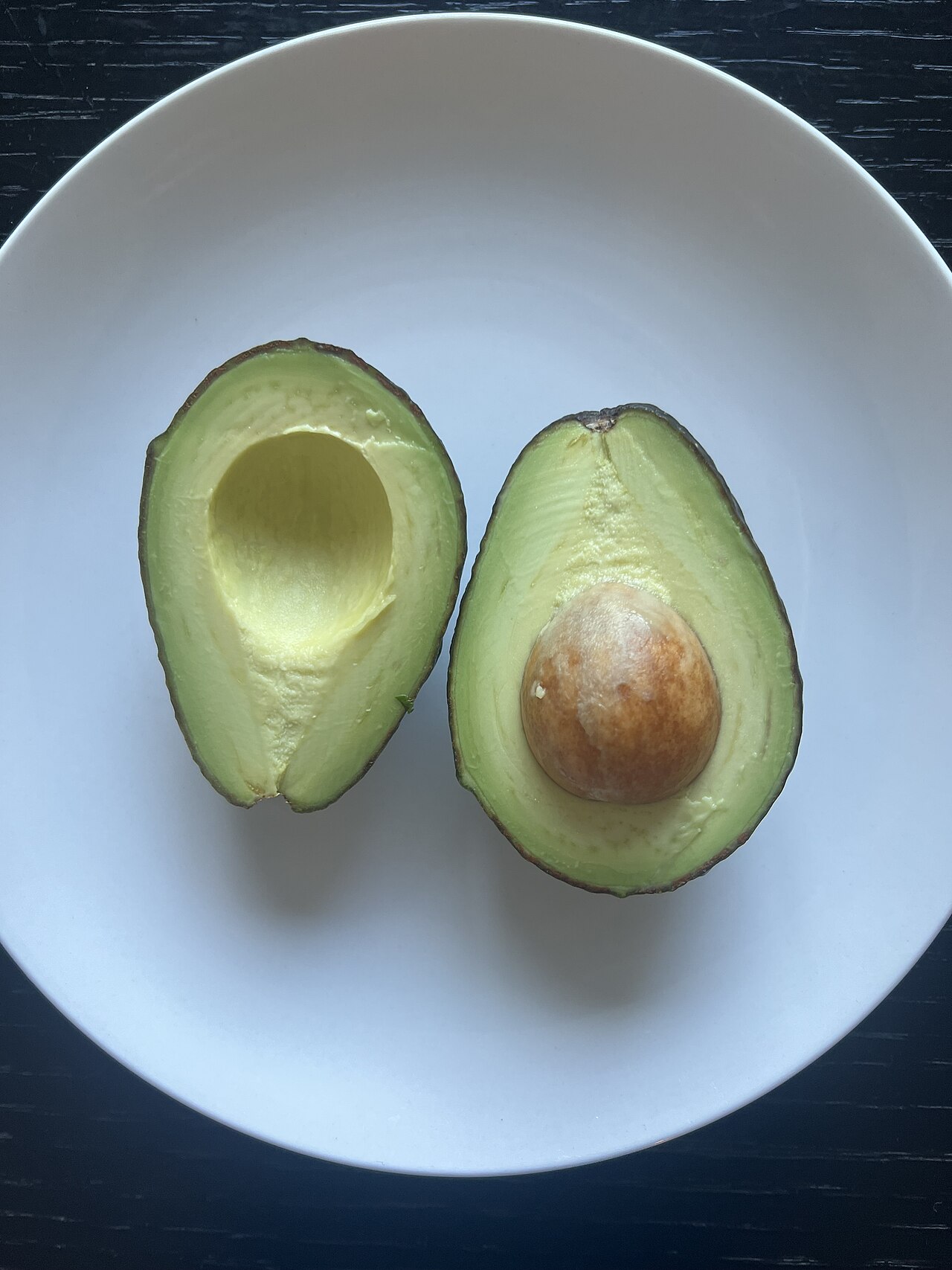
Yes, you can freeze avocado, and if you have a bowl of them ripening all at once it is far better than watching them go brown and soft on the side. But be clear about what you are getting back. Freezing breaks down the cell structure that makes a ripe avocado firm and creamy, so what thaws is softer, looser and a bit watery. That is fine, in fact ideal, for anything you were going to mash or blend anyway. It is no good at all for a tidy fan of slices on toast. So freeze it with the end use in mind: smoothies, guacamole, dips, dressings and baby food, yes; a photogenic slice, no.
Free PDF
Free Oven Temperature & Gas Mark Chart
A printable one-page conversion chart for your kitchen: degrees, fan, gas mark and the descriptions in between. Pop your email in and the PDF is yours, plus the odd straight-talking kitchen tip.
Free, unsubscribe any time. The download starts as soon as you sign up.
Freeze it ripe, not hard
Only freeze avocados that are properly ripe, that give a little when you press near the stem end. A rock-hard, underripe one will not ripen in the freezer, and it will not ripen well after thawing either, so you just end up with a sad, grassy lump. If yours are not ready yet, leave them in a fruit bowl for a day or two, or pop them in a paper bag with a banana to hurry them along, and freeze once they are good to eat.
Overripe is fine, right up until the flesh is going brown and stringy inside. At that point it is past saving and belongs in the caddy. The sweet spot is a ripe avocado you simply cannot use in time.
The three ways to freeze it
As mash (my default, and the best result). Scoop the flesh into a bowl, mash it, and stir in a good squeeze of lemon or lime juice, roughly half a lime per two avocados. The acid slows the browning. Press it into a freezer bag, flatten it thin, push all the air out and seal. Flat bags freeze fast, stack neatly and snap into portions. This is what I do, because mash is what I use avocado for once it has been frozen anyway.
As halves or chunks. Halve, stone and peel, then brush all the cut surfaces with lemon or lime juice. Open-freeze the pieces on a lined tray until solid, then tip them into a bag. Freezing them separately first stops them clumping into one block. Be honest with yourself that these will thaw soft, so they are chunks for blending, not for slicing.
As guacamole. You can freeze guac, but leave out the watery, chunky extras. Tomatoes, raw onion and fresh coriander weep water and turn to mush as they thaw, giving you a watery, sad dip. Freeze just the avocado base, mashed with lime, salt and maybe garlic, and stir the fresh tomato, onion and herbs through after it has thawed. It tastes far closer to freshly made that way.
Whichever method, always get the air out. Avocado browns on contact with air, so a bag with the air pressed out, or a tub filled to the top with cling film pressed onto the surface, makes a real difference to the colour.
Why it goes mushy (the quick science)
It helps to know why the texture slides, because then the rules make sense rather than feeling like fussy instructions. A ripe avocado is mostly water and fat held inside intact cell walls, and it is those firm little cells that give you the clean, buttery bite. When the flesh freezes, the water inside each cell forms ice crystals that push against and rupture those walls. Thaw it and the structure has been burst from the inside, so the cells can no longer hold their shape or their water, and you get a soft, slightly weepy mash instead of a firm slice.
That is also why acid and air matter so much. The browning you see is the flesh oxidising, the same reaction that turns a cut apple brown, sped along by an enzyme in the fruit. Lemon or lime juice is acidic enough to slow that enzyme right down, and keeping the air out starves the reaction of the oxygen it needs. Neither trick changes the safety of the avocado, they just keep it looking and tasting fresher. So none of this is about the freezer being unkind to avocados; it is simply what freezing does to any soft, watery flesh, which is why mashing and blending are the honest end uses.
How long it keeps
Frozen avocado holds its quality for about 3 to 6 months. Mashed with a bit of acid tends to keep its colour and flavour best; plain chunks are better used within 3 months or so. After that it stays safe to eat if it has been solidly frozen the whole time, it just loses more flavour and the texture slides further.
Freezing is a quality clock here, not a safety one, the same as with most fruit and veg. As long as your freezer holds a steady minus 18 degrees, the avocado will not become unsafe; it simply gets less pleasant the longer it sits. For how freezer timings work across the board, my freezer storage times guide has the numbers for everything else in there.
Thawing and using it
Thaw in the fridge for a few hours, or on the worktop for about an hour if you are in a hurry. For a smoothie, do not bother thawing at all, just drop the frozen mash or chunks straight into the blender, where the cold is a bonus.
Expect a bit of liquid to separate out as it thaws. Pour that off, or just stir it back in and give the mash a brisk beating with a fork to bring it back together. A fresh squeeze of lime and a pinch of salt wakes up the flavour, since freezing dulls it slightly.
Good jobs for thawed avocado: guacamole and dips, smoothies, salad dressings, folding through a pasta sauce, spreading on toast when you do not mind it rustic, avocado chocolate mousse, and baby purées. The one thing to skip is anything that needs it to look neat and hold its shape.
When to just use it fresh instead
Freezing is for a genuine surplus, not your everyday avocado. If you only have one or two and want them for slicing, keep them out of the freezer. A whole ripe avocado keeps in the fridge for a few days and slows its ripening there. A cut one browns fast, so press cling film onto the flesh or store it cut-side down in a tub with a little lemon juice, and use it within a day.
And if the flesh is already brown and stringy through the middle, freezing will not rescue it. Freezing preserves what is there, it does not improve it, so a past-it avocado is past it. When it smells rancid or the flesh has gone genuinely off rather than just a bit brown at the edges, throw it out.
The short version: freeze ripe avocado as lemon-spiked mash, get the air out, use it within a few months, and keep it for the blender and the dip bowl rather than the slice. Done that way it saves you money and waste, and there is no safety catch, just a texture one.
This is general storage guidance; trust your own eyes and nose over any timing here, and when in doubt, throw it out.