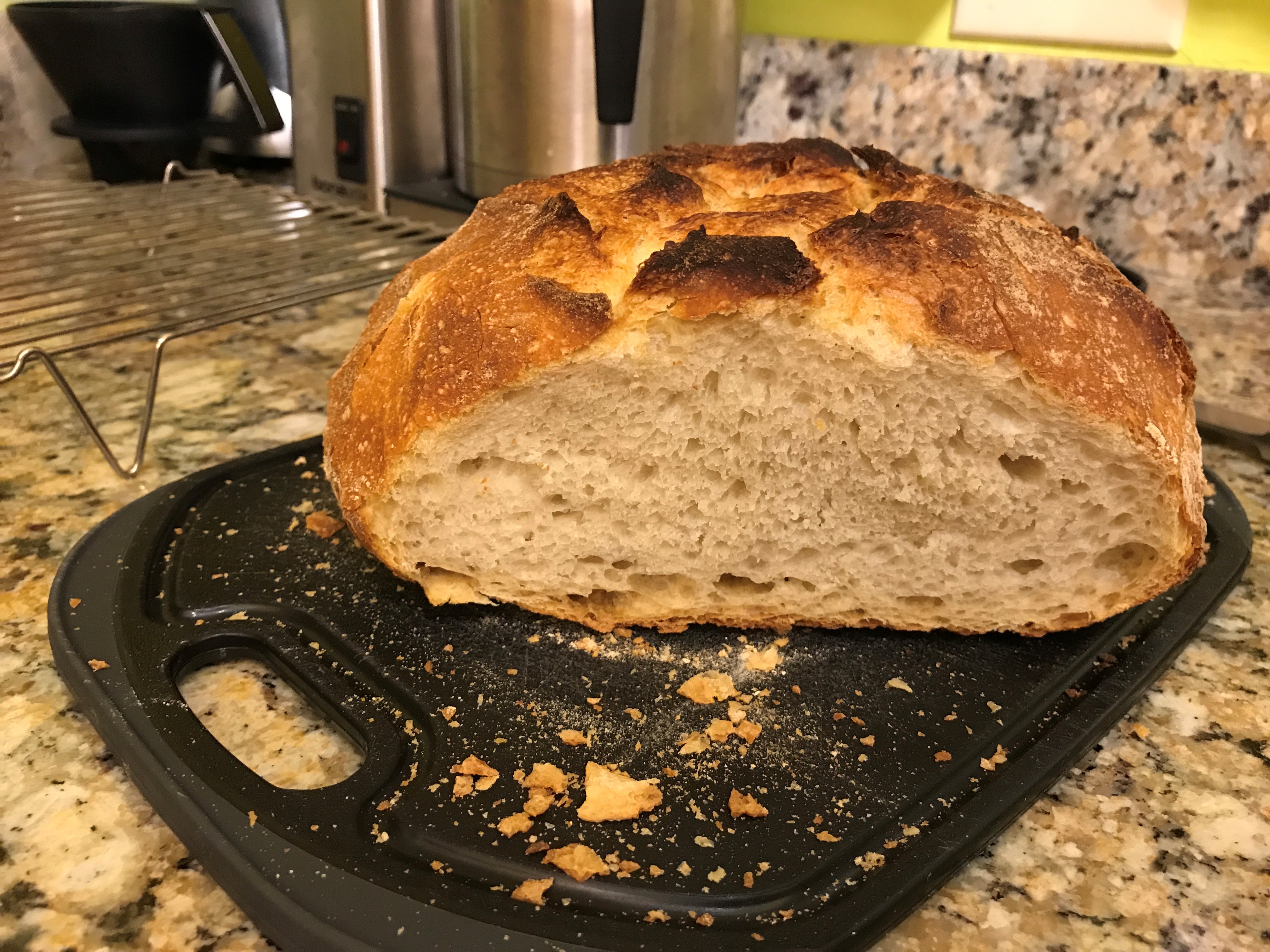
Bread is the thing my household wastes more of than anything else, or it used to be. A loaf that seemed like a good idea on Monday is dry by Thursday and properly stale by the weekend, and half of it goes in the bin having never been anywhere near a plate. The freezer fixed that, and it took me an embarrassingly long time to work out why. Freezing bread is not a compromise or a way of rescuing something past its best. Done right, it is genuinely the best way to keep a loaf, better than the bread bin and far better than the fridge. Here is the whole thing: what happens to bread when you freeze it, how to do it so it comes out well, how long it keeps, and the one habit that leaves you disappointed.
Free PDF
Free Oven Temperature & Gas Mark Chart
A printable one-page conversion chart for your kitchen: degrees, fan, gas mark and the descriptions in between. Pop your email in and the PDF is yours, plus the odd straight-talking kitchen tip.
Free, unsubscribe any time. The download starts as soon as you sign up.
Yes, and the freezer beats the bread bin
Bread does not go stale because it dries out, or not only for that reason. The main thing happening is a process called staling, where the starch in the crumb recrystallises and the loaf turns firm and dry even inside a sealed bag. It starts the moment the bread cools and it happens fastest at fridge temperature, which is exactly why you should never keep an everyday loaf in the fridge. Counterintuitive, I know, but the fridge stales bread quicker than the counter does.
Freezing stops that staling clock almost dead. At freezer temperature the starch cannot recrystallise, so a loaf that goes into the freezer fresh comes out fresh, near enough, once you thaw it. That is the part people miss. You are not storing sad old bread for emergencies. You are pressing pause on a good loaf at its best, then unpausing it when you want a slice.
Just about everything freezes: sliced sandwich loaves, sourdough, bloomers, baguettes, bagels, crumpets, pitta, wraps, rolls, even most cakes and teacakes. The only things that struggle are breads with a very thin, crisp crust, a fresh baguette loses its shattery crust and goes a bit leathery, though a few minutes in a hot oven brings most of that back.
Freeze it fresh, and freeze it fast
The single rule that matters most: freeze bread while it is fresh, not when it is a day off going stale. Whatever state it goes in is roughly the state it comes out. If you wait until Wednesday to freeze Monday’s loaf, you have frozen two-day-old bread and that is what you will get back. So if you know you will not finish a loaf in a day or two, freeze half of it straight away rather than waiting to see.
Let a freshly baked loaf cool completely first. Sealing warm bread traps steam, and that turns to ice crystals and then to a damp patch when you thaw it. Once it is cool, wrap it well. Air is the enemy in a freezer because it causes freezer burn, those pale dry patches where the surface has dried out, so you want the bread wrapped snugly with as little air around it as you can manage. I use a freezer bag with the air pressed out, and for anything I am keeping more than a few weeks I wrap it in foil or cling film first and then bag it. Label it with the date, because one frozen loaf looks much like another and optimism is not a dating system.
Slice before you freeze
This is the tip I wish someone had told me years ago. Freeze bread sliced, not whole.
A whole frozen loaf is an all-or-nothing commitment. You have to thaw the entire thing to get at any of it, and then you are back to racing the staling clock on a full loaf. Slice it first, though, whether it came pre-sliced or you cut it yourself, and you can take out exactly as many slices as you want and leave the rest frozen solid. Two slices for toast, four for sandwiches, back in the freezer with the bag resealed. For a loaf you slice yourself, it helps to slot a bit of baking paper between the slices, or at least freeze it flat for an hour before bagging, so they do not weld into a single block.
Thawing: the toaster is your friend
How you thaw depends on what you are doing with it.
For toast, do not thaw at all. Frozen slices go straight into the toaster from the freezer. You might need an extra minute or a second go round, but it toasts beautifully and there is no waiting. This is the whole reason sliced-and-frozen bread is so good day to day; breakfast is no slower than it would be with a fresh loaf.
For sandwiches or anything you want soft, take the slices out and leave them on a plate at room temperature. Thin sliced bread is ready in fifteen to twenty minutes; a thick slice or a chunk of a larger loaf might want half an hour or a little more. They thaw quickly because they are thin, and they come back soft. You can hurry a slice along in the microwave for ten to fifteen seconds if you are in a rush, but eat it promptly because microwaved bread firms up fast as it cools.
For a whole loaf, rolls or a baguette you want to serve warm, thaw at room temperature still wrapped so the crust does not dry, then refresh it in a hot oven, around 180C, for five to ten minutes. That crisps the crust and gives you something close to fresh from the bakery. Do not thaw a whole loaf in the fridge, for the same reason you do not store bread there: the fridge is where staling happens fastest.
How long frozen bread keeps
For quality, aim to use frozen bread within about three months. The UK Food Standards Agency gives three months as a sensible limit, and after that the bread is still safe but the texture starts to slip, with freezer burn and off-flavours creeping in the longer it sits.
On safety, the picture is reassuring. Freezing to normal freezer temperature stops microbes in their tracks, so bread kept properly frozen does not become unsafe; the three-month figure is about how good it tastes, not whether it will make you ill. That said, do not freeze bread that already shows any sign of mould. Freezing halts mould growth but does not undo it, and mould on bread can send threads deep into the loaf beyond the visible spot, so a mouldy loaf belongs in the bin, not the freezer. The whole loaf, not just the fuzzy corner.
One more thing worth saying plainly, because it applies to all frozen food and bread is no exception: once you have thawed something, do not refreeze it raw. With bread this is more about quality than danger, each freeze-thaw cycle costs you texture, but the habit is a good one to keep. Take out what you need, leave the rest frozen, and you never face the question.
The quiet economy of it
What freezing bread really buys you is the freedom to stop shopping like the loaf is a deadline. Buy the good sourdough or the bakery loaf you actually want, slice it, freeze most of it, and eat it over a fortnight two slices at a time with none of it going to waste. A reduced loaf near its date is a bargain rather than a gamble, because straight into the freezer it goes and the date stops mattering. I keep a bag of mixed slices on the go more or less permanently now, and the amount of bread we throw away has gone from a regular annoyance to almost nothing.
If batch cooking and stocking the freezer is becoming your thing, the same cool-it-fast, wrap-it-well, label-it logic runs through all of it. Our guide to freezer storage times has the keeping times for everything else you are likely to stash, and defrosting food safely covers the foods where thawing is a genuine safety matter rather than just a texture one. And if you are baking your own bread to freeze, the oven temperature converter will sort out any recipe that gives its heat in the wrong units.