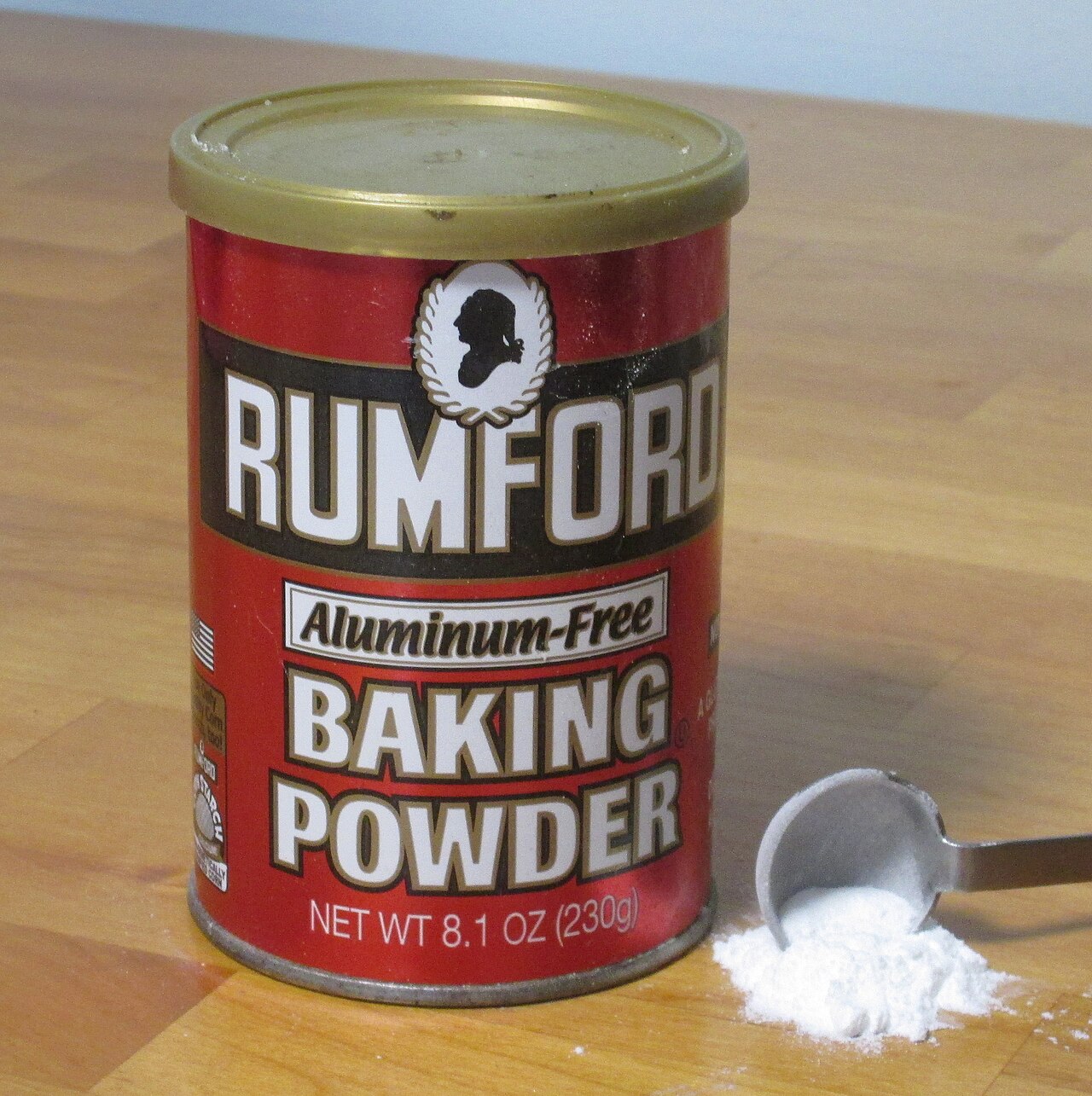
Bicarbonate of soda and baking powder are not the same thing, and swapping one for the other spoon for spoon is how a cake ends up flat, soapy or oddly bitter. The quick version: bicarbonate of soda is a single ingredient that needs an acid to work, while baking powder already has that acid built in. Bicarb is also far stronger, roughly three to four times the lifting power of baking powder, so you use much less of it. Get those two facts straight and most baking confusion clears up on its own. Here is the full picture, with the exact ratios for when you run out of one and have only the other.
Free PDF
Free Oven Temperature & Gas Mark Chart
A printable one-page conversion chart for your kitchen: degrees, fan, gas mark and the descriptions in between. Pop your email in and the PDF is yours, plus the odd straight-talking kitchen tip.
Free, unsubscribe any time. The download starts as soon as you sign up.
The one-line difference
Bicarbonate of soda is pure sodium bicarbonate, an alkali. Baking powder is bicarbonate of soda plus a dry acid plus a little starch, pre-mixed so it works on its own.
Both make things rise by producing carbon dioxide, the bubbles that lift a cake or lighten a scone. The difference is what triggers those bubbles. Bicarb needs you to supply an acid in the recipe. Baking powder brings its own, so it just needs liquid and heat. That single distinction explains everything else, including why they are not interchangeable.
How bicarbonate of soda works
Bicarb is an alkali, and on its own in a bowl it does nothing useful. Introduce an acid and some liquid and it reacts at once, fizzing off carbon dioxide. That is why recipes that call for bicarb almost always include something acidic to set it off:
- buttermilk, soured milk or plain yoghurt
- lemon juice or vinegar
- treacle, golden syrup or honey
- brown sugar
- natural cocoa powder (the ordinary sort, not Dutch-processed)
- mashed banana or other fruit
Because bicarb reacts the moment it meets acid and liquid, a batter made with it should go in the oven fairly promptly, before all the fizz escapes. Leave it sitting on the side and it slowly goes flat.
The other thing to know is that bicarb is strong. You need only a small amount, typically around a quarter to a half teaspoon for a standard cake. Use too much and you get the classic tell-tales: a soapy, slightly metallic taste, a coarse open crumb, and food that browns too fast and too dark. That soapy note is unreacted alkali, bicarb with no acid left to neutralise it, and it is the most common bicarb mistake in a home kitchen.
How baking powder works
Baking powder is bicarbonate of soda that has been packaged with everything it needs. A typical tin contains the bicarb, a dry acid such as cream of tartar or a phosphate, and a small amount of cornflour to keep it dry and stop it reacting inside the tub. Add liquid and it starts to fizz; add heat and, in most modern baking powders, it fizzes again. That second stage is why most baking powder is labelled double acting: one burst of gas when the batter is mixed, a second in the oven, which gives a more reliable rise.
Because the acid is already in there, baking powder is the raising agent you reach for when the recipe has no acidic ingredient of its own, plain cakes, most sponges, anything made with ordinary milk rather than buttermilk. It is gentler than bicarb, so recipes use more of it, often one to two teaspoons.
Can you use one instead of the other?
You can, at a pinch, but you have to adjust, and the results are not always identical.
If a recipe wants baking powder and you only have bicarbonate of soda: you also need an acid, because bicarb alone will not lift and will taste soapy. The reliable fix is to make a quick baking powder from bicarb and cream of tartar. To replace 1 teaspoon of baking powder, mix:
- 1/4 teaspoon bicarbonate of soda
- 1/2 teaspoon cream of tartar
That is the classic ratio, roughly twice as much cream of tartar as bicarb. Mix it fresh and use it straight away, because unlike shop baking powder it is single acting and will not wait around. If you have no cream of tartar, you can lean on an acid already in the recipe, but that is guesswork, and I would sooner buy a tub of baking powder.
If a recipe wants bicarbonate of soda and you only have baking powder: use about three times as much baking powder, since bicarb is roughly three to four times stronger. So a recipe needing 1/2 teaspoon of bicarb would take around 1 and 1/2 teaspoons of baking powder. It usually works, but the extra powder can leave a faint taste and the recipe was probably relying on that acidic ingredient (the buttermilk, the treacle) doing something for flavour and browning too, so expect a slightly different result.
Make your own baking powder
If you bake with cream of tartar anyway, you can mix baking powder from scratch. The ratio is one part bicarbonate of soda to two parts cream of tartar. I add one part cornflour as well, which absorbs stray moisture and keeps the mix from reacting in the jar:
- 1 teaspoon bicarbonate of soda
- 2 teaspoons cream of tartar
- 1 teaspoon cornflour
Stir well and store it airtight. It is single acting, so it will not have the two-stage lift of a commercial double-acting powder, but for most home baking it does the job. Make it in small batches and it stays lively.
Are they still any good? A quick test
Both raising agents lose their fizz with age, and a tired one is behind many a heavy cake. Bicarb keeps for a good while but is not immortal; baking powder fades faster once opened and is worth replacing roughly once a year. Two ten-second checks:
- Bicarbonate of soda: drop a spoonful into a little vinegar. It should fizz up straight away.
- Baking powder: stir a spoonful into hot water. Same thing, it should bubble at once.
No fizz, no lift. Bin it and open a fresh tub rather than waste good ingredients on a batter that will not rise.
A few things worth knowing
- Self-raising flour is simply plain flour with baking powder already blended in, which is why you leave out extra raising agent when a recipe uses it. If you have only plain flour, you can make your own, and I go through the amounts in how to make self-raising flour.
- Buy food-grade. The bicarbonate of soda sold for cleaning is the same chemical, but for baking use the food-grade tub from the baking aisle.
- Scaling a recipe up or down? Raising agents do not always scale in a neat straight line, but the recipe scaler gives you a sensible starting point, and the ingredient converter sorts out any teaspoon-to-gram muddle along the way.
For more everyday swaps like this, from eggs to buttermilk to caster sugar, see my baking ingredient substitutions guide and the wider list of ingredient substitutions.
The bottom line
Bicarbonate of soda is a strong, single alkali that needs an acid to do its job; baking powder is a milder, ready-mixed blend that works on its own. Use bicarb when your recipe has something acidic in it, use baking powder when it does not, and remember bicarb is the far stronger of the two so you need much less. Keep both fresh, test them if you are unsure, and if you are ever caught short, a quarter teaspoon of bicarb with half a teaspoon of cream of tartar will stand in for a teaspoon of baking powder and save the bake.