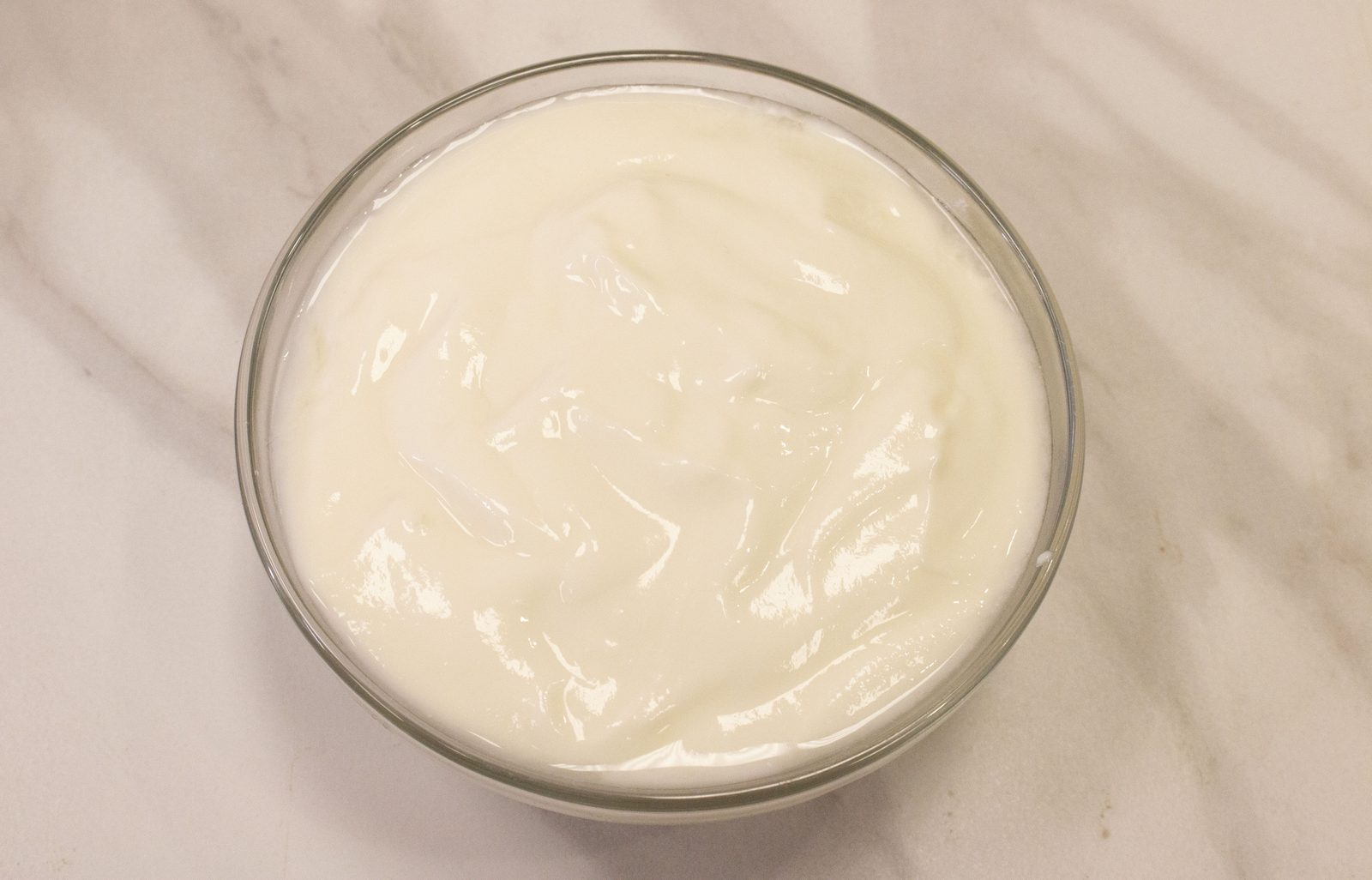
Yes, you can freeze yoghurt, it is perfectly safe, and freezing does not kill the live cultures. The one thing to know before you start is that freezing changes the texture. Yoghurt is an emulsion of water, fat and protein, and freezing splits it, so what you thaw out is grainy and watery rather than smooth and glossy. That does not make it bad, it just makes it the wrong thing to eat straight from a pot with a spoon. Where frozen yoghurt shines is in smoothies, baking, cooking and cold treats, and if you have ever stood over a tub that is a day off its date wondering whether to bin it, freezing is the answer. Here is how I do it.
Free PDF
Free Oven Temperature & Gas Mark Chart
A printable one-page conversion chart for your kitchen: degrees, fan, gas mark and the descriptions in between. Pop your email in and the PDF is yours, plus the odd straight-talking kitchen tip.
Free, unsubscribe any time. The download starts as soon as you sign up.
Is it safe to freeze yoghurt?
It is. Freezing pauses the activity of bacteria rather than killing them, which is exactly what you want. The live cultures in yoghurt, the friendly bacteria such as Lactobacillus, are not destroyed by freezing either. They simply go dormant in the cold and wake back up as the yoghurt warms, so a smoothie made with thawed live yoghurt still delivers them.
The safety rule is the same one that applies to anything you freeze: freeze it while it is still fresh and within its date, not after. If a pot is already past its use-by, freezing does not rescue it, and you should throw it out. If it is good now, in the freezer it goes, and it stays safe frozen. For the wider picture on what those labels actually mean, see my guide to use-by versus best-before dates.
The catch: texture, not safety
This is the part worth being honest about. When yoghurt freezes, the water in it forms ice crystals that separate from the fat and protein. Thaw it and those parts do not fully knit back together, so you get a grainy, slightly watery, curdled-looking result with a pool of whey on top. It tastes fine, but the smooth, creamy mouthful you get from fresh yoghurt is gone.
Full-fat and Greek-style yoghurts cope best, because the extra fat and the strained, thicker texture cushion some of that damage. Low-fat and fat-free yoghurts, being more watery to begin with, split the most. So if you are choosing what to freeze, a thick full-fat or Greek yoghurt will thaw closer to usable than a thin low-fat one.
How I actually use frozen yoghurt
Once you stop expecting it to come back as spoonable yoghurt, it becomes genuinely useful. Here is where it earns its place in my freezer:
- Smoothies. This is the best use by a mile. Freeze yoghurt in an ice cube tray, pop the cubes into a bag, and drop a few straight into the blender with fruit. They chill and thicken the smoothie and the grainy texture vanishes completely once blended.
- Baking. Thawed yoghurt works well in cakes, muffins, soda bread and pancakes, where it is being beaten into a batter anyway. The split texture makes no difference at all once it is mixed in.
- Cooking. Stir it into curries, marinades and sauces. A quick whisk brings it back together enough for cooking, though add it towards the end and keep the heat gentle so it does not split further in the pan.
- Frozen treats. Sweeten and flavour it, then freeze it into a simple frozen yoghurt, or spread it on a lined tray with fruit and a drizzle of honey and freeze it into yoghurt bark to snap into pieces.
How to freeze yoghurt properly
The method depends on how you plan to use it, but the principle is always the same: freeze in small portions so you only thaw what you need.
For smoothies and cooking, freeze it in an ice cube tray, then transfer the frozen cubes to a labelled freezer bag once solid. Each cube is roughly a tablespoon or two, so you can grab exactly the amount you want. For baking, freeze it in the quantities you tend to use, say 150g or 250g portions in small tubs or bags, so a batch drops straight into a recipe.
You can also freeze an unopened pot as it is, which is the no-effort option if a multipack is about to turn. Just know you will need to thaw and rework the whole thing at once, so it suits baking or a big batch of smoothies rather than portioned use. Whatever you choose, leave a little headroom in tubs because yoghurt expands as it freezes, and label everything with the date. Frozen yoghurt keeps its quality for around one to two months; it stays safe longer than that, but the texture drifts further the longer it sits.
Thawing it without making it worse
Thaw yoghurt slowly in the fridge overnight rather than on the worktop. A slow, cold thaw keeps it out of the temperature range where bacteria multiply and gives the live cultures the best chance of bouncing back. Do not thaw it at room temperature for hours or blast it in the microwave, which heats it unevenly, can kill the cultures and encourages splitting.
Once thawed, give it a good whisk or a quick blend to bring it back together as much as it will go. It will never be quite as smooth as it was, which is exactly why the blender, the mixing bowl and the pan are its natural homes. For cubes going into a smoothie, skip thawing entirely and blend them straight from frozen.
And do not refreeze yoghurt once it has thawed. Every freeze-thaw cycle does more damage to the texture, and refreezing something that has sat at fridge temperature for a while is not a habit worth getting into. Thaw what you need, use it, and leave the rest frozen. This is the same rule I apply to cream and to most dairy: freeze it once, in portions, and plan how you will use it.
What about the pots that say do not freeze?
Some yoghurt pots carry a “do not freeze” line. That is almost always about quality rather than safety, because the maker knows the texture will change and would rather you did not blame them for a grainy pot. It is not a safety warning in the way a use-by date is. So if a tub says do not freeze but you are planning to blend or bake with it, you are fine to go ahead, just with your eyes open about the texture.
The bottom line
Freezing yoghurt is safe, it keeps the live cultures, and it is a genuinely good way to stop a tub going to waste. Accept that the texture splits and you stop being disappointed and start being useful with it: freeze it in cubes or small portions, use it in smoothies, baking and cooking, thaw it slowly in the fridge, whisk it back together, and never refreeze it. Full-fat and Greek yoghurts give you the best results. If you are working yoghurt into a recipe and need to switch between grams, millilitres and cups, my ingredient converter will sort the measurements out.
This is general kitchen guidance, not medical advice. If you are ever unsure whether food is safe to eat, follow the FSA and NHS guidance and err on the side of binning it.