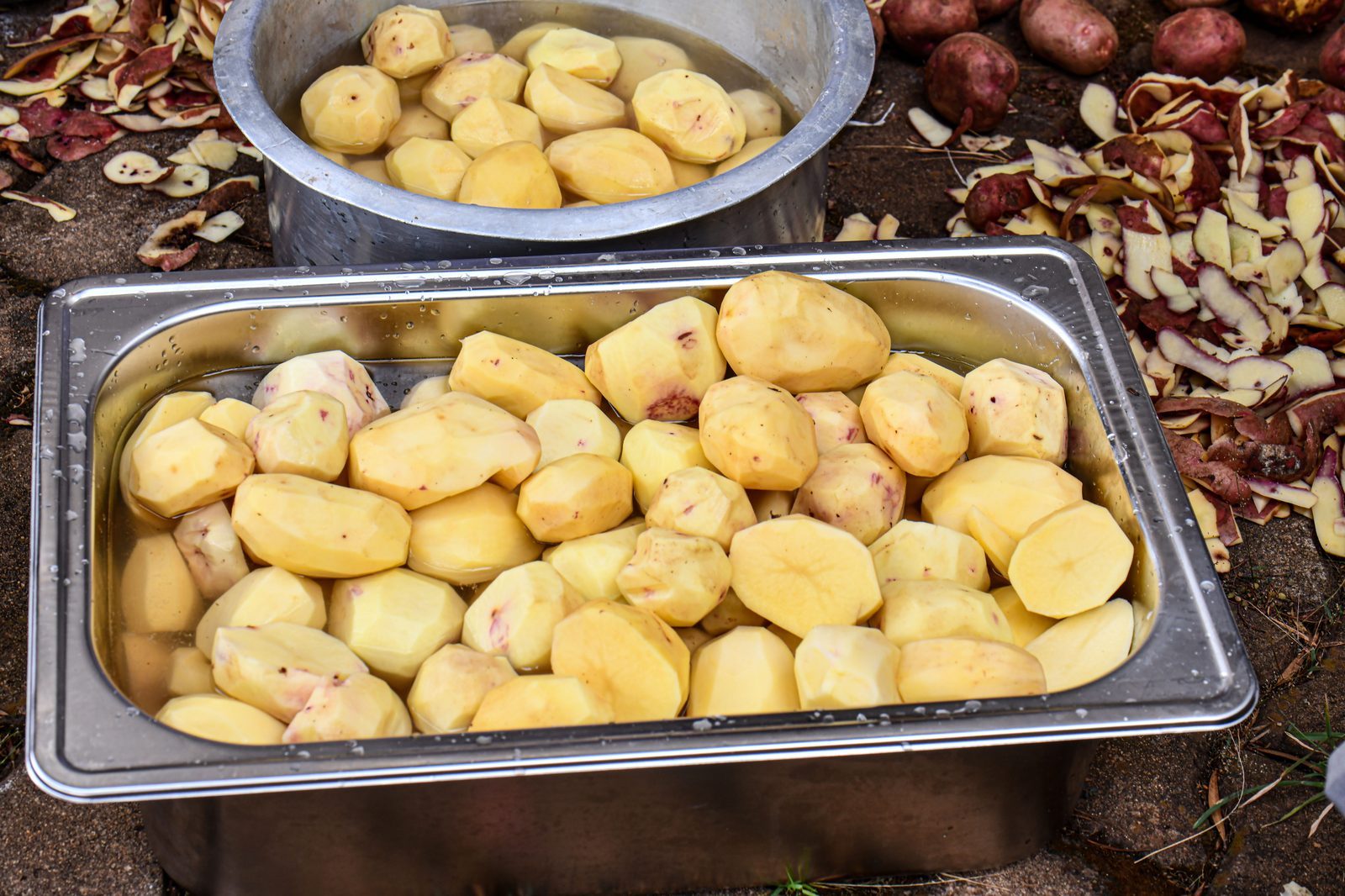
Yes, you can freeze potatoes, but not the way most people first try it. Peel a few spuds, cut them up, tip them straight into a freezer bag raw, and you will be disappointed. They come out grainy, watery, a bit grey and faintly sweet, which is not what anyone wants under a Sunday roast. The trick is that potatoes need to be cooked or at least part-cooked before they go anywhere near the freezer. Do that, and they freeze beautifully, whether it is mash, roasties, chips or diced potato for a hash. Below is how I handle each one, how long they keep, and the one rule that stops the whole lot going to waste.
Free PDF
Free Oven Temperature & Gas Mark Chart
A printable one-page conversion chart for your kitchen: degrees, fan, gas mark and the descriptions in between. Pop your email in and the PDF is yours, plus the odd straight-talking kitchen tip.
Free, unsubscribe any time. The download starts as soon as you sign up.
Why raw potatoes freeze so badly
Potatoes are around 80 per cent water, and that is the root of the problem. When you freeze them raw, all that water forms sharp ice crystals that punch through the cell walls. Thaw them and the structure has collapsed, so you get a soft, watery, slightly mealy texture instead of a firm potato. On top of that, raw potatoes contain enzymes that keep working slowly even in the cold, which is what turns them grey or brown and gives frozen raw spuds that odd sweet, off flavour.
Shop-bought frozen chips and roast potatoes get round this because they are blanched or par-cooked in the factory before freezing. That step switches off the enzymes and firms up the outside. At home you do the same thing: cook first, freeze second. Once you know that, the rest is easy.
How to freeze mashed potato (the easiest win)
Mash is the one I freeze most, because it reheats into something genuinely as good as fresh. Make your mash as usual, but be a little generous with the butter, milk or cream, because a bit of extra fat protects the texture through freezing and reheating.
Let it cool quickly, then portion it. I use either a lined baking tray to make scoops that I open freeze and bag up once solid, or I fill individual tubs so I can pull out one dinner’s worth at a time. Get it into the freezer within an hour or two of cooking rather than leaving a warm bowl on the side, which is both a safety point and a quality one.
Frozen mash keeps well for around three months. Reheat it from frozen in a pan over a low heat, or in the microwave, and stir through a splash more milk or a knob of butter to bring it back together. It can look a touch grainy the moment it thaws; a good beat with a wooden spoon while it heats sorts that out. Mash is also the one potato I am happy to freeze already seasoned, so a batch of proper buttery mash is only a few minutes from the plate on a busy night.
Roast potatoes: par-roast, then freeze
Roasties freeze far better than people expect, and doing them ahead takes all the panic out of a roast dinner. The secret is to stop short of finishing them. Parboil your potatoes, rough them up in the colander for those crispy edges, then roast in hot fat for about two thirds of the usual time, until they are pale gold and set on the outside but not fully crisp.
Cool them completely, open freeze them in a single layer on a tray so they do not clump, then tip the frozen potatoes into a bag. When you want them, spread them straight from frozen onto a hot tray with a little more fat and finish roasting in a hot oven until crisp and golden. Do not thaw them first, or you lose the crunch. They will take a bit longer than fresh, but you get proper roasties with almost no last-minute work. If you are timing them around a joint, my roasting time calculator helps you slot everything into the same oven.
Chips and wedges: blanch first
For homemade chips, cut them to size, then blanch them to switch off those enzymes. You can do this two ways. Either drop them into boiling water for three to five minutes until just softened but nowhere near cooked through, or give them a quick first fry in hot oil until pale and limp, not coloured. Cool and drain them thoroughly, because surface water becomes ice, then open freeze on a tray and bag up.
Cook them from frozen, whether you are oven-baking, deep frying or using an air fryer, and they crisp up properly because the blanching has already done the groundwork. If you cook a lot of chips in an air fryer, my air fryer conversion calculator is handy for adjusting oven recipe times and temperatures.
Diced and blanched potatoes for hashes and stews
If you like having ready-to-go potato cubes for a quick hash, a curry or a stew, blanch them the same way. Peel and dice, blanch in boiling water for three to five minutes depending on the size of the cubes, then plunge them into a bowl of iced water to stop the cooking dead. Drain and dry them well, open freeze, and bag. They will hold their shape when you cook them from frozen because the blanching set the structure. Small cubes need less blanching time than big chunks, so err on the shorter side to avoid ending up with mush.
New, waxy or floury: does the type matter?
A little. Floury varieties like Maris Piper and King Edward make excellent frozen mash and roasties. Waxy salad potatoes and new potatoes are more delicate and can go a bit watery, so they are better blanched and used in dishes where texture matters less, like a stew or a hash. Whichever you use, the golden rule does not change: cook or blanch first, freeze after.
How long do frozen potatoes actually last?
For safety, food kept properly frozen at minus 18C stays safe more or less indefinitely, because freezing pauses the bacteria rather than killing them. Quality is the thing that fades, so here is what I aim for before the texture starts to slide:
- Mashed potato: around 3 months
- Par-roasted roast potatoes: 3 to 4 months
- Blanched chips and wedges: 3 to 6 months
- Blanched diced potatoes: around 3 months
Label everything with what it is and the date it went in, because a bag of frozen white lumps is impossible to identify in February. A cheap roll of freezer tape and a marker pen saves a surprising amount of guesswork and waste.
The safety bits worth getting right
Two things matter here, and they are easy. First, cool cooked potatoes quickly before freezing. Do not leave a warm pan of mash or a tray of roasties sitting out for hours; get them cooled and into the freezer within a couple of hours, ideally faster, so they spend as little time as possible at room temperature. This is the same cool-it-fast habit I use for rice and other cooked leftovers.
Second, once you have cooked frozen potatoes, treat them like any other leftover. Do not refreeze potatoes that have already been cooked from frozen and then left over. If you have made, say, a shepherd’s pie topped with previously frozen mash and then baked it, you can freeze the finished dish, because it has been cooked through again. Loose thawed potatoes, though, go in the bin rather than back in the freezer. When you reheat any potato dish, get it piping hot all the way through, and only reheat it once. For more on that, see my guide to reheating leftovers safely.
There is one thing freezing will not fix: a potato that has gone green or grown long shoots. Green patches and sprouts point to higher levels of natural toxins, so cut them well away or throw the potato out. Freezing does nothing to that, so start with sound potatoes.
The bottom line
Never freeze potatoes raw and whole. Cook or blanch them first and they freeze brilliantly: mash reheats like fresh, par-roasted potatoes crisp up straight from frozen, and blanched chips and cubes are ready whenever you are. Cool them fast, open freeze so they stay loose, label the bag, and cook from frozen. Do that and a cheap sack of spuds turns into weeks of easy dinners instead of a drawer of grey mush. If you are batch-cooking to fill the freezer and need to scale a recipe up cleanly, the recipe scaler does the maths for you.
This is general kitchen guidance, not medical advice. If you are ever unsure whether food is safe to eat, follow the FSA and NHS guidance and err on the side of binning it.