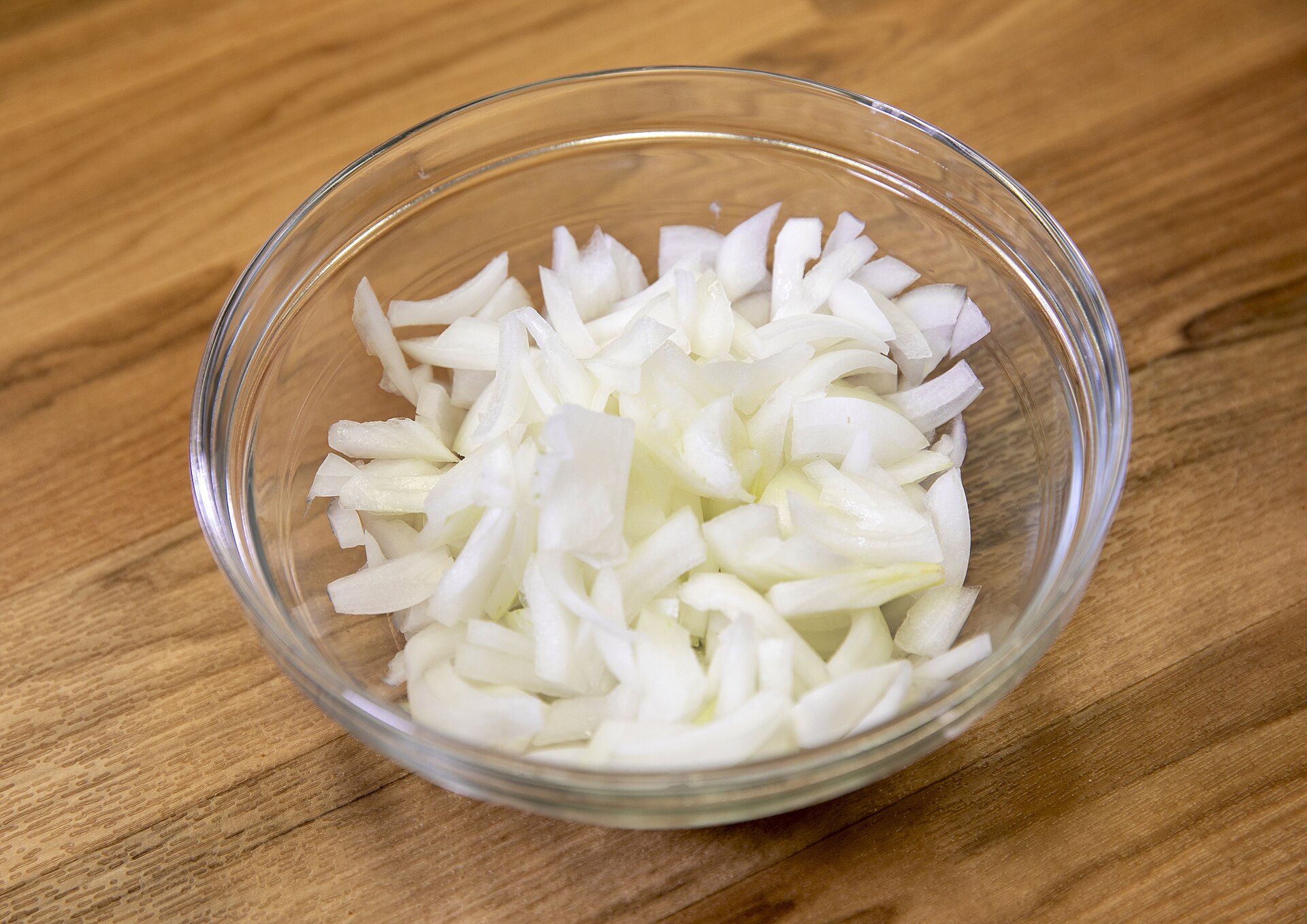
Yes, you can freeze onions, and unlike a lot of vegetables they do not need blanching first. Peel them, chop or slice them, and they go straight into the freezer raw. They keep for months, they cost you almost nothing, and there is no more crying over the chopping board every single time a recipe starts with “first, dice an onion”. The one thing to be clear about from the start: frozen onions come back soft and a bit watery, so they are for cooking, not for a salad or a burger. Get that straight and freezing onions becomes one of the most useful habits in a busy kitchen.
Here is how I actually do it, what keeps and for how long, and the couple of things worth knowing about safety and smell.
Free PDF
Free Oven Temperature & Gas Mark Chart
A printable one-page conversion chart for your kitchen: degrees, fan, gas mark and the descriptions in between. Pop your email in and the PDF is yours, plus the odd straight-talking kitchen tip.
Free, unsubscribe any time. The download starts as soon as you sign up.
The short answer
Raw onions freeze without blanching. Chop, slice or dice them, pack them well, and use them within about three months for the best flavour. They stay safe far longer than that, up to eight months or so, but the taste sharpens and can turn a little bitter the longer they sit, so three months is the sweet spot rather than a safety limit.
You do not thaw them before cooking. Frozen onion goes straight from the bag into a hot pan, which is honestly the whole point. No defrosting, no faff, no soggy puddle on a plate.
Why the texture changes (and what that means for how you use them)
Onions are mostly water held inside firm cell walls. Freezing turns that water into ice crystals that puncture the walls, so when the onion thaws the structure has gone and the water leaks out. That is why a frozen onion is limp and never crisp again.
For anything cooked, this does not matter at all. Soups, stews, curries, bolognese, chilli, a base for risotto, the start of almost any sauce: the onion was going to soften in the pan anyway, so you lose nothing. In fact frozen onion cooks down a touch faster because the cell walls are already broken.
Where it does matter is anything you would eat the onion raw or crisp in. Do not freeze onions for salads, sandwiches, burgers, a cheese board or fresh salsa. There is no trick that brings the crunch back, so keep a fresh onion on the side for those jobs.
How I freeze chopped and sliced onions
The method is simple, and one small step makes the difference between a usable bag and a solid brick.
- Peel and chop to the size you use most. I do most of mine as a rough dice, and keep a separate bag of slices for fajitas and anything that wants strands.
- Open-freeze first. Spread the pieces in a single layer on a tray lined with baking paper and put the tray in the freezer for an hour or two until the pieces are hard.
- Bag them up. Tip the frozen pieces into a freezer bag or tub, press out as much air as you can, then seal, label and date.
That open-freezing step stops everything clumping into one lump. Do it and you can pour out a handful of loose onion whenever you need it. Skip it and you will be hacking at a frozen block with a knife, which is exactly the sort of job that makes you give up on the whole idea.
If you cook in fixed amounts, portioning helps even more. Pack the chopped onion into an ice-cube tray, freeze, then pop the cubes into a bag. One or two cubes is roughly one small onion’s worth, ready to drop into the pan.
Freeze caramelised onions too, this is the real win
If you only take one thing from this, make it this. Caramelised onions freeze brilliantly, and slow-cooking a big batch takes the same standing-at-the-hob time whether you do one onion or six. So do six.
Cook them right down low and slow until deep golden and jammy, let them cool, then freeze them in small portions. I use a muffin tin to freeze single blobs, then bag the blobs once solid. From there they go into French onion soup, onto pizza, through a cheese toastie, into a burger, or stirred into gravy, and you get half an hour of caramelising for none of the effort on the night. This is the thing I would not want to be without now.
Cooked onions in general freeze better than raw, because the softening has already happened, so the texture loss you would notice in raw onion is a non-issue.
What about whole onions, spring onions and red onions?
Whole raw onions: technically you can, but I would not. They take an age to thaw, come out mushy, and you cannot portion them, so you gain nothing over freezing them chopped.
Spring onions: these freeze well chopped, no blanching, and they are perfect straight from frozen scattered into stir-fries, noodle soups and fried rice. Keep the green tops and white parts together, it all cooks fine.
Red onions: freeze the same way as brown, and they are great for cooking, but they lose their colour and bite, so they are no use for the raw pop of colour you usually reach for a red onion to get.
A note on smell, and one on safety
Onions are pungent, and in a freezer that smell can creep into other things, ice cream especially. Double-bag them, or use an airtight tub rather than a bag, and you will keep the rest of the freezer honest.
On safety, onions are low-risk and there is a lot of nonsense online about them. You may have seen the claim that a cut onion left on the worktop turns poisonous or acts like a bacteria magnet that will make you ill. That particular scare story is a myth, and the Food Standards Agency does not warn against it. What is true, and more sensible, is that a cut raw onion should not sit out at room temperature for hours on end. Once you have cut into it, wrap it, keep it in the fridge, and use it within a couple of days. Freezing raw onion does not sterilise it, so the usual rule still stands: freeze it clean and fresh, not something that has already been sitting around going off.
As with any food, once onions have thawed do not refreeze them. Cook them, and if you have made too much of whatever they went into, freeze the finished dish instead.
The bottom line
Freeze onions chopped or sliced, raw and unblanched, open-frozen on a tray so they stay loose, and use them within three months for the best flavour. Cook them straight from frozen, and never expect crunch. Caramelise a big batch and freeze it in portions, because that is the one that quietly saves you time every week. Keep a fresh onion aside for anything raw, keep cut onion in the fridge, and you have turned a weekly chore into a bag you dip into whenever the pan gets going.
If you are batch-cooking to freeze, my guide to how long different foods keep in the freezer has the timings for the rest of your haul, and if you are scaling a recipe up to make the batch worthwhile, the recipe scaler and ingredient converter will do the sums. For the fresh onions in the bowl, storing fruit and veg well will keep them going longer before they ever need the freezer.