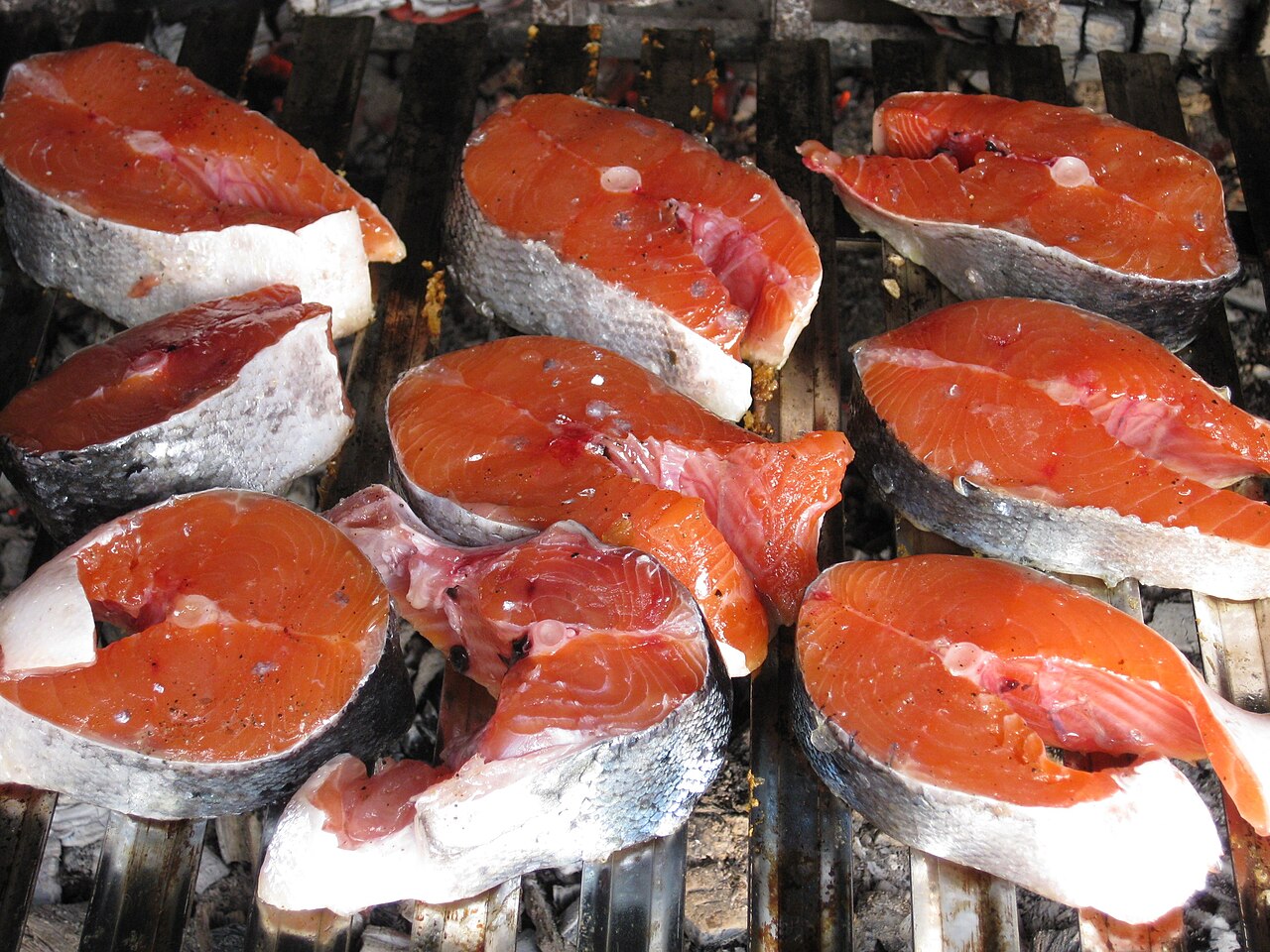
Yes, you can freeze fish, and most of it comes back beautifully. Raw fish freezes well for three to eight months depending on the type, cooked fish for about three months, and the whole thing hinges on two habits: wrap it airtight, and freeze it while it is still genuinely fresh, not on the day it was going off anyway. Freezing pauses the clock; it does not wind it back.
I keep fish in the freezer more than anything else, because it is the food I am most likely to buy with good intentions and then not cook on the night I planned to. A couple of fillets tucked away means dinner is sorted without another trip to the shop.
Free PDF
Free Oven Temperature & Gas Mark Chart
A printable one-page conversion chart for your kitchen: degrees, fan, gas mark and the descriptions in between. Pop your email in and the PDF is yours, plus the odd straight-talking kitchen tip.
Free, unsubscribe any time. The download starts as soon as you sign up.
Can you freeze fresh fish? Yes, and sooner is better
If you have bought fresh fish and know you will not cook it in the next day or so, freeze it straight away rather than letting it sit in the fridge first. Raw fish only keeps one to two days in the fridge, so every day it lingers there is a day of freshness you are not getting back once it is frozen.
The one caveat: a lot of the fish on a supermarket fish counter has already been frozen and thawed for display. If the label says “previously frozen” or “defrosted”, do not refreeze it raw. Cook it first, then you can freeze the cooked fish. When in doubt, ask at the counter, or buy from the freezer aisle where you can see exactly what you are getting.
How long does frozen fish last?
All fish stays safe indefinitely at a steady minus 18°C, which is what a home freezer runs at. The times below are about quality, the point past which texture and flavour start to slide, not safety.
- Lean white fish (cod, haddock, plaice, pollock): up to 6 to 8 months.
- Oily fish (salmon, mackerel, trout, sardines): 2 to 3 months.
- Cooked fish of any kind: about 3 months.
- Prawns and other shellfish, raw: 3 to 6 months; cooked, 2 to 3 months.
The split between white and oily fish is the bit most people miss. Oily fish has far more fat, and fat slowly goes rancid in the freezer even when the fish is perfectly safe. That is why a salmon fillet frozen for six months can taste faintly of old cooking oil while a cod fillet from the same day still tastes clean. Eat the oily ones first.
How to freeze fish so it is worth eating later
Air is the enemy. It dries the surface into freezer burn, those pale leathery patches, and it carries fishy smells to everything else in the drawer.
- Pat it dry with kitchen paper. Surface water turns into ice crystals that wreck the texture.
- Wrap each piece individually, tightly, in cling film or a freezer bag, pressing out as much air as you can. A second layer, or a bag over the wrapped fillets, is not overkill.
- Freeze it flat so it firms up quickly and stacks neatly.
- Label with the date and the type. Frozen white fish fillets all look identical, and you will not remember. Ask me how I know.
If you have a lot, freezing the fillets separately on a tray first, then bagging them once solid, stops them welding into one block so you can take out just what you need.
Freezing fish you plan to eat raw is a different question
This is the one genuine safety point, so I will not gloss over it. Fish eaten raw or barely cooked, sushi, sashimi, ceviche, cold-smoked salmon, can carry parasites. The law for anyone selling it requires the fish to be frozen to at least minus 20°C for 24 hours, or minus 35°C for 15 hours, to kill those parasites.
The trouble is that a normal domestic freezer usually only reaches around minus 18°C, and it does not hold a reliably lower temperature. So you cannot assume that freezing supermarket fish at home makes it safe to eat raw. If you want to make sushi at home, buy fish sold specifically as sushi-grade or sashimi-grade, which has already had that treatment. The one exception the Food Standards Agency now allows is farmed salmon, which is reared in conditions that mean it does not carry the same parasite risk. Everything else you intend to eat raw needs to have been properly frozen by someone who can guarantee the temperature.
How to thaw frozen fish safely
Thaw fish in the fridge, not on the worktop. Move it from freezer to fridge the night before, sitting on a plate to catch drips, and it will be ready by the next day. Small fillets defrost in a few hours. Fridge thawing keeps the surface cold enough that bacteria are not multiplying while the middle is still frozen, which is exactly what happens if you leave it out on the side.
In a hurry, seal the fish in a leakproof bag and sit it in a bowl of cold water, changing the water every half hour. Never use warm water, and never just leave it out in a warm kitchen.
You can also cook many thin fish fillets straight from frozen; they only need a few extra minutes. Whatever the method, cook fish until it is opaque all the way through and flakes easily. If you like a temperature to aim for, that lands around 63°C in the centre, and there is more on that in meat and fish doneness temperatures. Cooking from frozen also works nicely in an air fryer, and the air fryer conversion calculator helps you dial in the time.
Can you refreeze fish?
If it thawed in the fridge and has stayed cold, yes, you can refreeze raw fish safely, ideally within a day or two, though the texture takes another knock each time. If it thawed on the counter, in warm water, or has been sitting out for more than a couple of hours, do not refreeze it. Cook it now or bin it.
The tidier route is to cook the thawed fish, then freeze it cooked. That gives you a safe second freeze and a ready meal at the end of it, rather than a raw fillet that is now a bit sad from two trips through the freezer. For more on thawed food generally, see defrosting food safely.
When to throw it out
Frozen fish that has gone grey, dried out and covered in ice crystals is not dangerous, just past its best, and it will taste of the freezer; that is a quality call. Safety is a different matter. Thawed fish that smells strongly of ammonia, has turned slimy or sour, or has been left in a warm kitchen for hours should go in the bin. Fresh fish smells of the sea and very little else; a sharp, off, ammonia note means it is done.
The usual rule holds. If you cannot remember when you froze it, or something about the smell or feel is off, do not risk it. Fish is one of the faster foods to make you ill, and no meal is worth a night of food poisoning.
This is general guidance to help you waste less and stay safe, not a substitute for the official advice; when you are unsure, follow the UK Food Standards Agency and the label. For the wider picture on freezer life, have a look at freezer storage times, and for cooked fish specifically, how long does cooked fish last.