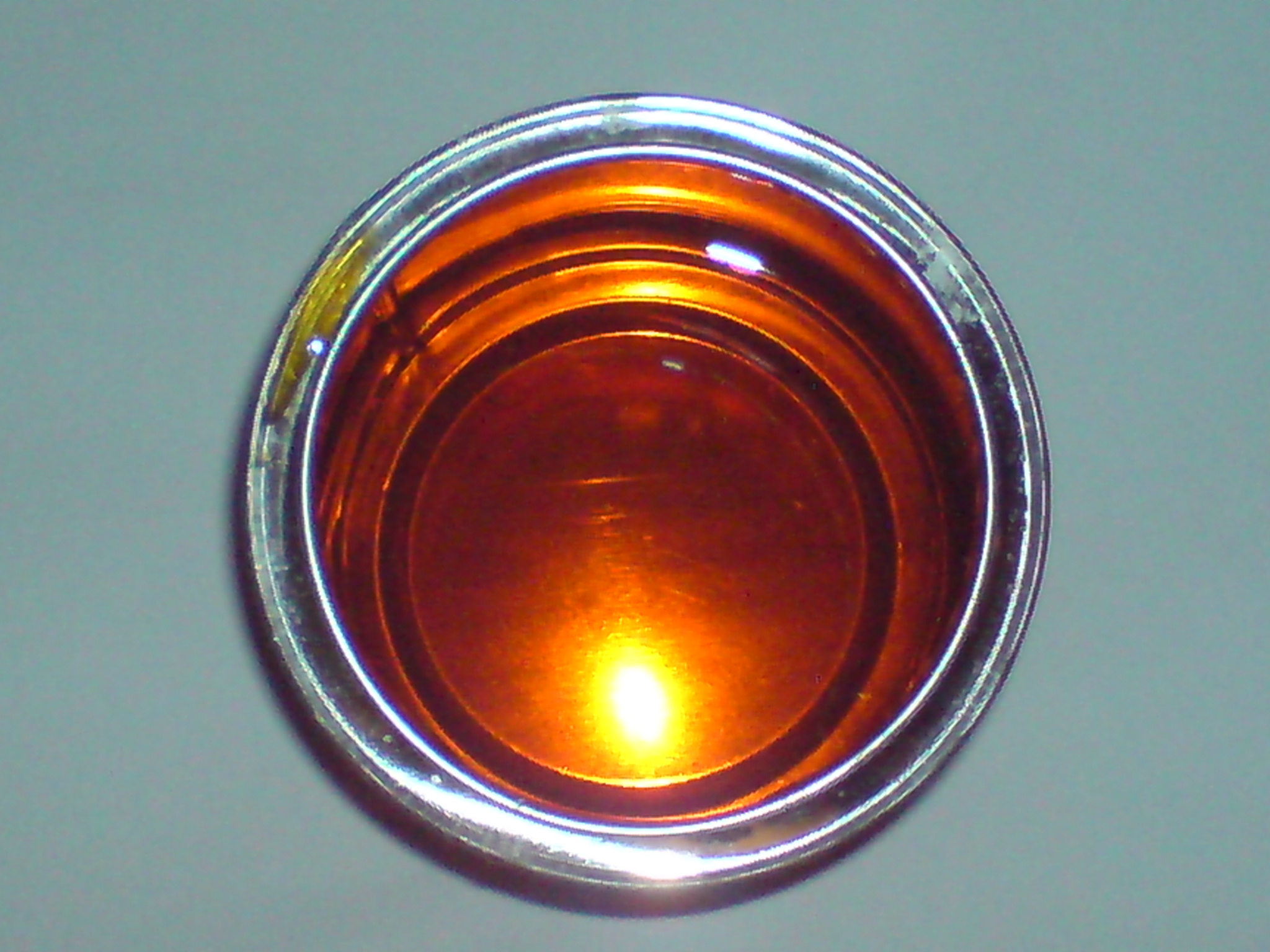
If you have run out of golden syrup and the recipe wants a few tablespoons, honey or maple syrup will stand in measure for measure and you can carry on. If you need a proper match in both flavour and that thick, pourable stretch, the best stand-in is one you make yourself from sugar, water and a squeeze of lemon. Which you reach for depends on what the syrup is doing in the bake, so here is the honest version of each, the ratios, and the homemade one I keep in a jar at the back of the cupboard.
Free PDF
Free Oven Temperature & Gas Mark Chart
A printable one-page conversion chart for your kitchen: degrees, fan, gas mark and the descriptions in between. Pop your email in and the PDF is yours, plus the odd straight-talking kitchen tip.
Free, unsubscribe any time. The download starts as soon as you sign up.
What golden syrup actually is
Golden syrup is inverted sugar syrup: cane or beet sugar that has been treated so the sugar partly splits into simpler sugars that will not crystallise. That is why it stays glossy and smooth in the tin instead of setting grainy. It brings three things to a recipe at once: sweetness, a soft buttery caramel flavour, and a thick stickiness that binds and keeps bakes moist and a touch chewy.
When you pick a substitute, the question to ask is which of those three jobs matters most here. In flapjacks the syrup is mostly glue and sweetness, so almost anything sticky will do. In a treacle tart the syrup more or less is the filling, so flavour and body matter far more and a weak swap shows up straight away.
The quick swaps you probably already have
Honey
For most recipes this is the one I reach for first, because there is usually a jar in. Use it one for one in place of golden syrup.
Honey is a little sweeter and brings its own floral note, which you will notice in a plain bake and barely register in something spiced like gingerbread. Two things to watch. It is slightly thinner than golden syrup, and it browns faster in the oven because of the different sugars, so a tray of honey flapjacks can catch at the edges a few minutes sooner. Keep an eye on them and pull them a touch early if they are colouring fast.
Maple syrup
Also a straight one for one swap, and genuinely good in flapjacks, granola and anything drizzled. It is noticeably thinner than golden syrup and carries a clear maple flavour, so it will change the character of the bake rather than disappear into it. In something delicate I would think twice; in a hearty oaty traybake it is lovely.
Light treacle or a little black treacle
Golden syrup and treacle come from the same sugar refining, so they are cousins. Black treacle is far stronger, darker and more bitter, closer to molasses, so do not swap it in one for one or you will overwhelm everything. What does work is using mostly another swap and adding a teaspoon or two of black treacle for that deeper, almost malty note, especially in parkin, gingerbread or a dark fruit cake where you want the colour and depth.
Agave or brown rice syrup
If you keep agave nectar or brown rice syrup, both are close to golden syrup in texture and fairly neutral, so they swap in one for one without throwing the flavour off much. Agave is very sweet, so taste if you are using it somewhere the sweetness is front and centre.
A quick brown sugar syrup
No syrup of any kind in the house? Dissolve 200g of soft brown sugar in 75ml of just-boiled water, stirring until clear, and you have a rough stand-in for a few tablespoons of golden syrup. It is thinner and will not have the invert-sugar stretch, but for binding a flapjack or sweetening a sauce it does the job.
The closest match: homemade golden syrup
This is the one worth knowing, because it tastes right and behaves right, and it keeps for months. You are caramelising a little sugar for colour and flavour, then dissolving more sugar with water and a squeeze of lemon. The acid from the lemon is the clever bit: it inverts the sugar as it simmers, which is exactly what stops the finished syrup turning to grit in the jar.
You will need: 450g white caster or granulated sugar, split into 150g and 300g; 130ml water; 1 tablespoon lemon juice (bottled is fine).
- Put the 150g of sugar in a heavy saucepan with 2 tablespoons of the water. Set it over a medium heat and let it melt and turn a deep amber. Do not stir it once it is melting; swirl the pan instead, and watch it, because caramel goes from golden to burnt in seconds.
- Take it off the heat and carefully pour in the rest of the water. It will spit and seize, so stand back and add it slowly. Return it to a low heat and stir until any hardened caramel has dissolved again.
- Add the remaining 300g sugar and the lemon juice. Stir to dissolve, then leave it to simmer gently, without stirring, for anywhere from 20 to 45 minutes. You are waiting for it to turn a rich golden colour and thicken slightly.
- Here is the part that catches people out: it looks far too thin while it is hot. It thickens a lot as it cools, so judge it by colour, not by how runny it is in the pan. If anything, stop while it still seems a little loose.
- Pour it into a clean jar. Once cool it keeps at room temperature for up to about three or four months.
Use it one for one anywhere a recipe asks for golden syrup. It is the swap I would choose for treacle tart, steamed sponge puddings and anything where the syrup is the main flavour.
Which to choose, by recipe
- Flapjacks and oaty traybakes: honey or maple, one for one. The syrup is binding and sweetening, so the swap barely matters.
- Treacle tart, steamed puddings, treacle sponge: homemade golden syrup if you can, as the flavour is the whole point. Honey at a push.
- Gingerbread, parkin, dark spiced bakes: honey or the brown sugar syrup, lifted with a teaspoon of black treacle for depth.
- Flapjack-style cereal bars and granola: honey, maple or agave all work.
- Toffee, honeycomb and sweets: these lean hard on the invert-sugar stretch, so homemade golden syrup is the only swap I would trust here. The quick ones can crystallise on you.
A note on amounts and measuring
Syrups are stubborn to measure because they cling to the spoon. Warming the spoon under the hot tap first, or oiling it lightly, lets a sticky syrup slide off cleanly, which matters when a recipe depends on the exact quantity. If you are converting a recipe between cups and grams, or scaling it up for a crowd, the ingredient converter and the recipe scaler will sort the sums so you are not weighing syrup by guesswork.
And if the run on the baking cupboard has left you short of more than just syrup, the baking ingredient substitutions guide covers the rest of the usual suspects, and there is a separate piece on making your own self-raising flour for when that tin is empty too.
The short version: honey gets you out of trouble today, and a batch of homemade golden syrup means you are never caught out again.