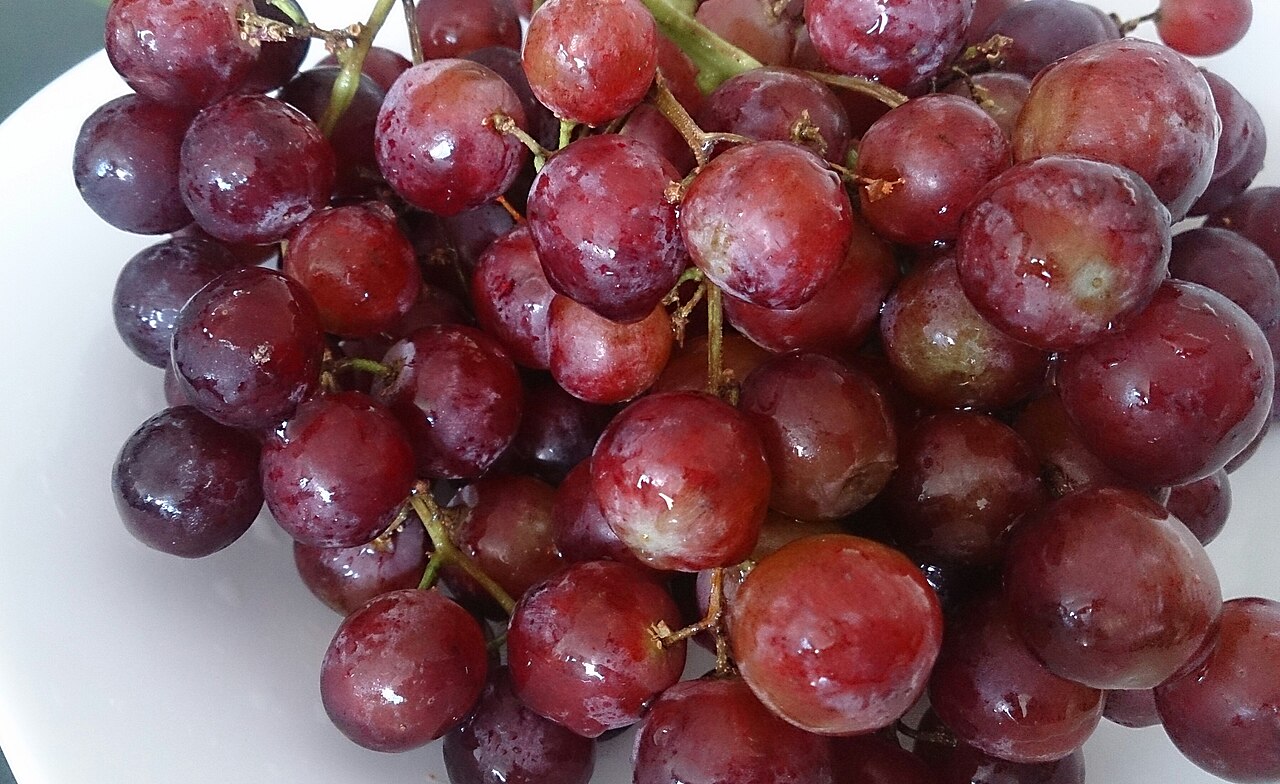
Yes, you can freeze grapes, and frozen grapes are one of the few things I keep in the freezer purely as a treat rather than to save them. Straight from the freezer they are like little beads of sorbet, and on a hot afternoon a bowl of them keeps the children quiet for a good ten minutes. The one thing to be straight about: a grape that has thawed all the way back to room temperature is soft, wrinkled and a bit weepy, because freezing bursts the water inside it. So the knack is to use them while they are still frozen or barely softened, or to blend and cook them, rather than expecting a firm grape back. Here is exactly how I freeze them, how long they keep, and what they are genuinely good for after.
Free PDF
Free Oven Temperature & Gas Mark Chart
A printable one-page conversion chart for your kitchen: degrees, fan, gas mark and the descriptions in between. Pop your email in and the PDF is yours, plus the odd straight-talking kitchen tip.
Free, unsubscribe any time. The download starts as soon as you sign up.
The quick answer
- Can you freeze them? Yes. Wash, dry, pull them off the stems and open-freeze them on a tray before bagging.
- How do they come out? Firm and icy while frozen, soft and wrinkled once fully thawed.
- Best used: eaten frozen as a snack, dropped into a glass as ice cubes, or blended into smoothies. Fully thawed, they are for cooking.
- How long? Up to about a year at minus 18C, best within the first few months for flavour.
- Freeze them fresh. Freezing pauses things, it does not rescue grapes that are already soft, split or going mouldy. Pick those out first.
How to freeze grapes
There is barely anything to it, but the order matters.
- Wash and dry them properly. Rinse the grapes under cold water, then dry them thoroughly with a clean tea towel. Any surface water turns to frost and welds the grapes together, so a proper dry is worth the extra minute.
- Pull them off the stems. Loose grapes freeze faster and pour out of the bag one handful at a time, which is what you want. As you go, chuck out any that are soft, split or showing a fleck of mould. You can freeze small bunches still on the stem if you are in a rush, but loose is better.
- Open-freeze on a tray. Spread the grapes in a single layer, not touching, on a baking tray lined with baking parchment. Slide the tray into the freezer for two to three hours, until the grapes are frozen solid.
- Bag them up. Tip the frozen grapes into a freezer bag or tub, press the air out and write the date on it. Because each grape froze on its own, they stay loose and you can take out as few as you like.
Seedless grapes are the easy choice here, since nobody wants to deal with pips on a grape that has gone soft. Red, green or black all freeze the same way.
Why frozen grapes go soft when they thaw
A grape is mostly water, somewhere around four-fifths of it. When that water freezes it forms sharp little ice crystals that puncture the cell walls holding the grape firm. Freeze it slowly and the crystals are bigger and do more damage, which is part of why a thin single layer that freezes quickly behaves better than a dense bag that takes all night to set.
Either way, once a grape thaws fully the broken cells cannot hold their shape, so it slumps into something soft and slightly wrinkled that leaks a bit of juice. There is nothing wrong with it and it is perfectly safe; it is simply a texture thing. Knowing that is the whole trick, because it tells you to eat them cold or cook them, and not to expect a crisp grape back.
The best ways to use frozen grapes
- Straight from the freezer, as a snack. Let them sit for a minute or two first so they go from rock hard to a sorbet-like bite. This is the main event in my house, and it is a genuinely good way to use up a bag that was heading for the bin.
- As ice cubes in a drink. A few frozen grapes chill a glass of water or white wine without watering it down as melting ice would. It looks a bit fancy for no effort, which I am always in favour of.
- In smoothies. Throw them in frozen, no thawing needed. They add sweetness and help chill the whole thing.
- Cooked down. Since a thawed grape goes soft anyway, this is where the fully defrosted ones earn their keep. Simmered into a quick compote, roasted alongside pork or sausages, or blended into a sauce, that softness stops being a fault and becomes the point.
One thing to watch with young children
Frozen grapes are a brilliant toddler snack, but a warning that applies to grapes at any temperature matters doubly here. A whole grape is exactly the size and shape to block a small child’s airway, and the NHS lists grapes among the common choking hazards for the under-fives. Freezing makes a grape harder, which does not help. So for small children, cut grapes in half lengthways, down the long way rather than across, and quarter the big ones. It takes a few seconds and it is the single most useful habit on this page if there is a toddler in the house. Older children and adults are fine with them whole.
Are frozen grapes safe, and how long do they last?
Grapes are low-risk as frozen food goes, but the safety rules are worth a line. Kept at minus 18C, frozen grapes stay safe effectively forever: as the Food Standards Agency puts it, food in a freezer will not go bad and most bacteria cannot grow in it. So safety is not really the limit here, quality is. For the best flavour and the least frosty, dull texture, use them within about three to six months; up to a year is fine, they just fade a little the longer they sit. Write the date on the bag, because next spring you will not remember when they went in.
Two small cautions. Wash them before they go in the freezer, not after, so you are not rinsing frozen grapes and thawing them in the process. And do not leave thawing grapes sitting out on the worktop for hours; the usual rule of getting perishable food back to cold within about two hours applies to them as much as anything else. I would not refreeze a batch of raw grapes that has already thawed and gone soft, though if you have cooked them into a compote or sauce you can freeze that.
If this all sounds familiar, it is the same open-freeze method I use for strawberries and the same soft-when-thawed story as bananas; both are worth a read if you are trying to rescue a fruit bowl that is turning faster than you can eat it. For everything else that lives in the freezer and how long it really keeps, my guide to freezer storage times lays the common ones out side by side, and storing fruit and veg covers keeping grapes and the rest fresh in the first place so you do not end up freezing them in a panic.