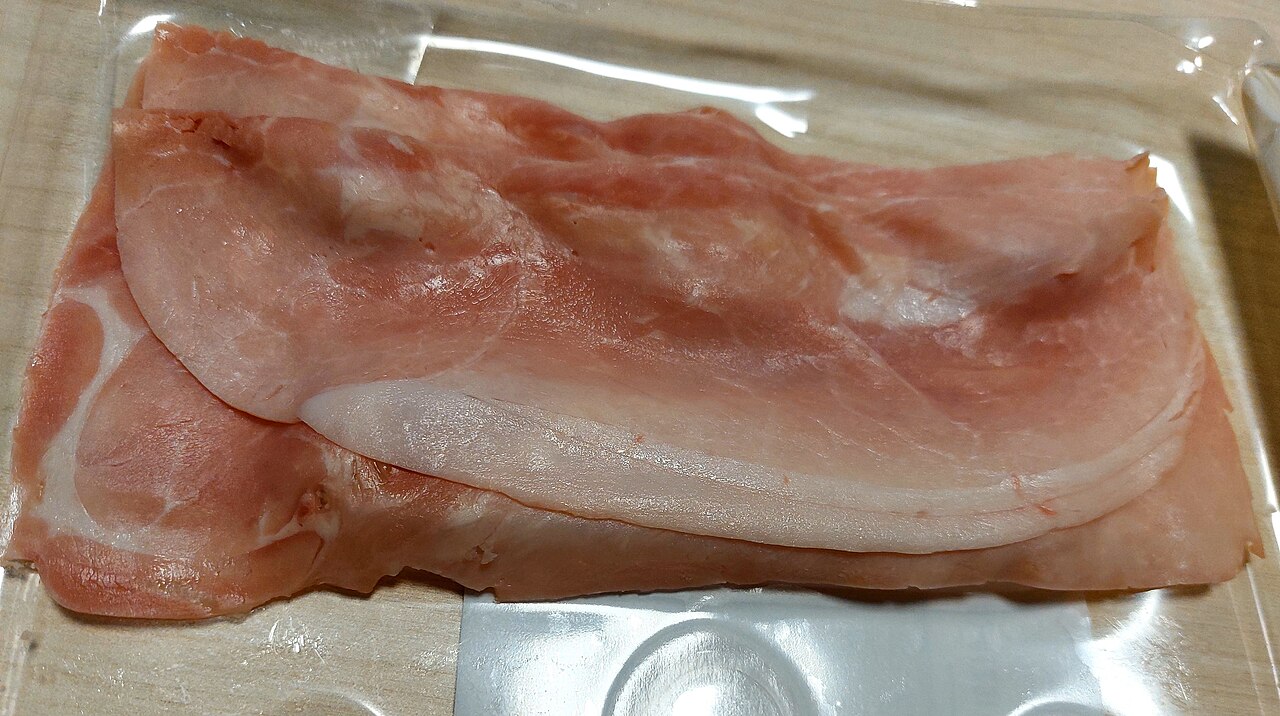
An opened pack of sliced ham keeps three to five days in the fridge, and never a day past its use-by date, whichever comes first. A ham or gammon joint you have cooked at home is a leftover like any other, so cool it fast and eat it within a couple of days to be safe. An unopened shop pack goes by the use-by date printed on it, nothing more. That is the short version. The longer version matters, because ham is one of those things that sits at the back of the fridge looking fine long after it has stopped being fine, and cold does not fix a meat that has turned.
I always seem to have ham in the house. The end of a Christmas gammon, a half pack left from sandwiches, the odd slice the children did not eat. Here is how I judge what is still good, what I freeze, and where I draw the line.
Free PDF
Free Oven Temperature & Gas Mark Chart
A printable one-page conversion chart for your kitchen: degrees, fan, gas mark and the descriptions in between. Pop your email in and the PDF is yours, plus the odd straight-talking kitchen tip.
Free, unsubscribe any time. The download starts as soon as you sign up.
The quick answer, by type of ham
The timings are not all the same, because “ham” covers a shop pack of wafer-thin slices and a two-kilo joint you boiled yourself. They keep differently.
- Opened pre-packed sliced ham: three to five days in the fridge, and not past the use-by date on the pack. Once you break the seal, the clock is the shorter of those two.
- Unopened pre-packed ham: follow the use-by date. A vacuum pack is often dated a couple of weeks ahead, but that date assumes the seal stays shut and the fridge stays cold.
- A ham or gammon joint you cooked yourself: this is a home-cooked leftover. The Food Standards Agency line for leftovers is to eat them within two days. Cured ham holds a little longer than a plain roast, and you will see American guidance stretch a whole cooked ham to a week, but I would not push a joint I cooked past three days, and I cool it and refrigerate it quickly so those three days actually count.
- Deli-counter ham, sliced to order: treat it like opened sliced ham. Three days is my rule, because it has been handled and exposed to the air more than a sealed pack.
If those numbers disagree with each other in your head, trust the shorter one. Rounding storage times up is how people end up ill.
Why the use-by date is the one that counts
Ham carries a use-by date, not a best-before date, and that difference is the whole game. Best-before is about quality, a biscuit past it is just a bit stale. Use-by is about safety. Ham is a cooked, ready-to-eat meat that spends its life cold and moist, which is exactly the conditions listeria likes, and listeria is one of the few bugs that keeps growing at fridge temperatures. That is why the date is firm and why I do not eat ham past it, even if it looks and smells perfectly good. You can read more on that split in my guide to use-by versus best-before dates.
This matters more for some people than others. If you are pregnant, elderly, very young or your immune system is under the weather, be stricter still. Cooked sandwich ham is generally considered fine in pregnancy, but the margins on cold meats are thinner for anyone in an at-risk group, so err early rather than late.
How to tell if ham has gone off
Your senses catch the obvious cases. A surface that has turned slimy or tacky, a sour or faintly sulphurous smell, a dull grey or greenish cast where it should be pink: any of those and it goes in the bin, no debate. A little moisture in a fresh pack is normal, a slippery film is not.
Here is the part I never skip, though. The look and the sniff are a veto, not a green light. Ham that harbours enough listeria to make you ill can look pink and smell of nothing at all. Passing the sniff test does not put days back on the clock. So I use my nose to reject ham, never to approve ham that is already past its date or its fridge window. If it is past the use-by, or it has been open longer than five days, or I genuinely cannot remember when I opened it, it goes, smell or no smell. When in doubt, throw it out. A pack of ham is not worth a bad week.
Storing ham so it lasts
Ham keeps best cold, wrapped and towards the back of the fridge rather than in the door, where the temperature swings every time someone opens it. Your fridge should be running at 5C or below; most of them sit warmer than people think, so a cheap fridge thermometer is worth the pound or two.
Once a pack is open, I reseal it properly. Cling film pressed against the surface, or an airtight box, keeps the slices from drying at the edges and going leathery. For a cooked joint, cool it quickly first. Standing a hot ham on the side for hours is asking for trouble, so I get it into the fridge within two hours, and if it is a big joint I carve it down or cut it in half so it cools faster. Keeping it in one warm lump slows the cooling right down.
Can you freeze ham?
Yes, ham freezes well, and it is my usual move for the end of a joint or a pack I will not finish in time. Freezing pauses the safety clock, so anything still within its fridge window can go in the freezer to save it.
- Sliced ham: freeze it in a sealed bag with the air pressed out, or in its unopened pack. It keeps its quality for about a month or two. Interleaving the slices with a bit of greaseproof means you can peel off a few at a time.
- A cooked joint: wrap it tightly, bag it, and use it within about three months for the best texture. Whole and well wrapped holds up better than thin slices, which can dry and go crumbly.
Two honest caveats. First, frozen ham stays safe more or less indefinitely, but the timings above are about quality, not safety; past them it turns dry and the flavour fades. Second, thaw it in the fridge, not on the worktop, and use it within a day or two once thawed. There is more on doing that safely in my note on defrosting food safely. Do not refreeze ham that has already been thawed unless you cook it in between.
Reheating ham, and doing it once
Most of the ham in my house gets eaten cold, in sandwiches and on the side of things, and that is fine. When I do heat it, in a pie, a carbonara or a bubbling gratin, I heat it until it is steaming hot all the way through, not just warm. And I heat it once. Reheating the same portion again and again gives bacteria more of those warm windows to multiply in, so I take out only what we will eat and leave the rest cold in the fridge. My guide on how many times you can reheat food goes into why once is the rule, and reheating leftovers safely covers getting it properly hot.
Where ham fits with the rest of the fridge
If you are working out timings for a whole fridge of leftovers, not just the ham, my guide to how long food lasts in the fridge lays the common ones out side by side, and freezer storage times does the same for the freezer. Cooking a gammon from scratch and need to scale the trimmings or the glaze up or down for a crowd? The recipe scaler does the arithmetic for you.
Ham is genuinely useful to keep around, and most of the time the answer to “is this still all right?” is a calm yes. The trick is knowing when it is a no, and being willing to bin a couple of slices rather than gamble. Cold ham that is within its date and has been kept properly cold is a friend. Ham that is past its use-by, or has been open a week, is not, however good it looks.
This is a general kitchen reference, not medical advice. If you are pregnant, elderly, very young or otherwise more vulnerable to food poisoning, follow the cautious end of every timing here, and check the NHS or Food Standards Agency guidance if you are unsure.