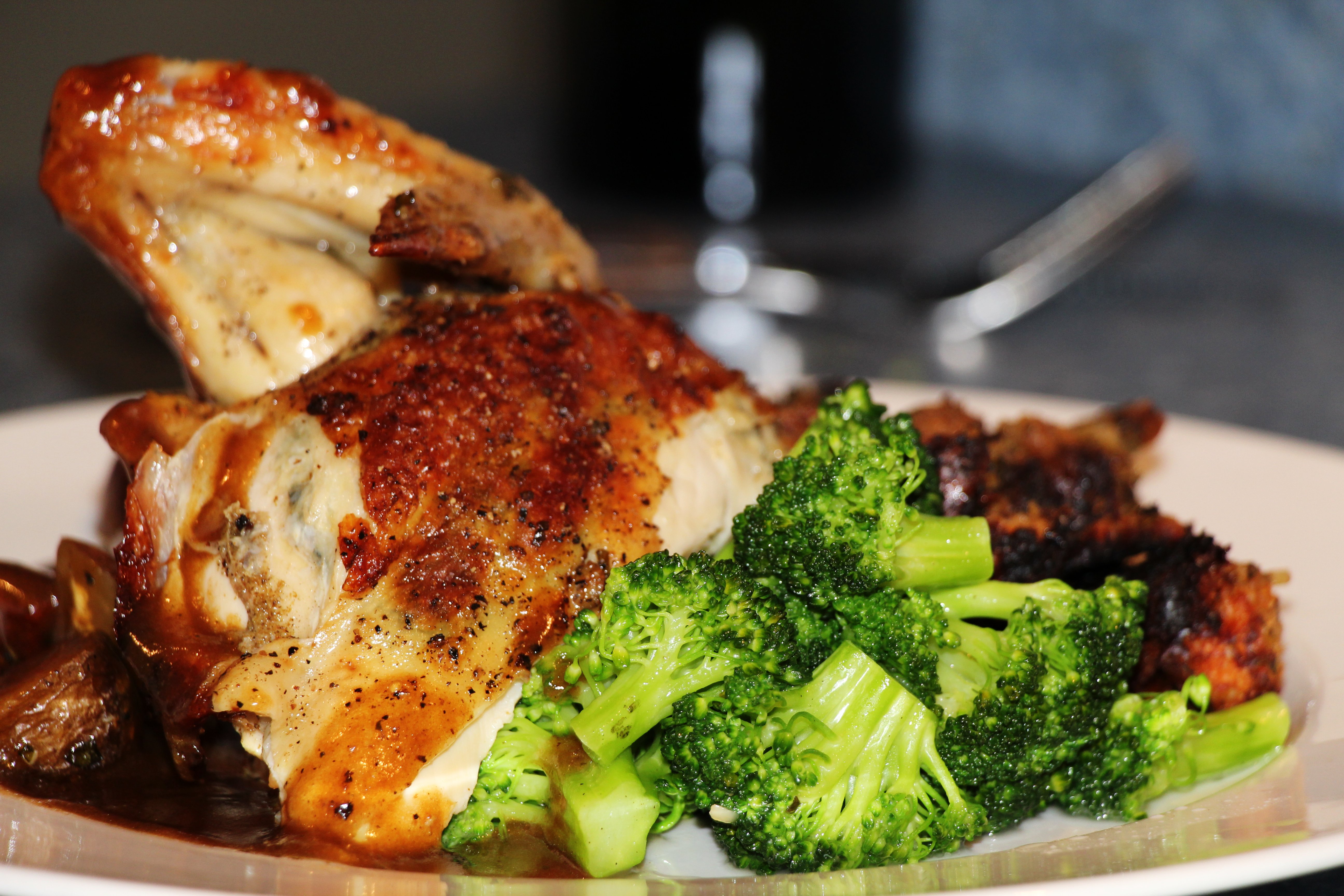
Yes, you can freeze cooked chicken, and in my kitchen it is one of the jobs the freezer does best. A roast on Sunday, the last of a poached breast, the chicken picked off a carcass before I make stock: all of it freezes well and comes back as a quick lunch or the start of a curry. The freezing part is easy. What matters is the hour after cooking and the way you bring it back to life, because the cold preserves chicken, it does not clean it up.
Free PDF
Free Oven Temperature & Gas Mark Chart
A printable one-page conversion chart for your kitchen: degrees, fan, gas mark and the descriptions in between. Pop your email in and the PDF is yours, plus the odd straight-talking kitchen tip.
Free, unsubscribe any time. The download starts as soon as you sign up.
The short answer, and the one window that counts
Cook the chicken, cool it quickly, get it into the freezer, and later thaw it in the fridge and reheat it until it is steaming hot right through. Frozen cooked chicken kept at minus 18 degrees stays safe more or less indefinitely, but for taste and texture I use mine within two to three months. After that it is still safe, it just starts to dry out and pick up that flat, faintly cardboard note that long-frozen meat gets.
The window that counts is the cooling. Cooked chicken should not sit out on the side going cold at its own pace. The Food Standards Agency says to cool cooked food as quickly as you can, ideally within about ninety minutes, and get it into the fridge or freezer. The reason is simple: the range between roughly 8 and 63 degrees is where bacteria multiply happily, and warm cooked chicken sitting on the worktop is squarely in it. Freezing later does not undo that. It only holds the food where it already is, so the chicken you freeze needs to have been safe when it went in.
Cool it fast, then freeze
To hit that ninety-minute mark I carve or shred the chicken while it is still warm rather than freezing a whole joint. Smaller pieces spread out in a shallow container lose their heat far faster than a solid lump, and they thaw quicker too. If I am in a real hurry I sit the container in a sink of cold water for ten minutes to knock the temperature down before it goes anywhere near the freezer.
Then:
- Portion it. Freeze the amount you will actually use at once, a single lunch or a meal for the family, so you never thaw more than you need.
- Wrap it well. Airtight is the whole game. A freezer bag with the air pressed out, or a tub filled close to the top, keeps the freezer burn off. A splash of stock or gravy in the bag protects plain chicken beautifully and stops it drying.
- Label it. The date and what it is. Everything looks identical under frost, and I have thawed what I thought was chicken and found it was pork more than once.
One thing worth saying plainly: if the cooked chicken has already been in the fridge for a day or two, freeze it while it is still within its safe fridge life, not at the end of it. Here in the UK the NHS advice is to eat cooked leftovers within two days, so if you know on day one that you will not get through it, freeze it then. Freezing on day one gives you a far better result than freezing tired chicken on day three, and it is safer too.
How long does it keep?
- In the freezer: safe indefinitely at minus 18 degrees, best quality within two to three months.
- Thawed, back in the fridge: treat it like fresh leftovers and use it within a day or so, not another two full days on top of its old life.
You will see American guidance, from the USDA, quoting three to four days in the fridge for cooked chicken. UK advice is more cautious at two days, and on a food-safety question I would rather you had the tighter number. If in doubt, the freezer buys you the time instead.
Thawing: the fridge, not the worktop
Move the chicken from the freezer to the fridge and let it thaw there overnight. It is slow, a full day for a big portion, but it keeps the meat cold the entire time so bacteria never get their chance. This is the method I plan around: chicken out of the freezer tonight, lunch sorted tomorrow.
What I do not do is thaw cooked chicken on the kitchen side. The outside sits for hours in that warm danger zone while the middle is still frozen, which is exactly the situation the cooling rule exists to avoid. If you are genuinely caught short, the microwave defrost setting works, but only if you are going to reheat and eat the chicken straight away, because the edges start to cook and warm as it defrosts. There is more detail in my piece on defrosting food safely if you want the full picture.
Reheating: piping hot, and only once
This is the rule I will not soften. Reheat frozen or thawed cooked chicken until it is steaming hot all the way through, not just warm on the outside. UK guidance is piping hot right to the middle, which in practice means 70 degrees held for a couple of minutes. If you have a probe thermometer, use it; if you do not, cut into the thickest piece and check it is properly hot and steaming there, not lukewarm.
And reheat it once. Chicken you have cooked, frozen, thawed and reheated has been round the block, and each warming is another chance for it to sit in the danger zone. Warm up only the portion you will eat now, and bin whatever is left rather than putting it back in the fridge for another round. I go into why the once-only rule matters in how many times can you reheat food and in reheating leftovers safely.
Two things reheating cannot do, and it is worth being honest about both. It cannot rescue chicken that sat out too long before you froze it, because some bacteria leave behind toxins that heat does not destroy. And it cannot make safe a piece that was undercooked to begin with; freezing and reheating are for food that was properly cooked the first time.
Refreezing, and cold chicken from the freezer
Can you refreeze it? Only in one narrow case: if the cooked chicken was thawed in the fridge and stayed cold, you can refreeze the portion you did not use, once. If it was thawed on the counter or warmed through, it does not go back in. I have written that up in full in can you refreeze cooked chicken.
And no, you cannot eat previously frozen cooked chicken cold straight from thawing and skip the reheat. Cold cooked chicken is fine when it has come from the fridge and never been near the danger zone, but chicken that has been frozen and thawed should be brought up to piping hot before you eat it, then cooled again quickly if you want it cold in a salad or sandwich afterwards.
Where extra care is needed
If you are cooking for someone pregnant, very young, elderly or unwell, be stricter with all of it: the ninety-minute cooling, the two-day fridge limit, the thorough reheat. Their margin for a mistake is smaller. And the sniff test is not your safety net here. Plenty of harmful bacteria leave no smell, taste or change in the look of the meat, so a portion that has been mishandled can seem perfectly fine and still make you ill. When you cannot remember how long something has been out, or how long it has been in the freezer, throw it out. It is cheaper than a bad night.
The way I actually run it
I roast or poach more chicken than we need on purpose. What we do not eat that evening gets shredded while still warm, split into meal-sized bags with a spoon of the cooking juices, labelled and frozen the same night. When I want it, it comes to the fridge the evening before, then gets reheated hard in a pan with whatever sauce the meal needs. Done that way, frozen cooked chicken is not a sad leftover; it is a head start on dinner.
If you are cooking the chicken fresh to freeze, my roasting time calculator will get the joint properly done in the first place, which is where safe leftovers begin.